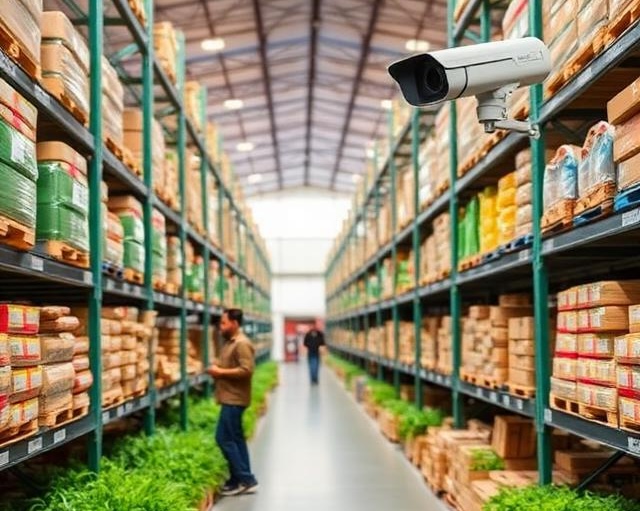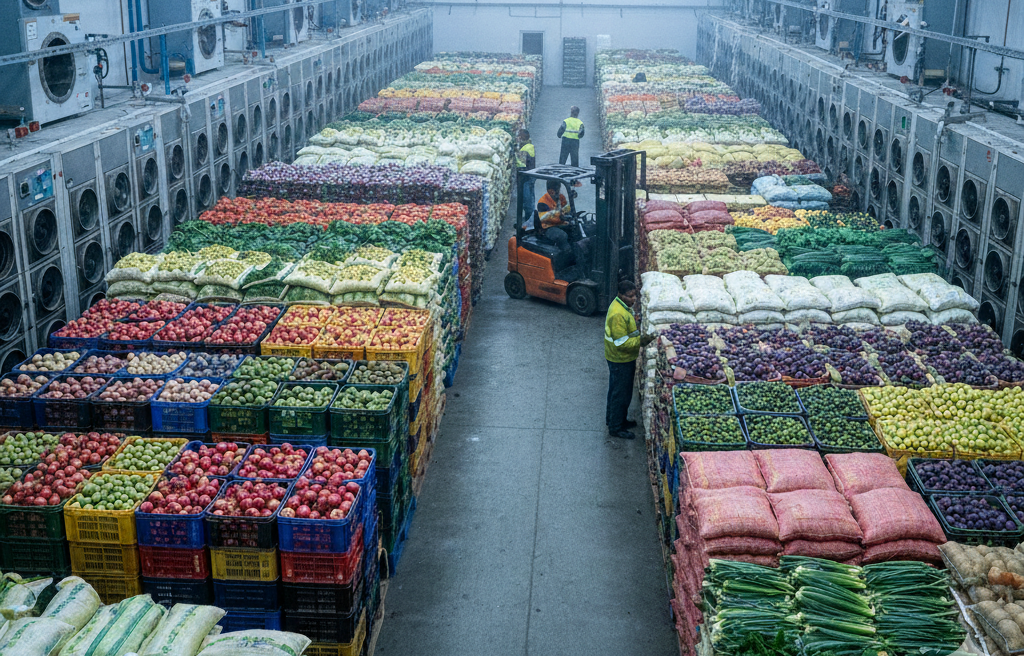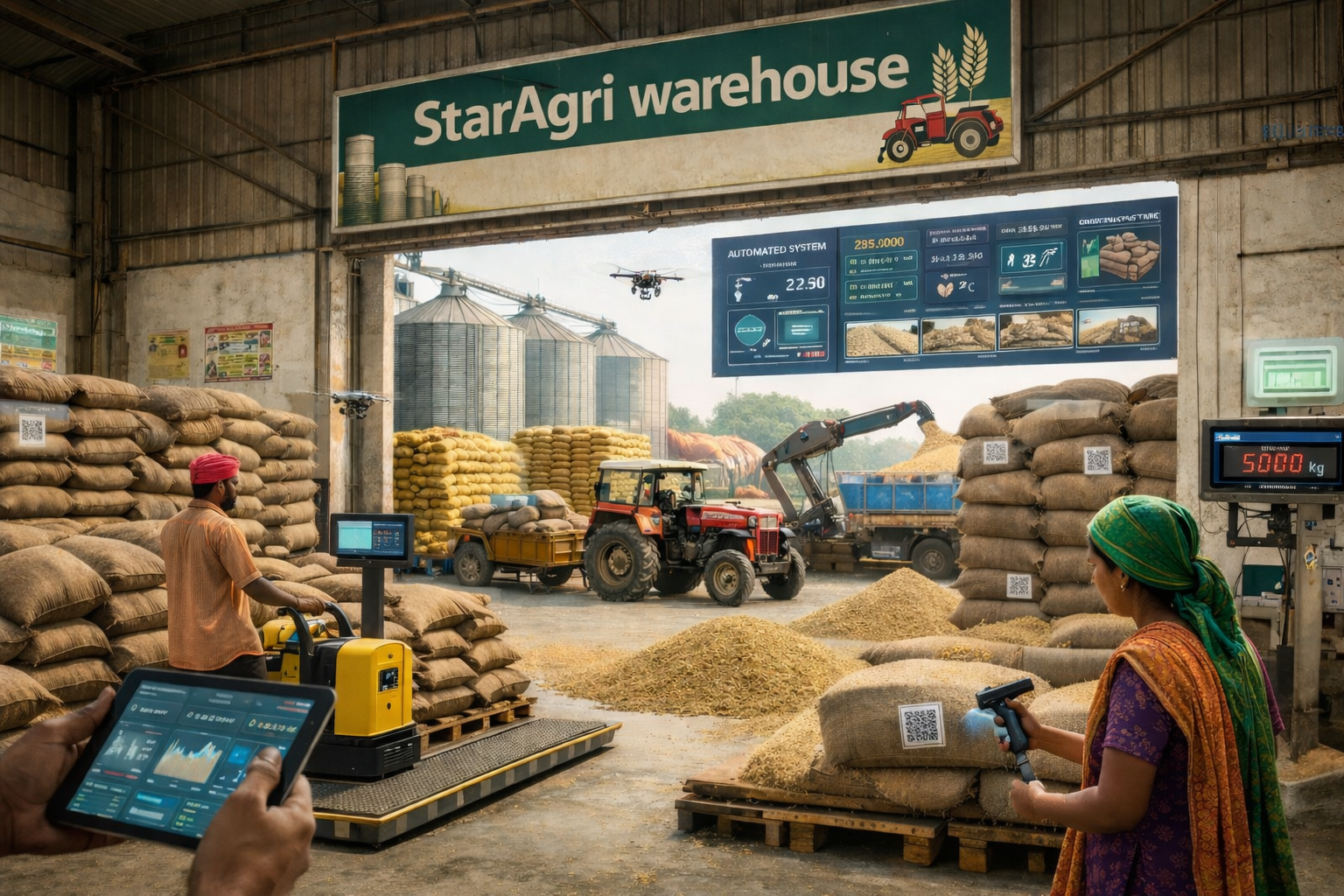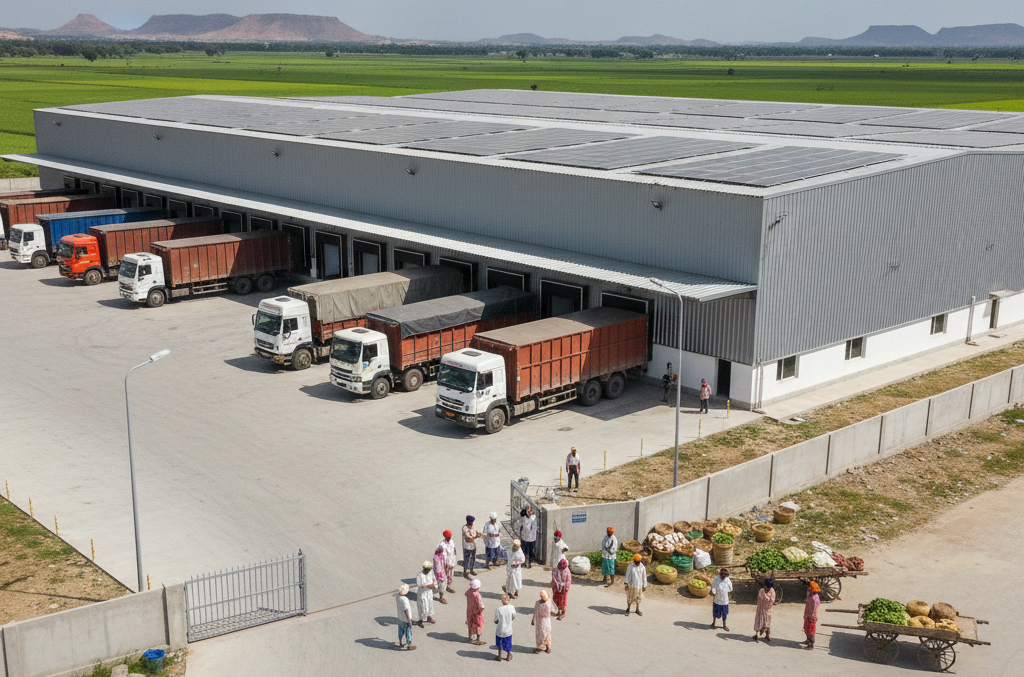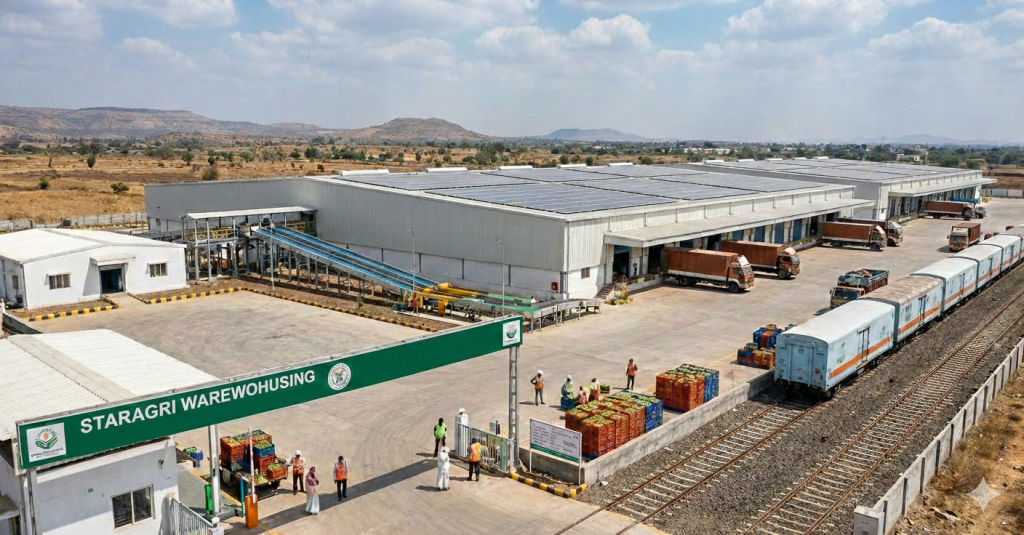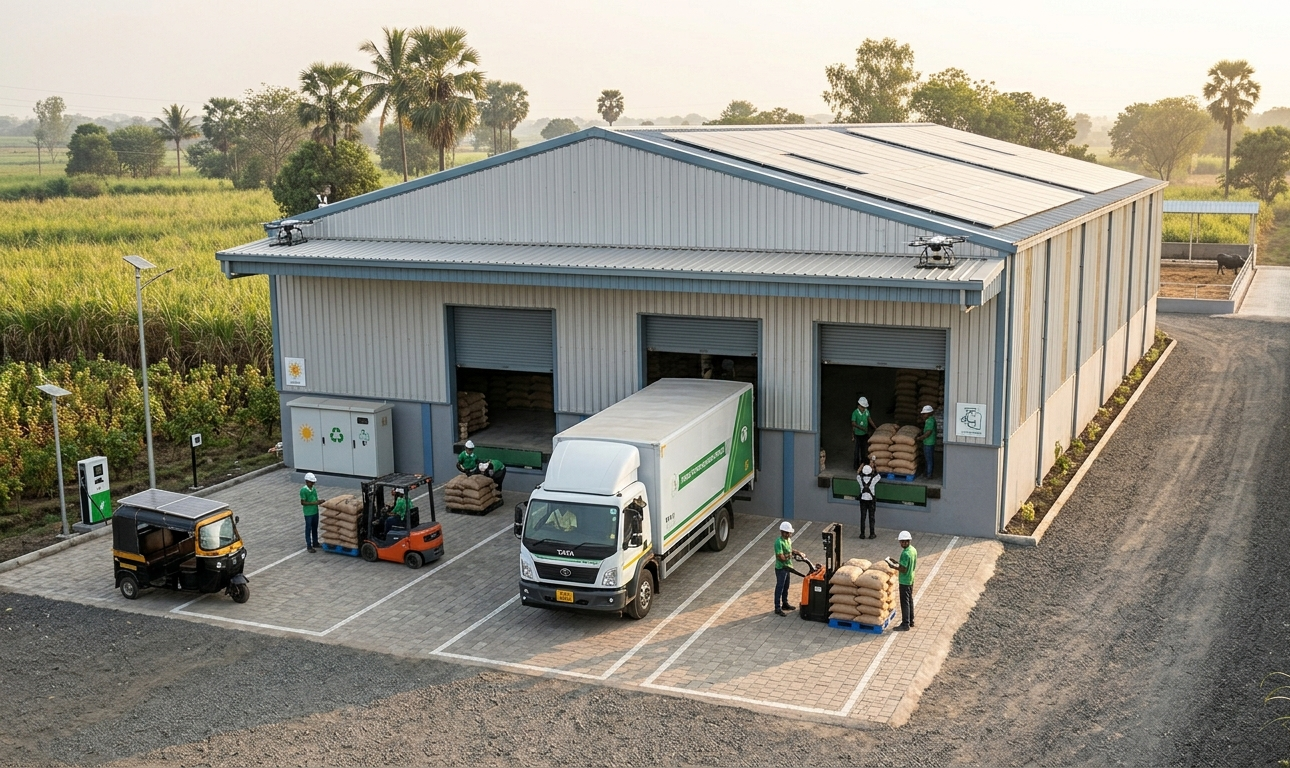
Tag Archives: staragri warehouse

When people talk about agricultural revolutions, the focus usually begins at the farm.

Better seeds. Smarter irrigation. Precision farming. AI-powered crop advisory. Higher yields.

But what if the next breakthrough in Indian agriculture doesn’t happen before harvest at all? What if it happens after it?

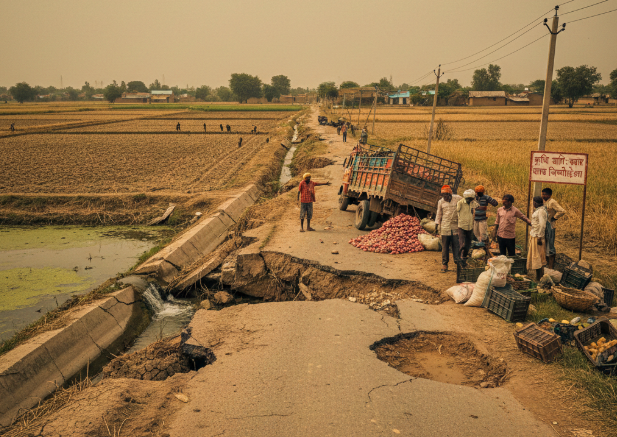
While India has significantly improved agricultural production over the years, the real challenge often begins once the crop leaves the farm.

Storage gaps, fragmented logistics, quality losses, financing delays, inefficient movement, and poor market visibility continue to impact the agricultural ecosystem long after harvesting is complete. And in many ways, this is where the next phase of agricultural transformation may quietly be taking shape.

India produces at scale. But efficiency still remains the bigger challenge.

India’s agricultural output continues to grow rapidly. The country recorded foodgrain production of nearly 357 million tonnes in 2024–25, one of the highest levels ever achieved. But production alone does not guarantee efficiency.

A large part of India’s agricultural value chain still operates through fragmented post-harvest systems. Commodities often move across disconnected networks involving storage, transport, financing, procurement, quality assessment, and trading.

This creates several challenges:

  • delayed market access,
  • inventory losses,
  • inconsistent quality visibility,
  • financing inefficiencies,
  • and unpredictable supply-chain movement.

In fact, post-harvest inefficiencies continue to remain one of the biggest structural gaps in Indian agriculture. And as agricultural volumes continue increasing, the need for intelligent post-harvest infrastructure is becoming far more urgent.
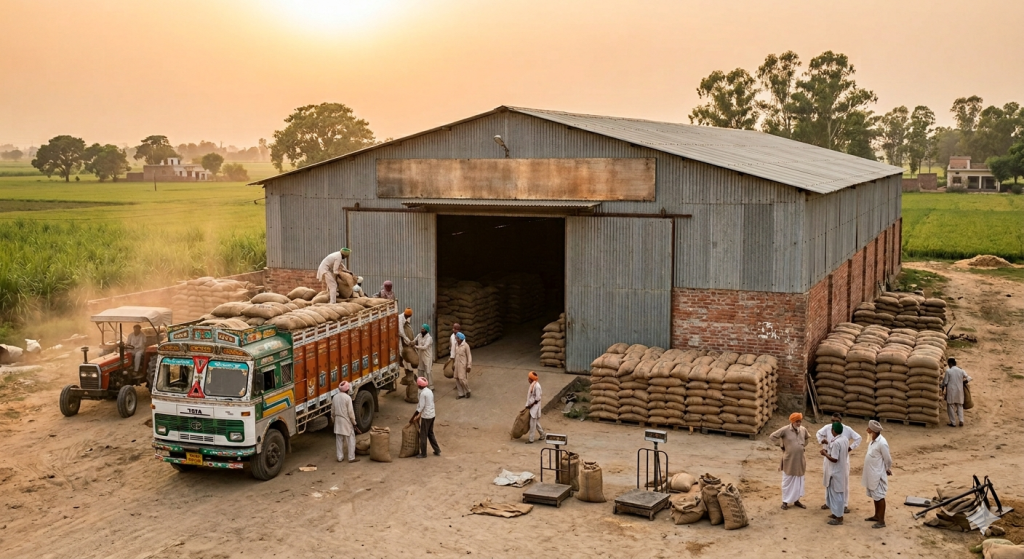
Post harvest warehouse

Agriculture is becoming a supply-chain intelligence business

Traditionally, agriculture focused heavily on production. Today, the conversation is expanding toward visibility.

Can inventory be tracked in real time?
Can supply disruptions be predicted earlier?
Can commodity movement become faster and more transparent?
Can financing be linked more efficiently with storage and trade?

These questions are slowly reshaping the industry.

Modern agriculture is no longer functioning only through physical movement of commodities. It is increasingly functioning through movement of data and intelligence. This is where technologies like:

  • AI,
  • warehouse digitisation,
  • satellite intelligence,
  • predictive analytics,
  • and integrated logistics systems

are beginning to play a much larger role.

Globally, AI-led supply-chain infrastructure and smart logistics systems are becoming key focus areas across food and agricultural ecosystems.

The future of agriculture may depend on what happens between harvest and market

Think about how many stages exist after harvesting:

  • storage,
  • quality assessment,
  • collateral management,
  • financing,
  • transportation,
  • trading,
  • and procurement.

Each stage influences pricing, working capital, market timing, and profitability. Yet historically, these systems have often functioned independently. That is now beginning to change.

The agricultural industry is slowly moving toward integrated ecosystems where warehousing, logistics, financing, and digital trade are becoming interconnected.

And this integration matters because agriculture today requires speed, transparency, and predictability. For example:

  • Real-time inventory visibility can support faster financing.
  • Integrated logistics can reduce movement inefficiencies.
  • Digitised warehouses can improve traceability.
  • AI-driven monitoring can help reduce storage risks.
  • Connected trade ecosystems can improve procurement planning.

In many ways, the future of agriculture may depend less on isolated infrastructure and more on how intelligently these systems work together.
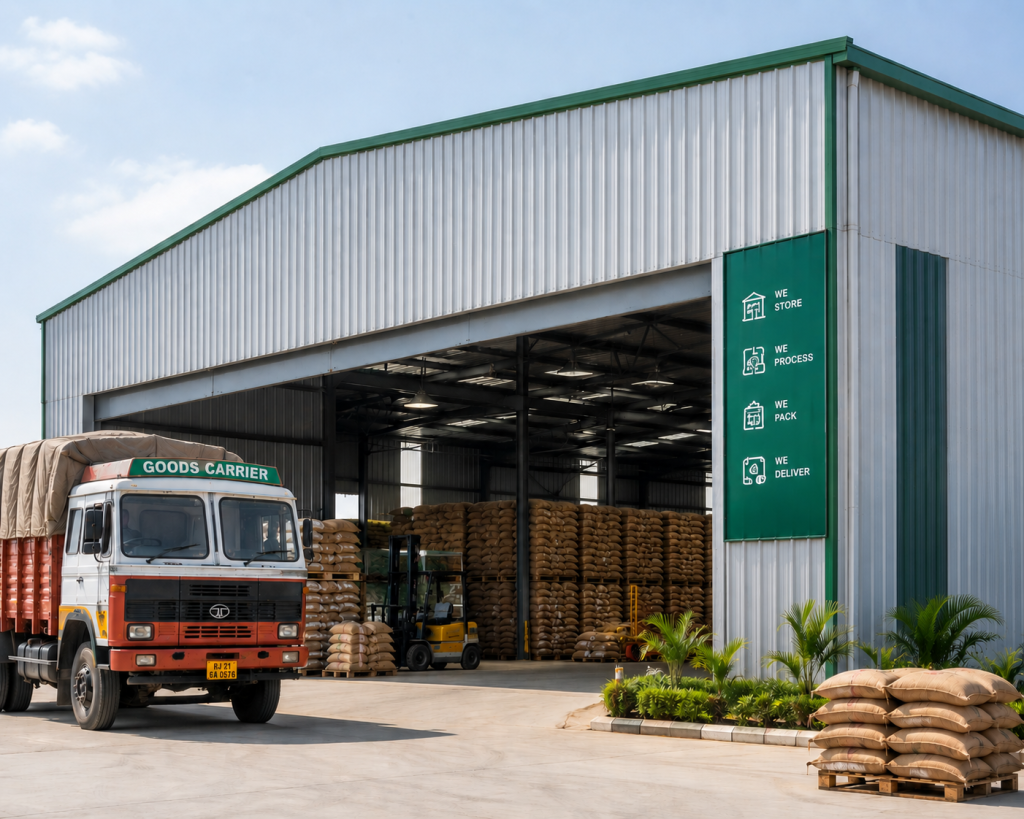
post harvest

Why integrated agritech ecosystems are becoming important

This shift is creating a new role for agritech companies.

The industry is no longer looking only for storage providers, logistics players, or trading platforms independently. Increasingly, agriculture requires connected ecosystems that bring multiple capabilities together.

This is where integrated agritech models are becoming more relevant.

Companies like StarAgri are participating in this transition by building interconnected post-harvest ecosystems that combine:

  • warehousing,
  • collateral management,
  • quality assessment,
  • financing,
  • logistics,
  • digital commerce,
  • and AI-led agricultural intelligence.

Today, StarAgri operates across 2,200+ warehouses with nearly 5 million metric tonnes of storage capacity spread across 380+ locations in 19 states. Its broader ecosystem also includes:

This kind of integration is becoming increasingly important because agriculture’s biggest bottlenecks are rarely isolated anymore. They are interconnected.

The next agri revolution could be built after harvest

For years, agriculture measured progress mainly through production. But the next decade may measure progress differently.

How efficiently can crops move through the supply chain?
How intelligently can inventory be managed?
How quickly can financing reach the ecosystem?
How much visibility exists after harvest?

Those questions may define the future of agriculture more than ever before. Because the next agricultural revolution may not necessarily come from growing more

It may come from losing less, moving smarter, financing faster, and connecting the entire agricultural ecosystem more intelligently after harvest. And as integrated agritech ecosystems continue evolving, post-harvest infrastructure may finally become one of the most important growth engines in Indian agriculture.

FAQs

  • What are post-harvest challenges in agriculture?
    Post-harvest challenges include storage inefficiencies, logistics gaps, financing delays, inventory losses, and fragmented supply-chain systems.
  • Why is post-harvest infrastructure important?
    Strong post-harvest infrastructure helps improve commodity movement, reduce losses, strengthen financing access, and improve market efficiency.
  • How is technology improving agricultural supply chains?
    Technologies like AI, warehouse digitisation, satellite intelligence, and predictive analytics are improving visibility and operational efficiency across supply chains.
  • What is an integrated agritech ecosystem?
    An integrated agritech ecosystem connects storage, finance, logistics, digital trade, and intelligence systems into one connected agricultural network.
  • How does StarAgri support post-harvest agriculture?
    StarAgri supports agriculture through warehousing, collateral management, logistics, financing ecosystems, and digital agri intelligence platforms.
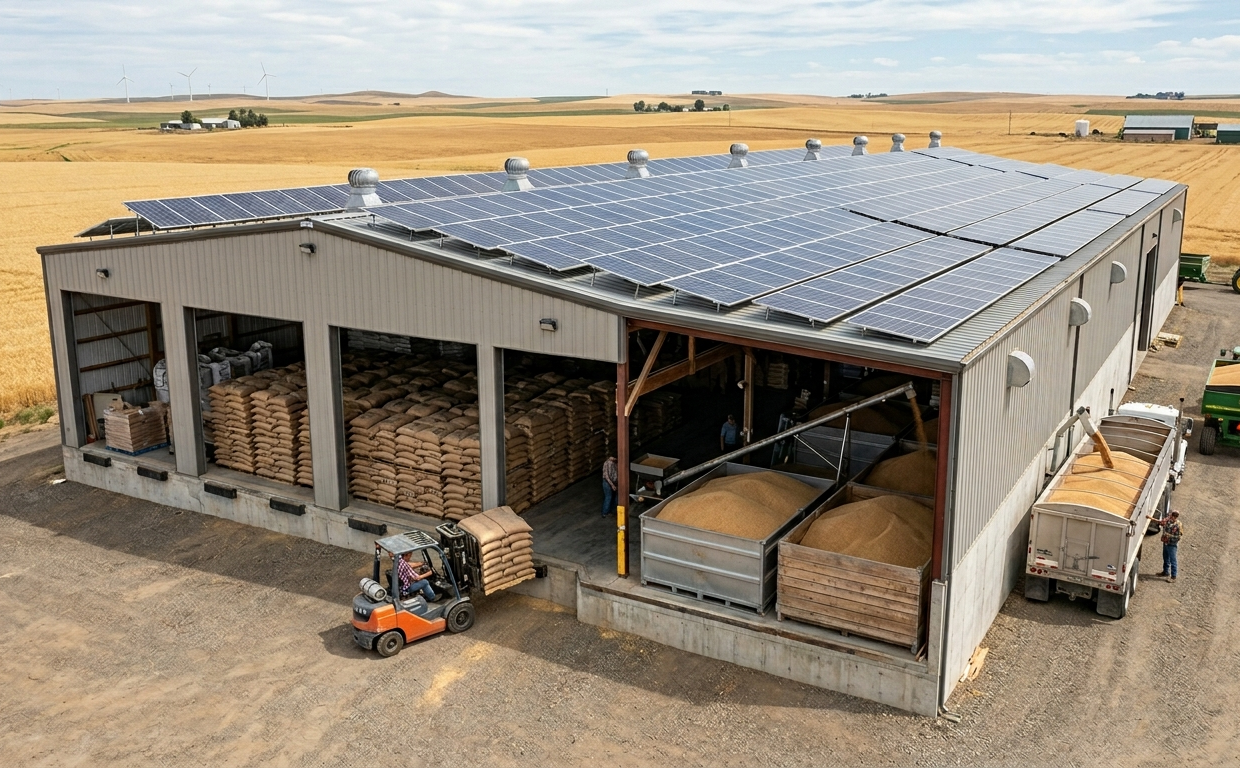
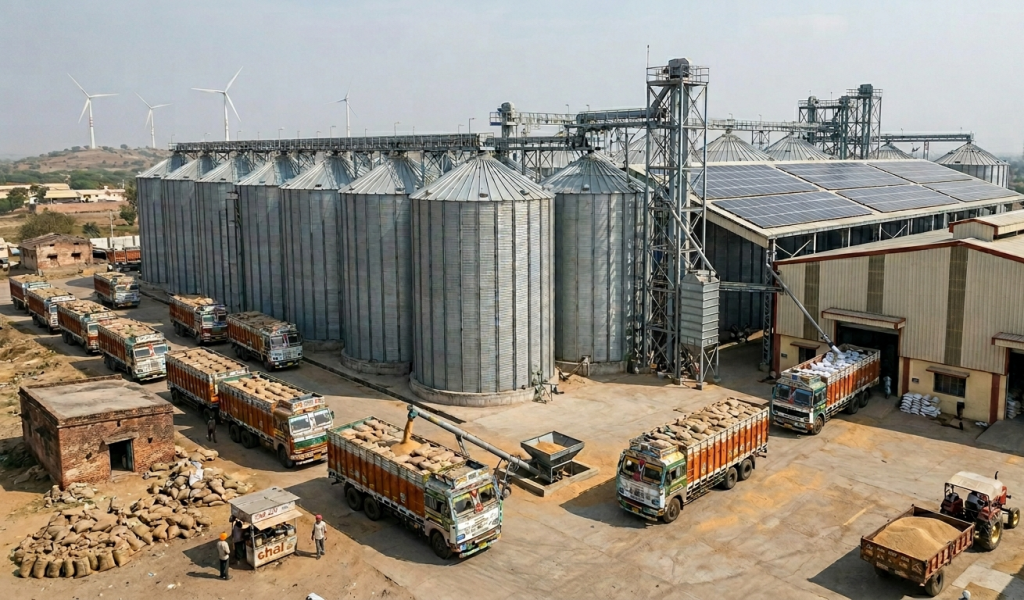
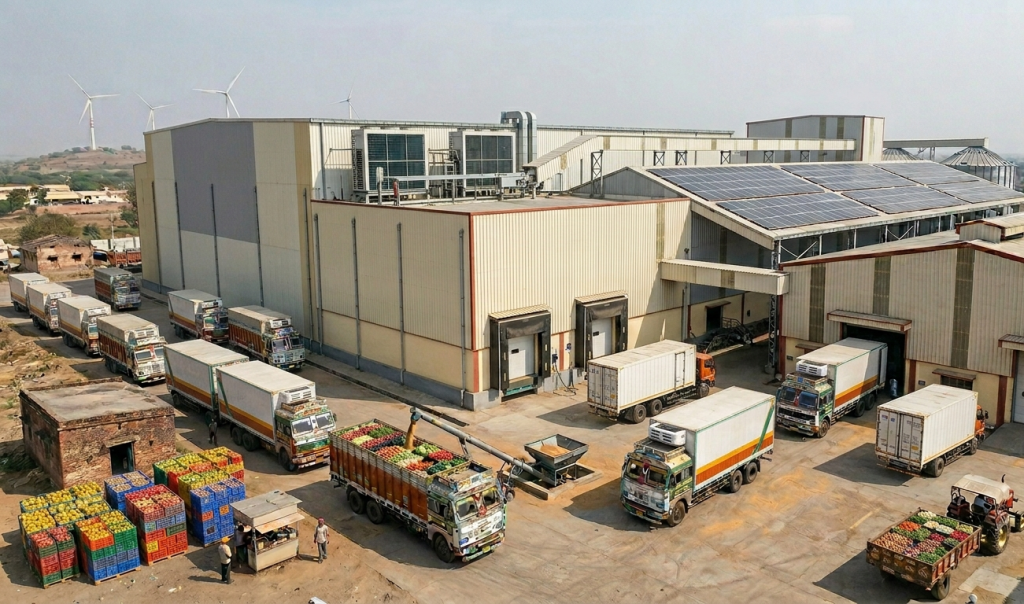
India’s agricultural sector faces a paradox: record production on one hand, and significant post-harvest losses on the other. According to multiple industry estimates, inadequate storage and cold-chain infrastructure continue to result in substantial annual economic losses. As climate pressures intensify and energy costs rise, solar-powered agriculture warehousing is emerging as a transformative solution, combining sustainability with efficiency.

The Growing Need for Modern Warehousing

India’s cold storage ecosystem, while expanding, still struggles with capacity gaps and outdated infrastructure. The sector is capital-intensive and often requires long gestation periods, with break-even timelines extending beyond five years. At the same time, renewable energy adoption is accelerating rapidly. According to IRENA 2026, India ranks 3rd globally in renewable energy capacity, with solar energy witnessing particularly strong growth.

This intersection of energy transition and post-harvest management is creating a compelling case for solar-powered warehousing.

Why Solar-Powered Warehousing Matters

Traditional warehouses and cold storage facilities rely heavily on grid electricity or diesel generators, leading to high operational costs and carbon emissions. Solar-powered systems address both challenges:

  • Reduced energy costs: Solar energy lowers long-term operating expenses, especially in energy-intensive cold storage facilities.
  • Improved shelf life: Consistent temperature control ensures reduced spoilage of perishables.
  • Decentralised infrastructure: Solar-powered units can be deployed closer to farm-gate locations.
  • Sustainability compliance: Increasingly important for export markets and ESG-driven financing.

For perishable commodities like fruits, vegetables, and dairy, even minor improvements in storage conditions can significantly enhance shelf life and market realisation.

farm solar panels

StarAgri’s Role in Building Smart Warehousing

StarAgri has pioneered the modernising India’s agricultural infrastructure. With a network of over 2,200 warehouses across 19 Indian states at 380+ locations and a storage capacity exceeding 5 MMT, the company plays a critical role in bridging post-harvest gaps. StarAgri’s approach goes beyond traditional warehousing:

  • Integrated warehousing solutions with quality testing and collateral management
  • Cold storage infrastructure supporting perishable commodities
  • Technology-enabled monitoring for inventory and quality
  • Financing integration through its NBFC arm, enabling warehouse receipt financing

By integrating renewable energy into these systems, StarAgri can further enhance efficiency and sustainability across its network.

Solar + Warehousing: A Strategic Advantage

The adoption of solar-powered systems in warehouses enables a dual-value proposition:

  1. Operational efficiency: Lower energy costs directly improve warehouse profitability
  2. Farmer benefit: Reduced storage costs and better price realisation

Additionally, solar-powered agriculture cold storages can operate reliably even in regions with inconsistent grid supply, making them particularly valuable in rural India.

Policy Support Driving Adoption

Government initiatives are also accelerating the shift toward modern infrastructure:

  • The Agriculture Infrastructure Fund (AIF) has sanctioned over ₹56,000 crore for projects, mobilising nearly ₹92,000 crore in investments and generating large-scale rural employment.
  • Subsidies under schemes like PM Kisan Sampada Yojana support cold-chain development

Such policy backing creates a strong foundation for integrating renewable energy into agri-infrastructure.

solar powered agriculture

The Road Ahead

As India moves toward a more resilient agricultural ecosystem, solar-powered agriculture warehousing is strategic. It aligns with three critical priorities:

  • Reducing post-harvest losses
  • Enhancing farmer incomes
  • Supporting India’s renewable energy goals

For StarAgri, this presents an opportunity to lead the next phase of agri-infrastructure transformation where technology, sustainability, and finance converge.

FAQs

  • What is solar-powered agriculture warehousing?
    Solar-powered warehousing integrates renewable energy systems with storage infrastructure to reduce energy costs and improve efficiency, especially in cold storage operations.
  • How does solar energy enhance the shelf life of agricultural commodities?
    It ensures consistent temperature control, reducing spoilage and preserving the quality of perishable goods like fruits, vegetables, and dairy.
  • Why is solar warehousing important for India’s agri sector?
    It addresses high energy costs, reduces post-harvest losses, and supports sustainable farming and supply chain practices.
  • What role does StarAgri play in this space?
    StarAgri provides integrated warehousing, cold storage, and collateral management solutions, and is well-positioned to adopt solar-powered infrastructure at scale.
  • What are the long-term benefits of solar-powered warehousing?
    Lower operational costs, improved farmer realization, reduced carbon footprint, and alignment with ESG and export requirements.


India has registered its highest-ever foodgrain production in 2024–25, reaching 357.73 million tonnes, according to the final crop output estimates released today by the Ministry of Agriculture & Farmers Welfare.  Yet despite strong production growth, a silent crisis continues to undermine farmers’ incomes and national food security due to post-harvest crop losses.

Post-harvest losses remain a persistent challenge across the agricultural value chain. Studies indicate that India loses agricultural produce worth over ₹1.5 lakh crore every year due to inefficiencies in storage, transportation, processing, and supply chain management. 

So why does India lose so much produce after harvest? And more importantly, how can technology and infrastructure change this reality?

The real reasons behind post-harvest losses

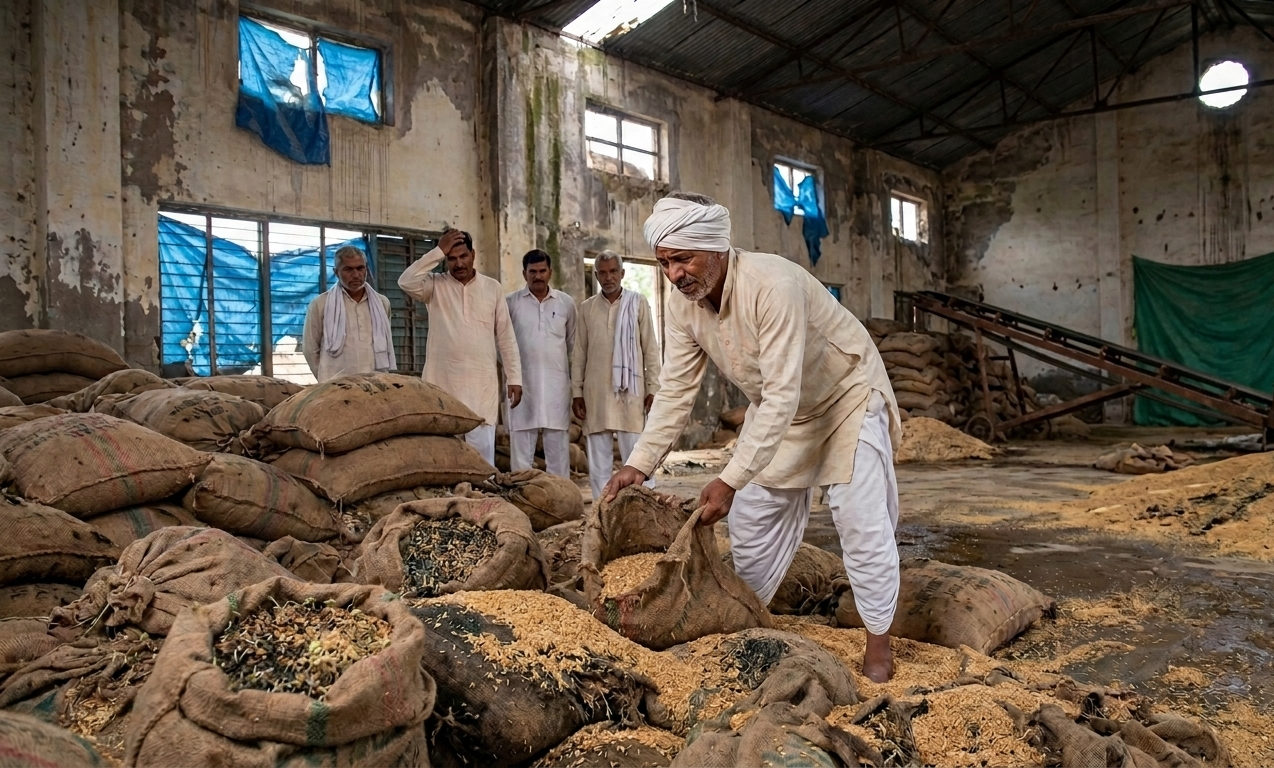
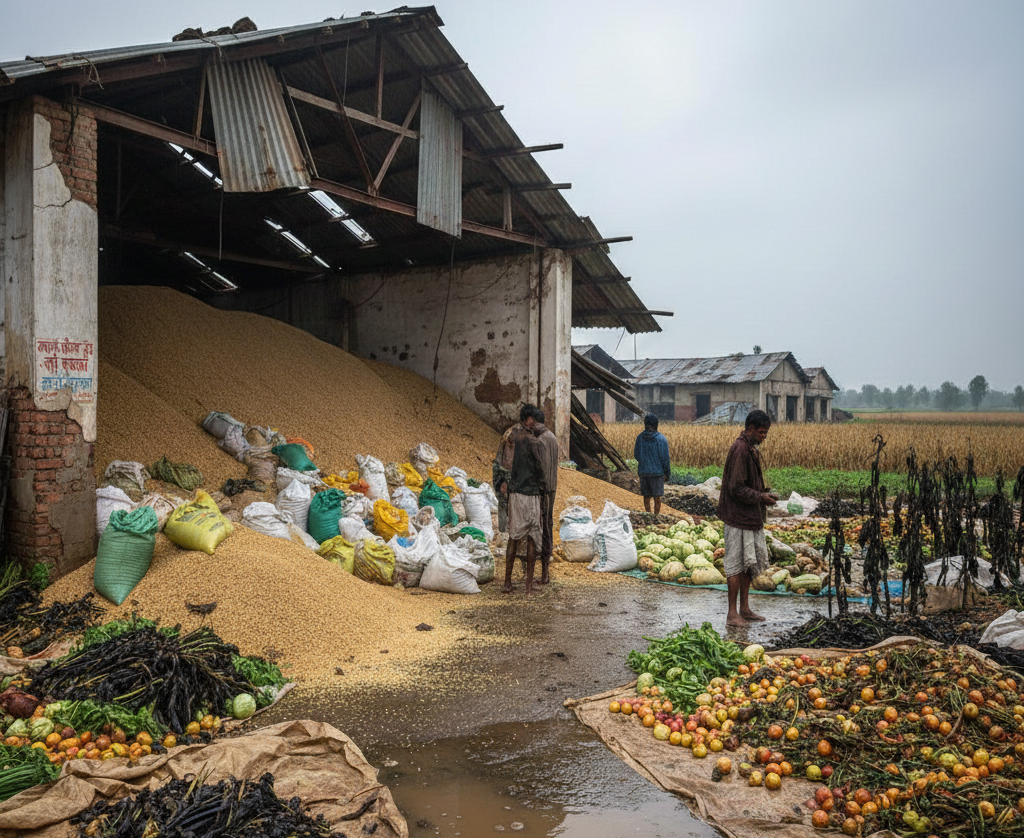
  • Inadequate Scientific Storage: One of the biggest contributors to crop loss is poor storage infrastructure. While India has expanded warehousing capacity over the years, a significant portion of produce, especially at the farmgate level, is still stored in temporary or unscientific conditions.
    Improper stacking, excess moisture, pest infestation, fungal growth, and lack of ventilation can reduce both the quantity and quality of stored grains. Even a small increase in moisture content can lead to aflatoxin contamination in pulses and oilseeds, rendering stock unfit for trade. For perishable commodities, the situation is even more difficult.
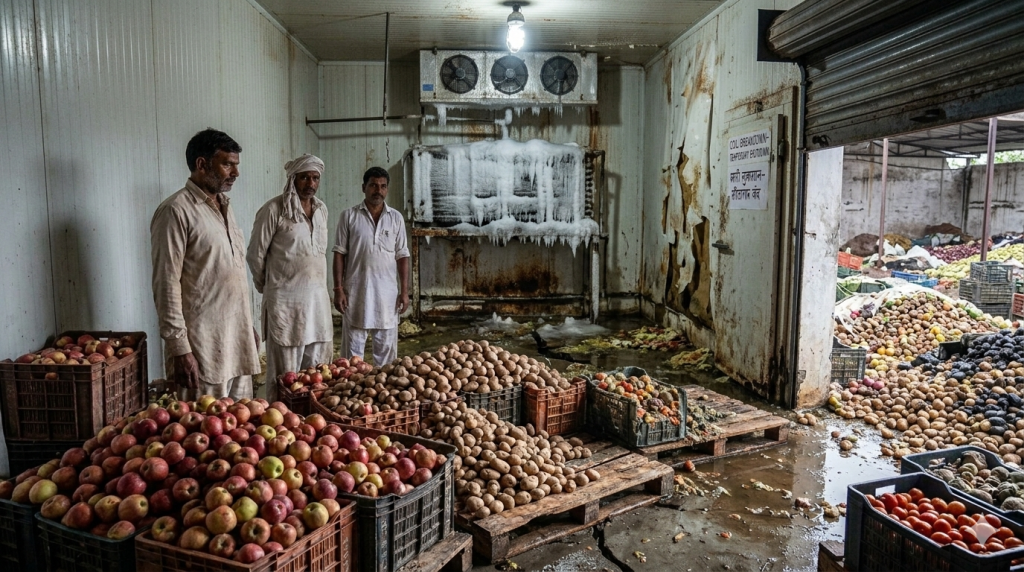
  • Gaps in cold chain infrastructure: India is one of the largest producers of fruits and vegetables globally, yet nearly a quarter of this output is wasted due to inadequate cold chain systems. While cold storage capacity has crossed millions of tonnes, it remains unevenly distributed and heavily concentrated in select states and commodities, such as potatoes.
    The absence of pre-cooling units, reefer transport, packhouses, and temperature-controlled logistics results in significant spoilage before produce even reaches mandis or processing units.

harvest

  • Fragmented supply chains and market volatility: Agricultural markets in India are highly seasonal. During peak harvest periods, sudden supply gluts cause prices to crash. Without access to storage or financing, farmers are often forced into distress sales.
    This leads to a paradox: bumper production on one hand and falling farm incomes on the other.
  • Limited access to finance post-harvest: Liquidity constraints play a major role in post-harvest losses. When farmers and traders lack working capital, they cannot afford to hold inventory, invest in better storage, or transport produce to distant markets that offer higher prices.
    As a result, produce is rushed into the market, often at suboptimal prices, increasing waste and reducing profitability.

How technology can prevent post-harvest losses

The solution to India’s post-harvest crisis lies at the intersection of infrastructure, technology, and finance.

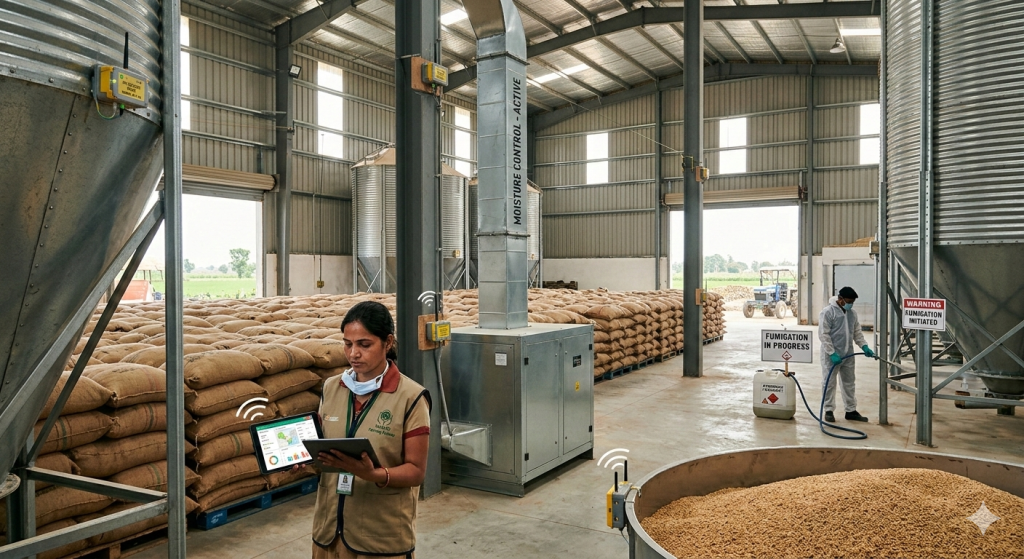
  • Scientific warehousing: Modern warehouses equipped with moisture control systems, scientific stacking protocols, aeration, and regular fumigation dramatically reduce storage losses. Digital warehouse management systems enable real-time stock monitoring, quality assessment, and traceability. Warehouse Receipt Systems (WRS) further strengthen this ecosystem by allowing stored commodities to be used as collateral for loans, thereby reducing the pressure to sell immediately.
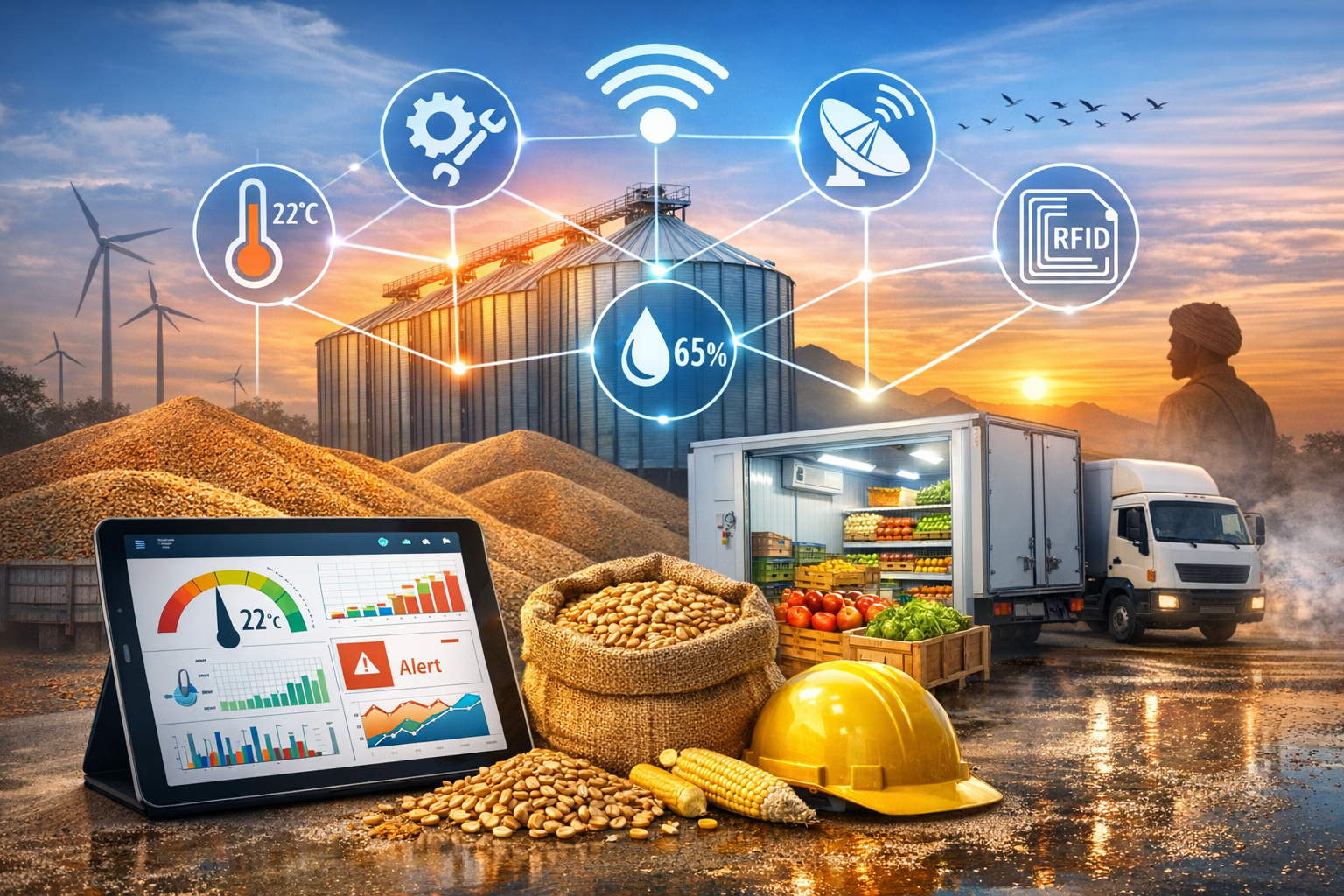
  • IoT and real-time monitoring: IoT-based sensors can monitor temperature, humidity, and gas levels inside storage facilities. Alerts triggered by deviations prevent spoilage before it becomes irreversible. Similarly, GPS-enabled transport tracking reduces transit delays, a major cause of deterioration in perishable commodities.
  • AI-driven demand forecasting: Artificial Intelligence tools now help predict price trends, demand cycles, and optimal selling windows. By aligning harvest timing with market conditions, farmers and aggregators can avoid distress sales and oversupply.
  • Integrated agri value chain platforms: Digitally connected ecosystems that combine storage, finance, risk management, and trade create resilience. When infrastructure and capital move in tandem, losses decline significantly.

How StarAgri strengthens India’s post-harvest ecosystem

Efficiently reducing post-harvest losses lies in scientific warehousing, and this is where StarAgri plays a transformative role.

  1. Scientific Warehousing: StarAgri operates and manages a widespread network of 2200+ professionally managed warehouses across 380+ locations in India. These facilities follow stringent quality control, stack management, fumigation, and inspection protocols to preserve commodity integrity.
    By providing secure, scientifically managed storage, StarAgri directly addresses one of India’s biggest loss points, improper warehousing.
  2. Collateral Management & Risk Mitigation: Through structured collateral management services, stored commodities are monitored, audited, and quality-assured. This reduces spoilage, pilferage, and financial risk for lenders and traders alike.
  3. Structured Trade Finance (STF): StarAgri’s Structured Trade Finance solutions unlock liquidity against warehoused, in-transit, and even imported goods. By ensuring access to timely working capital, the company prevents distress selling and enables better price realisation.
  4. Technology Integration: With digital stock tracking, audit systems, and integrated risk frameworks, StarAgri strengthens transparency across the agricultural supply chain, reducing inefficiencies that often lead to crop loss.

Conclusion

India’s agricultural production story is strong, but production alone does not guarantee prosperity. Unless post-harvest inefficiencies are addressed, farmers will continue to lose value even after a successful harvest.
Reducing losses by even 5–10% could save billions of rupees annually, improve farmer incomes, stabilise food prices, and strengthen national food security.

The path forward is clear: invest in scientific warehousing, embrace technology, integrate finance, and build resilient agri-infrastructure.

FAQs

  • What are post-harvest losses in agriculture?
    Post-harvest losses refer to the reduction in the quantity or quality of agricultural produce after harvest. These losses can occur during harvesting, handling, storage, transportation, processing, or marketing. In India, post-harvest losses affect crops like cereals, pulses, fruits, and vegetables, leading to reduced farmer incomes and food wastage.
  • How much agricultural produce is lost after harvest in India?
    A considerable share of India’s agricultural produce is lost after harvest due to gaps in storage, handling, and transportation. Perishable crops like fruits and vegetables are especially vulnerable to these losses.
  • What are the major causes of post-harvest crop losses in India?
    The main causes of post-harvest losses in India include lack of scientific warehousing, limited cold chain infrastructure, inefficient supply chains, poor handling practices, and limited access to post-harvest financing. These factors often force farmers to sell produce quickly or store it in unsuitable conditions.
  • How can technology reduce post-harvest losses in agriculture?
    Technology can significantly reduce post-harvest losses through solutions such as scientific warehousing, IoT-based monitoring systems for temperature and humidity, AI-driven demand forecasting, and digital platforms that connect farmers directly with buyers. These innovations improve storage conditions, logistics efficiency, and market access.
  • How does warehousing help reduce crop losses after harvest?
    Scientific warehousing helps maintain the quality and shelf life of agricultural commodities by controlling moisture, pests, and storage conditions. Modern warehouses also enable inventory monitoring and warehouse receipt financing, allowing farmers and traders to safely store produce and sell it when market prices are favourable.

Disclaimer

The content published on this blog is provided solely for informational and educational purposes and is not intended as professional or legal advice. While we strive to ensure the accuracy and reliability of the information presented, StarAgri make no representations or warranties of any kind, express or implied, about the completeness, accuracy, suitability, or availability with respect to the blog content or the information, products, services, or related graphics contained in the blog for any purpose. Any reliance you place on such information is therefore strictly at your own risk. Readers are encouraged to consult qualified agricultural experts, agronomists, or relevant professionals before making any decisions based on the information provided herein. StarAgri, its authors, contributors, and affiliates shall not be held liable for any loss or damage, including without limitation, indirect or consequential loss or damage, or any loss or damage whatsoever arising from reliance on information contained in this blog. Through this blog, you may be able to link to other websites that are not under the control of StarAgri. We have no control over the nature, content, and availability of those sites and inclusion of any links does not necessarily imply a recommendation or endorsement of the views expressed within them. We reserve the right to modify, update, or remove blog content at any time without prior notice.


India is among the world’s largest producers of agricultural commodities, with foodgrain production crossing 350 lakh MT in 2024-25, that is 7.65% increase from the previous year. Yet, storage inefficiencies continue to erode farmer income, disrupt supply chains, and impact national food security. As the country aims to modernise its agri-logistics ecosystem, strengthening storage infrastructure and adopting technology-led solutions has become critical.

What are the biggest agriculture storage challenges in India, and how are  StarAgri’s integrated technology and infrastructure solutions helping address them? Let’s find out.

agriculture loss

The scale of India’s agriculture storage challenge

Despite record production, India loses a significant share of its produce post-harvest due to inadequate storage and logistics. Estimates suggest:

  • India loses around 10% of its total foodgrain production post-harvest and over 30% of itsfruits and vegetables due to poor storage and handling.
  • Annual post-harvest losses amount to nearly ₹1.5 lakh crore, highlighting the economic cost of inefficiencies.
  • The country has 917.83 lakh metric tonnes of grain storage capacity and about 8,815 cold storage units with a total capacity of ~40 million tonnes, but distribution remains uneven and insufficient in many regions.
  • Even as government stocks are losing value, thousands of tonnes of grain have been damaged in recent years due to agriculture storage issues.

Biggest agriculture storage challenges in India

  • Inadequate and uneven storage infrastructure: Although storage capacity has grown, modern warehouses and cold chains are concentrated in select states and commodities. Many farmers still rely on traditional or open storage, which leads to moisture damage, pest infestations, and quality deterioration. This mismatch between production growth and storage infrastructure results in supply gluts during harvest seasons and distress selling by farmers.
  • High post-harvest losses: Losses occur across the value chain, from farm-level handling to storage and transportation. Cereals alone face losses of over 12 million tonnes, while horticulture losses exceed 49 million tonnes annually. Poor agriculture storage not only reduces available food but also impacts price realisation and export competitiveness.

  • Lack of scientific warehousing and quality monitoring: Traditional storage methods often lack temperature control, aeration, and quality testing. This leads to grain spoilage, contamination, and inconsistent quality, making it difficult for farmers and traders to access premium markets or financing.
  • Limited access to finance linked to storage: Farmers often sell produce immediately after harvest due to cash flow constraints. Without access to warehouse-receipt financing or collateral management systems, they cannot hold produce to benefit from better prices.
  • Fragmented supply chains and limited transparency: India’s agri-supply chain involves multiple intermediaries and limited digital tracking. This fragmentation reduces visibility on stock levels, quality, and movement, leading to inefficiencies and wastage.

StarAgri’s technology-led solutions for storage challenges

As one of India’s leading integrated agritech players, StarAgri combines physical infrastructure with digital tools to modernise agricultural storage and post-harvest management.

  • Scientific warehousing network: StarAgri operates 2,200+ warehouses across 400 locations, with a storage capacity of over 5 Mn metric tonnes. These facilities are designed for scientific storage with proper grading, fumigation, and monitoring, helping reduce spoilage and maintain quality. By providing reliable storage close to production centres, StarAgri enables farmers and agri-businesses to store produce safely and avoid distress sales.
  • Collateral management and warehouse receipt finance: StarAgri’s collateral management ecosystem supports warehouse-receipt-backed financing of over ₹1.5 lakh crore cumulatively, enabling farmers, traders, and processors to access working capital. This allows stakeholders to store produce and sell when market conditions are favourable, improving price realisation and liquidity.

agriculture storage

  • Digital inventory and supply-chain visibility: Through proprietary platforms like AgriGate and stocyard (across the UAE), StarAgri enables real-time monitoring of stock, quality, and movement across warehouses.

These technology tools help:

    • Improve transparency
    • Reduce pilferage and losses
    • Enable data-driven decision-making
  • Integrated marketplace and trade ecosystem: StarAgri’s digital marketplace, agribazaar, has facilitated the trade of over 12 million metric tonnes of commodities and connects more than 300,000 farmers to buyers. By integrating storage with digital trade and finance, StarAgri ensures that stored commodities can be monetised efficiently.
  • Data-driven decision making: With proprietary analytics, satellite-linked farm data, and credit models built on years of repayment data, StarAgri supports better storage planning, credit decisions, and risk management. This tech-enabled approach reduces risk for banks and improves access to finance for agri-stakeholders.

The road ahead

India’s agricultural growth story is increasingly dependent on how efficiently crops are stored, financed, and connected to markets. Reducing post-harvest losses and strengthening storage infrastructure could unlock billions in value for farmers and the economy.

Private sector participation, especially through integrated and technology-driven models, will be key to closing the storage gap. By combining scientific warehousing, digital platforms, and financing solutions, StarAgri is helping transform India’s post-harvest ecosystem, ensuring that harvests are not just produced but preserved, valued, and efficiently brought to market.

FAQs

  • What are the biggest agriculture storage challenges in India?
    India faces several storage challenges, including inadequate scientific warehousing, uneven distribution of storage infrastructure, high post-harvest losses, limited cold chain facilities, and restricted access to finance linked to stored commodities. These issues often force farmers to sell produce immediately after harvest, leading to lower price realisation.
  • How do storage issues impact farmers and agri-businesses?
    Poor storage leads to quality deterioration, pest infestation, and wastage, which reduces market value. Farmers often resort to distress selling due to a lack of storage and liquidity, while traders and processors face supply inconsistencies and higher operational risks.
  • How can technology improve agricultural storage in India?
    Technology enables real-time monitoring of inventory, quality tracking, digital warehouse receipts, and data-driven supply-chain decisions. Smart warehousing systems, sensors, and digital platforms improve transparency, reduce losses, and help stakeholders access better financing and markets.
  • What solutions does StarAgri offer for agri storage challenges?
    StarAgri provides integrated solutions, including scientific warehousing, collateral management, warehouse-receipt-based financing, digital inventory tracking, and an online commodity marketplace through Agribazaar. These solutions help reduce post-harvest losses and improve access to credit and markets.
  • Why is scientific warehousing important for India’s agri supply chain?
    Scientific warehousing ensures proper storage conditions, quality preservation, and traceability. It helps reduce wastage, stabilise supply, and enables farmers and traders to store produce safely and sell at favourable market prices, strengthening the overall agricultural value chain.

Disclaimer

The content published on this blog is provided solely for informational and educational purposes and is not intended as professional or legal advice. While we strive to ensure the accuracy and reliability of the information presented, StarAgri make no representations or warranties of any kind, express or implied, about the completeness, accuracy, suitability, or availability with respect to the blog content or the information, products, services, or related graphics contained in the blog for any purpose. Any reliance you place on such information is therefore strictly at your own risk. Readers are encouraged to consult qualified agricultural experts, agronomists, or relevant professionals before making any decisions based on the information provided herein. StarAgri, its authors, contributors, and affiliates shall not be held liable for any loss or damage, including without limitation, indirect or consequential loss or damage, or any loss or damage whatsoever arising from reliance on information contained in this blog. Through this blog, you may be able to link to other websites that are not under the control of StarAgri. We have no control over the nature, content, and availability of those sites and inclusion of any links does not necessarily imply a recommendation or endorsement of the views expressed within them. We reserve the right to modify, update, or remove blog content at any time without prior notice.


“India smart warehousing market is projected to witness a CAGR of 14.65% during the forecast period FY2025-FY2032, growing from USD 2.21 billion in FY2024 to USD 6.60 billion in FY2032.” – according to Markets & Data.

India’s agricultural storage ecosystem is entering a phase of meaningful transformation. While challenges such as post-harvest losses, inconsistent storage conditions, and limited real-time visibility have long impacted crop quality and farmer incomes, technology is steadily changing this narrative. The adoption of Internet of Things (IoT) solutions is enabling storage facilities to become smarter, more responsive, and far more reliable. By bringing real-time data, automation, and predictive insights into warehouses and cold storage units, IoT is helping India move closer to a more resilient, efficient, and future-ready agri storage infrastructure.

But how is IoT reshaping agri storage facilities in India? Let’s understand the key applications, measurable benefits, and how businesses like StarAgri are leveraging this technology to build future-ready storage solutions.

storage facilities

The IoT revolution in agricultural storage

The Internet of Things refers to networks of smart sensors and devices that collect, transmit, and analyse data in real time. Within agricultural storage, whether grain warehouses, cold storage units, or controlled environment facilities, IoT enables continuous environmental tracking, automated alerts, predictive decision-making, and workflow optimisation.
IoT’s integration into agri storage is no longer futuristic. It’s already yielding value. The India IoT-based cold chain management market was valued at approximately USD 220.45 million in 2024 and is projected to grow robustly through 2033, indicating strong adoption of smart technologies across storage and logistics operations.

Core applications of IoT in agri storage

  • Real-time environmental monitoring: IoT sensors installed across storage facilities continuously capture critical parameters, including temperature, humidity, gas composition, ventilation, and moisture. For example:
    • A spike in humidity in a grain warehouse may indicate the potential for mould formation.
    • Rising gas concentrations could signal early spoilage behaviour in stored produce.

These parameters are streamed to dashboards and mobile apps, allowing managers to visualise conditions and intervene proactively. Such real-time insights significantly reduce the reliance on periodic manual checks and human error.

  • Automated & immediate alerts: Connected IoT systems can be configured to trigger alerts via SMS, email, or app notifications when conditions deviate from specified thresholds. For instance, if a cold storage unit’s temperature exceeds a set limit, automated alerts trigger immediate corrective action, minimising quality degradation.
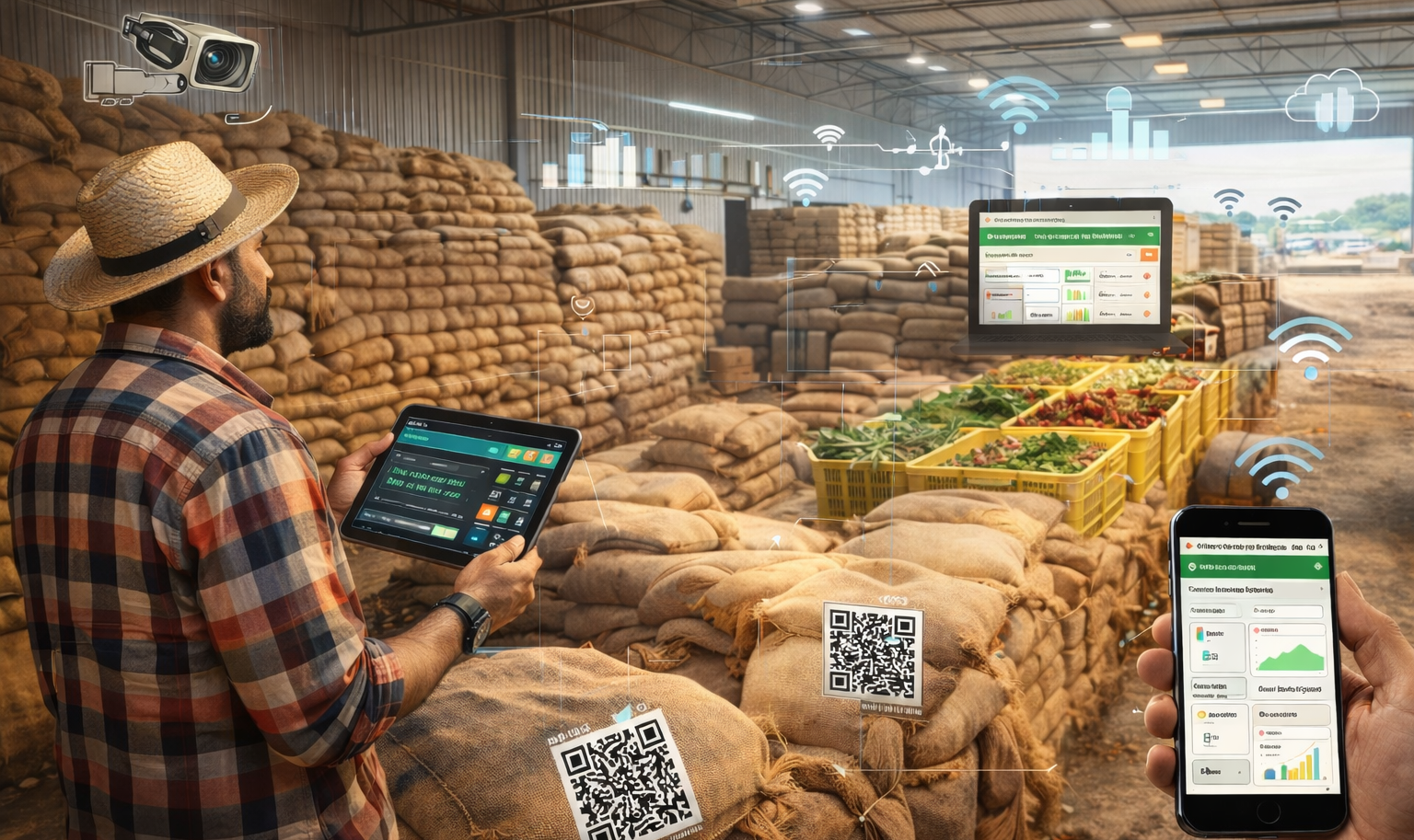
  • Digital inventory & traceability: Integrating IoT with tools such as RFID tagging, QR codes, and smart cameras facilitates accurate inventory tracking. Digitised records enhance traceability, minimise theft or misplacement, and improve accountability throughout the storage lifecycle.

rfid tagging

  • Predictive maintenance & efficiency: Beyond environmental factors, IoT can monitor the performance of infrastructure and machinery such as refrigeration units, motors, and ventilation systems. Sensor data fuels predictive analytics, enabling the anticipation of component failures before they occur, thereby reducing downtime and maintenance costs.
  • Energy optimisation & sustainability: Smart IoT systems can optimise energy usage by adjusting lighting, cooling, and ventilation based on actual usage patterns and environmental conditions. This not only reduces operational costs but also supports sustainability by lowering carbon footprints.

Industry impact

India’s agricultural sector loses a significant percentage of its produce due to post-harvest inefficiencies. Smart storage technologies are key to mitigating these losses. Real-time data and predictive analytics not only protect stored value but also empower stakeholders with insights for better planning and risk management.

  • Traditional warehousing inefficiencies contribute to post-harvest losses estimated at over ₹1.5 lakh crore annually (≈ ₹1.53 trillion).
  • IoT-enabled temperature and humidity monitoring in cold chains has been shown to reduce spoilage by up to 35% in pilot programs.

IoT in cold chain infrastructure

India’s cold chain, encompassing cold storage facilities, refrigerated transport, and controlled-environment warehouses, is expanding rapidly. As of mid-2025, the country reported approximately 8,815 cold storage facilities with a combined capacity of about 40.2 million tonnes, highlighting both progress and persistent infrastructure challenges.

IoT plays an increasingly vital role in making cold chain networks more resilient and intelligent. Continuous monitoring ensures that perishable goods such as fruits, vegetables, dairy, and pharmaceuticals remain within optimal conditions throughout their storage lifecycle, contributing to higher quality, reduced waste, and improved marketability.

StarAgri: Driving smart storage with IoT

At StarAgri, we are committed to modernising agricultural storage through technology-led, data-driven solutions that empower farmers and supply chain stakeholders.

Key IoT-enabled services and offerings include:

  • Real-time remote monitoring: Our warehouses are equipped with IoT sensors that capture environmental data, including temperature, humidity, and ventilation, around the clock, ensuring optimal conditions for grains, pulses, and perishables.
  • Connected warehousing network: With a pan-India presence of over 2,200 warehouses in 350+ locations, we deliver consistent quality and transparency across locations.
  • Collateral management services: By integrating tech insights with physical storage, we support structured trade finance against stored commodities, unlocking working capital for farmers when they need it most.
  • Data-driven decision support: AI-generated data enables informed decision-making, helping stakeholders reduce spoilage, optimise storage costs, and achieve better price realisation.

Conclusion: Future of Indian agri storage

IoT is catalysing a shift in how agricultural storage facilities operate, from reactive, manual operations to predictive, automated, and efficient ones. As the Indian agri ecosystem embraces smart storage technologies, the potential to reduce post-harvest losses, improve food quality, and enhance farmer incomes becomes increasingly attainable.
With continued investment in IoT, data analytics, and connected infrastructure, agri storage facilities are set to become high-performance assets in India’s agricultural value chain, supporting sustainability, resilience, and profitability for all stakeholders.

FAQs

  • How is IoT used in agri storage facilities in India?
    IoT is used in agri storage facilities to monitor temperature, humidity, moisture levels, and gas composition in real time. Sensors and connected devices provide continuous data, enabling storage operators to take timely action to maintain optimal conditions and reduce spoilage.
  • What are the key benefits of IoT in agricultural warehousing?
    IoT improves storage efficiency by reducing post-harvest losses, enabling real-time alerts, enhancing traceability, optimising energy usage, and supporting predictive maintenance of equipment in warehouses and cold storage units.
  • Can IoT help reduce post-harvest losses in India?
    Yes, IoT plays a critical role in reducing post-harvest losses by identifying risks early, maintaining consistent storage conditions, and enabling proactive interventions that prevent spoilage, pest infestation, and quality degradation.
  • How does IoT support cold storage operations in India?
    In cold storage facilities, IoT ensures precise control over temperature and humidity, tracks equipment performance, and provides instant alerts during deviations. This helps preserve the quality of perishable commodities and improves cold chain reliability.
  • How is StarAgri using IoT in its storage and warehousing services?
    StarAgri integrates IoT-based monitoring systems across its warehousing network to enable real-time visibility, remote monitoring, and data-driven decision-making. These capabilities support efficient storage management, quality assurance, and trade-linked financial services.

Disclaimer

The content published on this blog is provided solely for informational and educational purposes and is not intended as professional or legal advice. While we strive to ensure the accuracy and reliability of the information presented, StarAgri make no representations or warranties of any kind, express or implied, about the completeness, accuracy, suitability, or availability with respect to the blog content or the information, products, services, or related graphics contained in the blog for any purpose. Any reliance you place on such information is therefore strictly at your own risk. Readers are encouraged to consult qualified agricultural experts, agronomists, or relevant professionals before making any decisions based on the information provided herein. StarAgri, its authors, contributors, and affiliates shall not be held liable for any loss or damage, including without limitation, indirect or consequential loss or damage, or any loss or damage whatsoever arising from reliance on information contained in this blog. Through this blog, you may be able to link to other websites that are not under the control of StarAgri. We have no control over the nature, content, and availability of those sites and inclusion of any links does not necessarily imply a recommendation or endorsement of the views expressed within them. We reserve the right to modify, update, or remove blog content at any time without prior notice.


India’s agricultural story doesn’t end at the farm gate, but often hinges on what happens after the harvest. While farmers work tirelessly to grow quality produce, outdated storage systems, limited access to finance, and fragmented supply chains have historically eroded its true value.

“The Indian warehousing market is predicted to reach US$ 34.99 billion (Rs. 2,872.10 billion), expanding at a CAGR of 15.64% from 2022 to 2027.”

Today, that narrative is changing! As agritech innovations move beyond seeds and soil, they are reshaping India’s agri-warehousing landscape, turning warehouses into smart, data-driven hubs that protect crops, unlock liquidity, and connect farmers more efficiently to markets. This shift is not just modernising storage; it is redefining how agricultural value is preserved and realised across India.

warehousin industry

Let’s explore the top five ways agritech is revolutionising the Indian agri-warehousing industry in 2025.

  • Digital warehousing platforms & real-time visibility: Traditional warehousing in India has often been plagued by fragmentation, limited transparency, and inefficient utilisation of storage capacity, resulting in significant post-harvest losses estimated at around ₹1.5 lakh crore annually.

Emerging agritech platforms now offer digital warehousing networks that standardise operations across regions and provide real-time visibility into stock levels, environmental parameters, lease conditions, and accreditation status. These platforms aggregate data across hundreds or thousands of facilities, enabling stakeholders to discover, book, and manage storage digitally, effectively turning warehouses into integrated nodes in a tech-enabled supply chain.

Innovative digital tools also ensure compliance with industry standards and enable remote monitoring via dashboards or mobile apps, drastically reducing information asymmetry and inefficiencies.

  • IoT, sensor integration & predictive analytics: The Internet of Things (IoT) has become central to modern agricultural warehousing. Sensors deployed within storage facilities continuously monitor temperature, humidity, gas composition, and pest activity, ensuring ideal conditions for a wide range of commodities like grains, pulses, and oilseeds.

Coupled with predictive analytics and machine learning, these technologies can forecast spoilage risks, detect anomalies early, and optimise warehouse operations. Predictive models are particularly powerful during the highly volatile post-harvest period, helping operators anticipate storage demand, adjust inventory allocation, and dynamically control environments, reducing losses and improving quality.

  • AI-powered quality assessment & automation: Artificial intelligence (AI) is increasingly transforming agri supply chains. The broader agritech market in India is projected to grow from around $900 million in 2025 to $5.6 billion by 2030, with AI-led solutions expanding at a staggering 44% CAGR, outpacing the broader agritech sector.

Within warehousing, AI-based quality assessment tools can instantly evaluate the condition of stored produce using image recognition and sensor data, enabling rapid decision-making. Automated sorting, grading, and robotic movement further streamline operations and reduce dependency on manual labour. These advancements help warehouses maintain consistent quality, reduce human error, and ensure better price realisation for farmers.

  • Blockchain & transparent record-keeping: Blockchain technology is improving traceability and trust across the agri supply chain. By recording every transaction, inspection, and movement of produce in an immutable ledger, stakeholders can securely verify quality parameters, ownership history, and compliance credentials. This is especially valuable for export markets and premium buyers, who demand transparent proof of origin and quality.

Blockchain-linked warehouse receipts can also be used more reliably for financing, enabling farmers and traders to access credit against transparent, trustworthy digital records.

  • Collateral management & finance integration: Perhaps one of the most impactful agritech innovations in warehousing is the integration of collateral management and agri-fintech services. Warehouses are no longer just storage assets; they are gateways to structured credit for farmers and agri-businesses.

Tech-driven collateral management systems allow produce stored in certified facilities to be pledged as collateral for loans. Digitally issued warehouse receipts backed by verified storage data reduce risk for lenders and open up access to working capital at competitive rates. This convergence of warehousing and financial services is critical in a country where liquidity constraints often force farmers to sell produce at low prices due to cash flow pressures.

warehouse automation

Industry Context: India’s Warehousing Evolution

The holistic transformation of the warehousing landscape in India is supported by broader macro trends:

  • The warehousing sector in India is growing rapidly, with estimates suggesting the overall logistics infrastructure market could reach $35 billion by 2027, driven by digital adoption and policy reforms.
  • Industrial and warehousing leasing hit record levels in 2025, absorbing 36.9 million sq ft across major Indian cities, reflecting strong demand for advanced logistics space.
  • With government policies such as the PM Gati Shakti initiative and the National Logistics Policy, investments in multimodal connectivity and modern storage ecosystems are gaining traction.

These trends create an enabling environment for agritech to flourish and to improve the robustness of the agricultural supply chain.

StarAgri: Powering Tech-Enabled Agri-Warehousing

At the forefront of this tech-enabled transformation is StarAgri — India’s largest integrated agritech company offering a suite of solutions that bridge physical infrastructure with digital intelligence:

  • Scientific warehousing network: With over 2,200 scientific warehouses across India, StarAgri provides secure, compliant storage solutions tailored for crops of diverse profiles.
  • Collateral management services: StarAgri enables farmers and agribusinesses to unlock working capital by using stored produce as collateral, coordinated with top financial institutions nationwide.
  • Digital supply chain tools: Platforms like agribazaar and Agriwise Finserv streamline pre-harvest solutions, agri trading, agri finance, working capital, and much more, making warehousing and commodity financing more transparent and efficient.
  • Advanced monitoring & IoT integration: Real-time tracking and remote sensing technologies minimise spoilage risks and optimise storage conditions across the network.
  • Value-added Services: With offerings like commodity testing (Star Labs) and geo-tagged analytics via AgriBhumi, StarAgri empowers stakeholders with insights for better decision-making.

staragri warehousing

Conclusion

Agritech is redefining how India handles agricultural warehousing, from siloed storage facilities to data-driven, interconnected ecosystems that enhance quality, transparency, and financial inclusion. By integrating digital platforms, IoT, AI, blockchain, and fintech, the sector is transforming the agricultural value chain and empowering farmers to capture higher value for their produce.

As 2026 unfolds, these innovations are not just future possibilities. They are shaping the present of Indian agri-warehousing, offering scalable, resilient, and inclusive solutions that will underpin India’s agrarian success in the years to come.

FAQs

  1. What is the role of agritech in modern Indian warehouses?
    Agritech integrates technologies like IoT, AI, blockchain, and digital platforms into warehouses, enabling better inventory management, real-time monitoring, quality assessment, and streamlined supply chains. It reduces post-harvest losses and increases efficiency for farmers and agribusinesses.
  2. How does blockchain improve transparency in agri warehousing?
    Blockchain provides an immutable, tamper-proof record of all warehouse transactions, including storage, ownership, and quality checks. This enhances trust among farmers, traders, and financial institutions, while facilitating access to loans and credit using warehouse receipts as collateral.
  3. Can agritech help farmers access credit through warehousing?
    Yes. Tech-enabled collateral management systems allow farmers to pledge produce stored in certified warehouses as collateral. Digital warehouse receipts backed by verified data make it easier for lenders to offer working capital and other financial solutions at competitive rates.
  4. What emerging technologies are transforming agri-warehouses?
    Key technologies include IoT sensors for temperature and humidity monitoring, AI for quality assessment and predictive analytics, automated sorting and robotics, and blockchain for transparent record-keeping.
  5. How is StarAgri leveraging agritech in its warehousing operations?
    StarAgri combines scientific warehousing, IoT-enabled monitoring, digital platforms, and collateral management services to create a seamless and secure storage ecosystem. With over 2,200 warehouses across India, StarAgri ensures quality preservation, transparency, and easy access to financing for farmers and agri-businesses.

Disclaimer

The content published on this blog is provided solely for informational and educational purposes and is not intended as professional or legal advice. While we strive to ensure the accuracy and reliability of the information presented, StarAgri make no representations or warranties of any kind, express or implied, about the completeness, accuracy, suitability, or availability with respect to the blog content or the information, products, services, or related graphics contained in the blog for any purpose. Any reliance you place on such information is therefore strictly at your own risk. Readers are encouraged to consult qualified agricultural experts, agronomists, or relevant professionals before making any decisions based on the information provided herein. StarAgri, its authors, contributors, and affiliates shall not be held liable for any loss or damage, including without limitation, indirect or consequential loss or damage, or any loss or damage whatsoever arising from reliance on information contained in this blog. Through this blog, you may be able to link to other websites that are not under the control of StarAgri. We have no control over the nature, content, and availability of those sites and inclusion of any links does not necessarily imply a recommendation or endorsement of the views expressed within them. We reserve the right to modify, update, or remove blog content at any time without prior notice.


India’s next phase of agricultural growth will not be driven solely by higher acreage or yields. It will be shaped by how efficiently crops are stored, moved, financed, and connected to markets. As food supply chains become more time-sensitive and quality-driven, strengthening agri infrastructure emerges as a national priority, one that demands deeper participation from private players with the ability to build, operate, and scale modern solutions.

The scale of the gap

Every year, India loses a substantial portion of its produce between farm and fork. Recent government-linked studies and sector analyses estimate post-harvest losses running into tens of millions of tonnes annually, a drain on farmer incomes and national food security.

Cold storage and cold-chain capacity have expanded rapidly but remain unevenly distributed, often focused on a few states and commodities. As of June 30, 2025, India reported around 8,815 cold storage facilities with a combined capacity of about 40.2 million tonnes, signalling both progress and the size of the logistics challenge ahead.

At the same time, modern warehousing demand is surging: leasing in India’s industrial and warehousing market rose sharply in H1-2025 (record activity and 63% YoY growth), reflecting stronger demand from 3PLs, e-commerce, and food distribution partners, all of which require reliable agri logistics and storage.

cold storage

Role of private players in establishing agri infrastructure

  • Speed and scale of capital deployment: Private firms can mobilise equity and project finance to build modern warehouses, packhouses and cold-chain assets faster than many public programs, meeting demand in high-growth corridors.
  • Technology and operations expertise: Many private operators bring inventory management systems, IoT temperature monitoring, and integrated last-mile logistics that dramatically reduce spoilage and improve traceability.
  • Market-linked pricing and incentives: Private infrastructure enables warehouse receipts, collateralisation and market-linked financings that can convert stored produce into working capital for farmers and traders.
  • Integration with value-add services: Private players can offer sorting, grading, minimal processing and linkages to processors and exporters — creating more remunerative market outcomes for growers.

Economic upside for the country

The cold-chain and warehousing segments are predicted to be among the fastest-growing parts of the logistics ecosystem. Industry estimates show India’s cold-chain market was already large (over INR 2287.5 Billion in 2024 figures) and poised for further expansion to  INR 6061.7 Billion by 2033 at a CAGR of 10.86% (2025-2033) as food processing and fresh exports scale up. Similarly, Grade-A warehousing stock in India was on track to exceed 300 million sq ft by 2025, indicating rising professionalisation of storage capacity.

Investing in private agri infrastructure therefore multiplies benefits:

  • Lower post-harvest losses
  • Higher availability of quality produce for processors
  • Improved export readiness
  • Better farm credit against stored commodities.

agri infra

Policy enablers: Public + Private partnership

The public sector has invested in schemes and subsidies for cold chains, but gaps remain in last-mile, smallholder-friendly storage and integrated logistics. A pragmatic path is stronger PPPs and enabling regulations for warehouse receipts, transparent grading standards, tax incentives for green cold chains and streamlined land/clearances for agri-warehouses. Private operators, working alongside state programs, can deploy commercially sustainable models while public policy ensures equitable access for farmers.

StarAgri services supporting agri infrastructure growth

StarAgri offers an integrated set of services that directly complements private agri infrastructure expansion:

  • Pre-harvest intelligence: Satellite-verified land intelligence that geo-tags farms, captures crop history, acreage, and crop patterns, and supports better planning, risk assessment, and credit decision-making even before harvest.
  • Warehousing & Collateral Management: End-to-end warehouse onboarding, inspection, activation, and periodic revalidation to ensure safe, compliant, and transparent storage of agricultural commodities. Through collateral management, StarAgri helps customers to have access to easy credit options.
  • Integrated Logistics Support: Facilitates efficient movement of commodities across the supply chain—from farm gates and mandis to warehouses, processors, and export destinations.
  • Quality Testing through Star Labs: Scientific assaying and quality testing services that ensure standardisation, price discovery, and trust in commodity transactions.
  • Value-Added Services: Grading, sorting, and other services that improve commodity quality, consistency, and market readiness.

staragri warehouse

Conclusion

India’s agricultural growth story will increasingly be defined by the strength of its agri infrastructure, from pre-harvest intelligence and quality assurance to storage, logistics, and market linkage. Greater participation from private players can bridge long-standing gaps in efficiency, transparency, and scalability across the value chain. With its integrated ecosystem spanning agritech solutions, warehousing and collateral management, logistics, and Star Labs, StarAgri is playing a critical role in building future-ready agri infrastructure that supports farmers, strengthens trade, and accelerates the formalisation of India’s agricultural economy.

FAQs

  • What is meant by ‘agri infrastructure’?
    It includes physical and digital assets that support agriculture, such as warehouses, cold storages, packhouses, processing units, transport links, and systems like warehouse receipt platforms and inventory software.
  • How do private players reduce post-harvest losses?
    By providing temperature-controlled storage, faster handling, better grading/sorting, and traceable logistics that reduce spoilage and quality downgrades.
  • Will more private infrastructure hurt small farmers?
    Properly structured, private infrastructure increases market access and provides options (paid storage, market linkages, credit against inventory). Policy design and inclusive business models are important to ensure smallholder benefits.
  • How can farmers access finance using warehoused produce?
    Through warehouse receipt financing and structured trade finance, farmers or aggregators can pledge stored produce as collateral to obtain short-term working capital, a service StarAgri provides.
  • What role should the government play?
    The government should enable PPPs, provide targeted incentives for hinterland cold-chain and smallholder-friendly warehouses, and ensure standards and frameworks (grading, receipts) that build trust in private supply chains.

Disclaimer

The content published on this blog is provided solely for informational and educational purposes and is not intended as professional or legal advice. While we strive to ensure the accuracy and reliability of the information presented, StarAgri make no representations or warranties of any kind, express or implied, about the completeness, accuracy, suitability, or availability with respect to the blog content or the information, products, services, or related graphics contained in the blog for any purpose. Any reliance you place on such information is therefore strictly at your own risk. Readers are encouraged to consult qualified agricultural experts, agronomists, or relevant professionals before making any decisions based on the information provided herein. StarAgri, its authors, contributors, and affiliates shall not be held liable for any loss or damage, including without limitation, indirect or consequential loss or damage, or any loss or damage whatsoever arising from reliance on information contained in this blog. Through this blog, you may be able to link to other websites that are not under the control of StarAgri. We have no control over the nature, content, and availability of those sites and inclusion of any links does not necessarily imply a recommendation or endorsement of the views expressed within them. We reserve the right to modify, update, or remove blog content at any time without prior notice.