


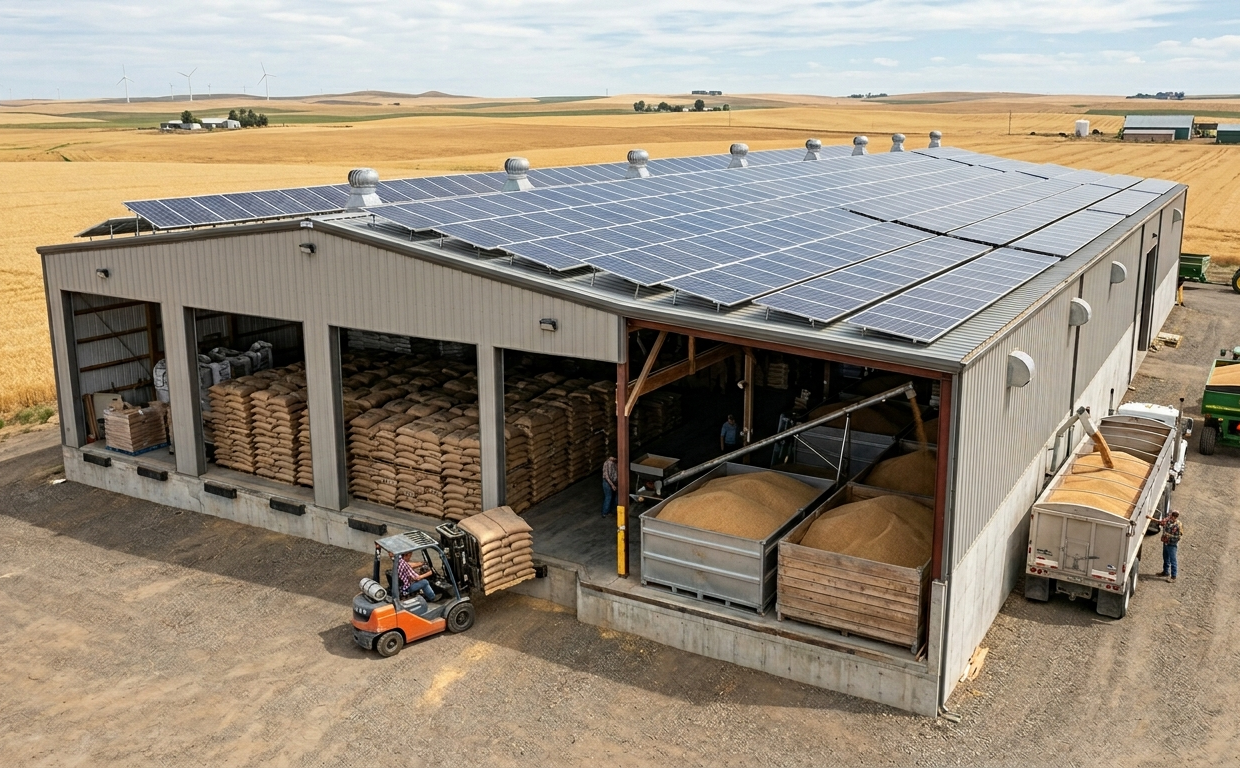
India’s agricultural sector faces a paradox: record production on one hand, and significant post-harvest losses on the other. According to multiple industry estimates, inadequate storage and cold-chain infrastructure continue to result in substantial annual economic losses. As climate pressures intensify and energy costs rise, solar-powered agriculture warehousing is emerging as a transformative solution, combining sustainability with efficiency.
The Growing Need for Modern Warehousing
India’s cold storage ecosystem, while expanding, still struggles with capacity gaps and outdated infrastructure. The sector is capital-intensive and often requires long gestation periods, with break-even timelines extending beyond five years. At the same time, renewable energy adoption is accelerating rapidly. According to IRENA 2026, India ranks 3rd globally in renewable energy capacity, with solar energy witnessing particularly strong growth.
This intersection of energy transition and post-harvest management is creating a compelling case for solar-powered warehousing.
Why Solar-Powered Warehousing Matters
Traditional warehouses and cold storage facilities rely heavily on grid electricity or diesel generators, leading to high operational costs and carbon emissions. Solar-powered systems address both challenges:
- Reduced energy costs: Solar energy lowers long-term operating expenses, especially in energy-intensive cold storage facilities.
- Improved shelf life: Consistent temperature control ensures reduced spoilage of perishables.
- Decentralised infrastructure: Solar-powered units can be deployed closer to farm-gate locations.
- Sustainability compliance: Increasingly important for export markets and ESG-driven financing.
For perishable commodities like fruits, vegetables, and dairy, even minor improvements in storage conditions can significantly enhance shelf life and market realisation.
StarAgri’s Role in Building Smart Warehousing
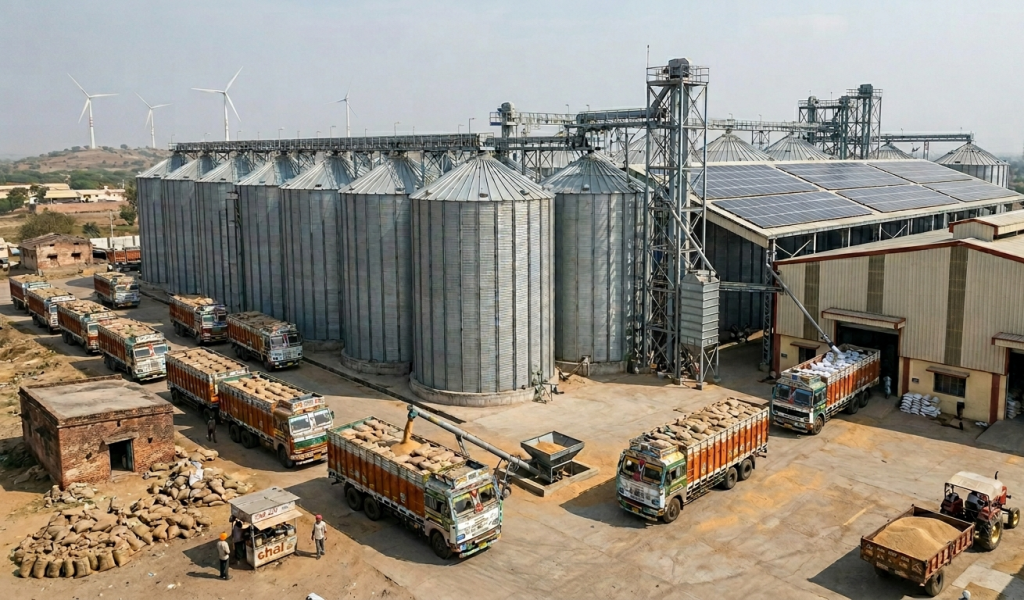
StarAgri has pioneered the modernising India’s agricultural infrastructure. With a network of over 2,200 warehouses across 19 Indian states at 380+ locations and a storage capacity exceeding 5 MMT, the company plays a critical role in bridging post-harvest gaps. StarAgri’s approach goes beyond traditional warehousing:
- Integrated warehousing solutions with quality testing and collateral management
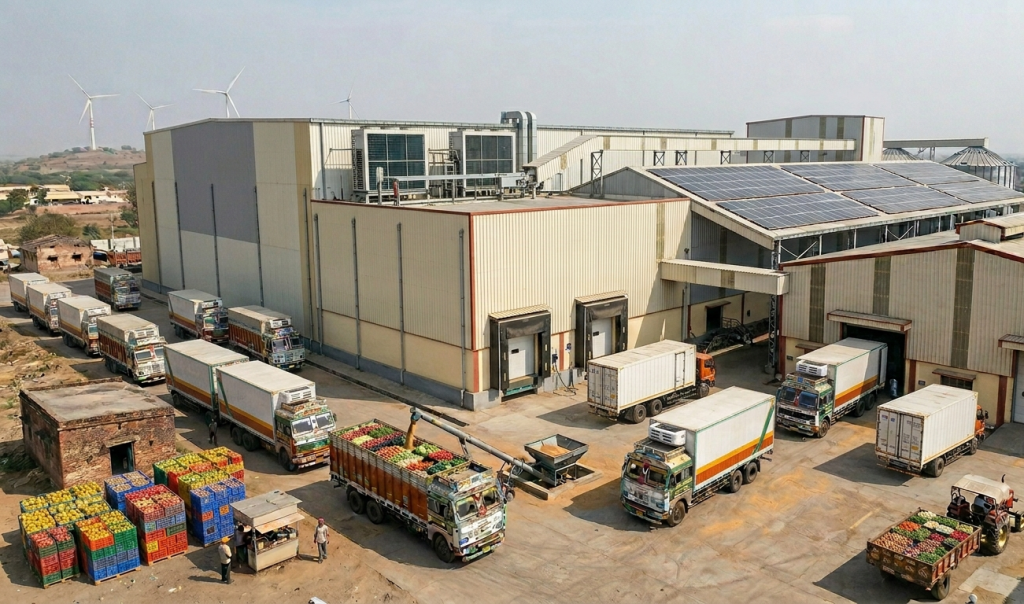
- Cold storage infrastructure supporting perishable commodities
- Technology-enabled monitoring for inventory and quality
- Financing integration through its NBFC arm, enabling warehouse receipt financing
By integrating renewable energy into these systems, StarAgri can further enhance efficiency and sustainability across its network.
Solar + Warehousing: A Strategic Advantage
The adoption of solar-powered systems in warehouses enables a dual-value proposition:
- Operational efficiency: Lower energy costs directly improve warehouse profitability
- Farmer benefit: Reduced storage costs and better price realisation
Additionally, solar-powered agriculture cold storages can operate reliably even in regions with inconsistent grid supply, making them particularly valuable in rural India.
Policy Support Driving Adoption
Government initiatives are also accelerating the shift toward modern infrastructure:
- The Agriculture Infrastructure Fund (AIF) has sanctioned over ₹56,000 crore for projects, mobilising nearly ₹92,000 crore in investments and generating large-scale rural employment.
- Subsidies under schemes like PM Kisan Sampada Yojana support cold-chain development
Such policy backing creates a strong foundation for integrating renewable energy into agri-infrastructure.
The Road Ahead
As India moves toward a more resilient agricultural ecosystem, solar-powered agriculture warehousing is strategic. It aligns with three critical priorities:
- Reducing post-harvest losses
- Enhancing farmer incomes
- Supporting India’s renewable energy goals
For StarAgri, this presents an opportunity to lead the next phase of agri-infrastructure transformation where technology, sustainability, and finance converge.
FAQs
- What is solar-powered agriculture warehousing?
Solar-powered warehousing integrates renewable energy systems with storage infrastructure to reduce energy costs and improve efficiency, especially in cold storage operations. - How does solar energy enhance the shelf life of agricultural commodities?
It ensures consistent temperature control, reducing spoilage and preserving the quality of perishable goods like fruits, vegetables, and dairy. - Why is solar warehousing important for India’s agri sector?
It addresses high energy costs, reduces post-harvest losses, and supports sustainable farming and supply chain practices. - What role does StarAgri play in this space?
StarAgri provides integrated warehousing, cold storage, and collateral management solutions, and is well-positioned to adopt solar-powered infrastructure at scale. - What are the long-term benefits of solar-powered warehousing?
Lower operational costs, improved farmer realization, reduced carbon footprint, and alignment with ESG and export requirements.
