


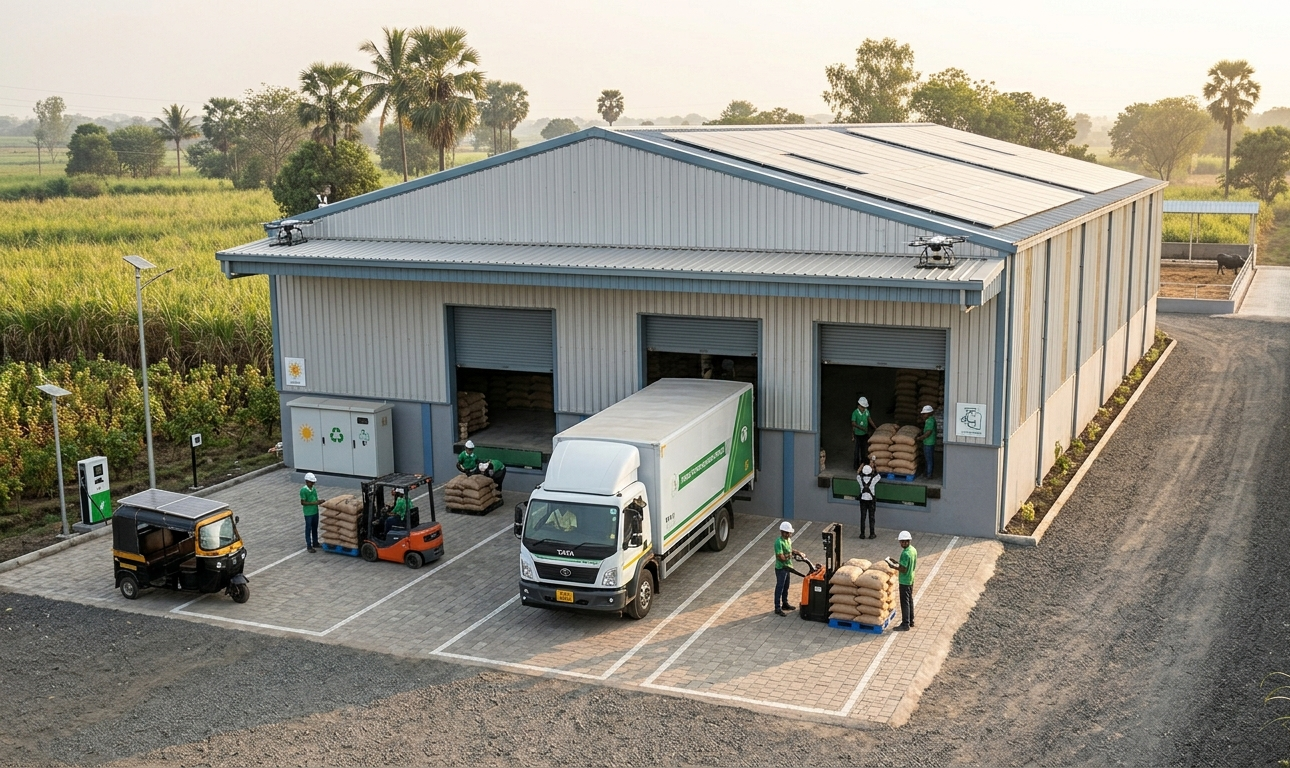
When people talk about agricultural revolutions, the focus usually begins at the farm.
Better seeds. Smarter irrigation. Precision farming. AI-powered crop advisory. Higher yields.
But what if the next breakthrough in Indian agriculture doesn’t happen before harvest at all? What if it happens after it?
While India has significantly improved agricultural production over the years, the real challenge often begins once the crop leaves the farm.
Storage gaps, fragmented logistics, quality losses, financing delays, inefficient movement, and poor market visibility continue to impact the agricultural ecosystem long after harvesting is complete. And in many ways, this is where the next phase of agricultural transformation may quietly be taking shape.
India produces at scale. But efficiency still remains the bigger challenge.
India’s agricultural output continues to grow rapidly. The country recorded foodgrain production of nearly 357 million tonnes in 2024–25, one of the highest levels ever achieved. But production alone does not guarantee efficiency.
A large part of India’s agricultural value chain still operates through fragmented post-harvest systems. Commodities often move across disconnected networks involving storage, transport, financing, procurement, quality assessment, and trading.
This creates several challenges:
- delayed market access,
- inventory losses,
- inconsistent quality visibility,
- financing inefficiencies,
- and unpredictable supply-chain movement.
In fact, post-harvest inefficiencies continue to remain one of the biggest structural gaps in Indian agriculture. And as agricultural volumes continue increasing, the need for intelligent post-harvest infrastructure is becoming far more urgent.
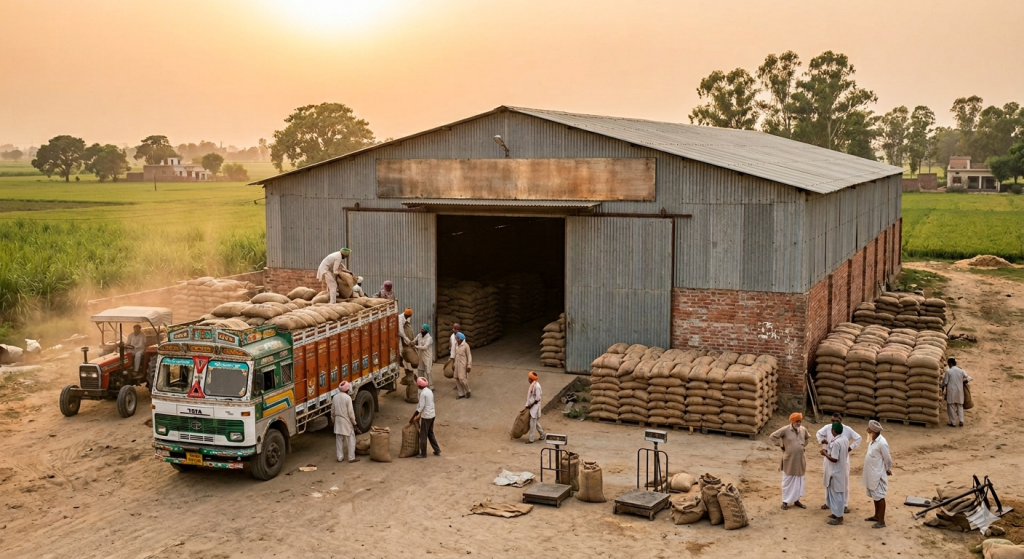
Agriculture is becoming a supply-chain intelligence business
Traditionally, agriculture focused heavily on production. Today, the conversation is expanding toward visibility.
Can inventory be tracked in real time?
Can supply disruptions be predicted earlier?
Can commodity movement become faster and more transparent?
Can financing be linked more efficiently with storage and trade?
These questions are slowly reshaping the industry.
Modern agriculture is no longer functioning only through physical movement of commodities. It is increasingly functioning through movement of data and intelligence. This is where technologies like:
- AI,
- warehouse digitisation,
- satellite intelligence,
- predictive analytics,
- and integrated logistics systems
are beginning to play a much larger role.
Globally, AI-led supply-chain infrastructure and smart logistics systems are becoming key focus areas across food and agricultural ecosystems.
The future of agriculture may depend on what happens between harvest and market
Think about how many stages exist after harvesting:
- storage,
- quality assessment,
- collateral management,
- financing,
- transportation,
- trading,
- and procurement.
Each stage influences pricing, working capital, market timing, and profitability. Yet historically, these systems have often functioned independently. That is now beginning to change.
The agricultural industry is slowly moving toward integrated ecosystems where warehousing, logistics, financing, and digital trade are becoming interconnected.
And this integration matters because agriculture today requires speed, transparency, and predictability. For example:
- Real-time inventory visibility can support faster financing.
- Integrated logistics can reduce movement inefficiencies.
- Digitised warehouses can improve traceability.
- AI-driven monitoring can help reduce storage risks.
- Connected trade ecosystems can improve procurement planning.
In many ways, the future of agriculture may depend less on isolated infrastructure and more on how intelligently these systems work together.
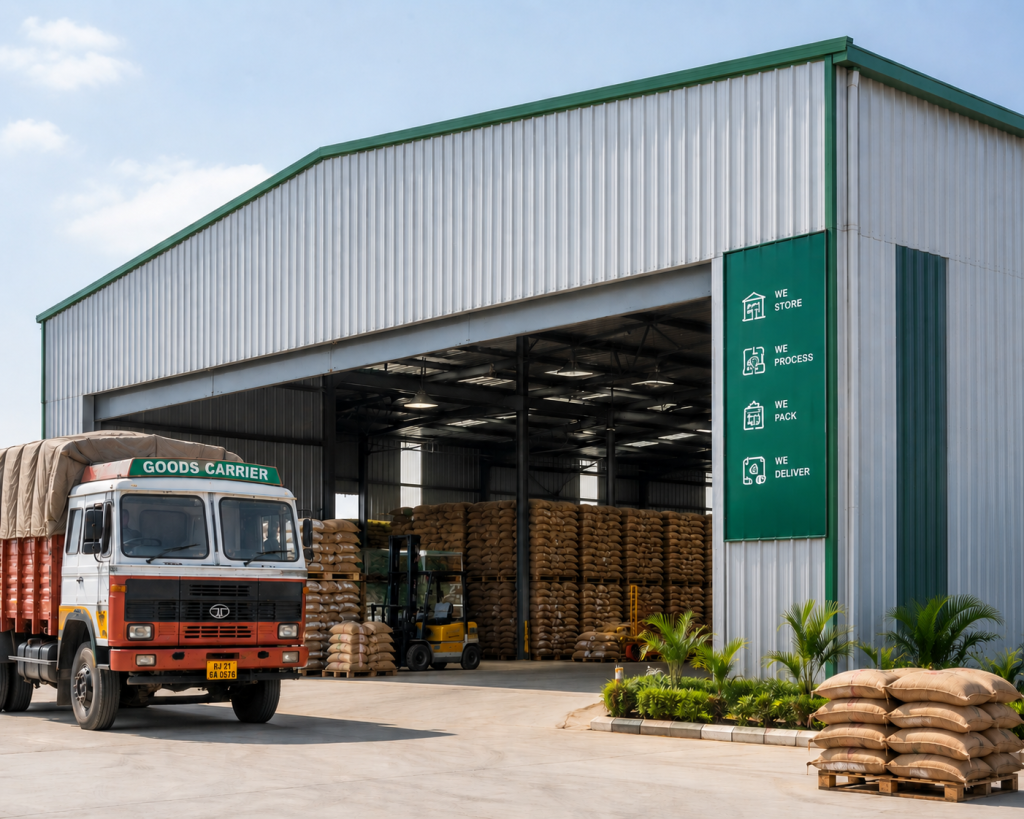
Why integrated agritech ecosystems are becoming important
This shift is creating a new role for agritech companies.
The industry is no longer looking only for storage providers, logistics players, or trading platforms independently. Increasingly, agriculture requires connected ecosystems that bring multiple capabilities together.
This is where integrated agritech models are becoming more relevant.
Companies like StarAgri are participating in this transition by building interconnected post-harvest ecosystems that combine:
- warehousing,
- collateral management,
- quality assessment,
- financing,
- logistics,
- digital commerce,
- and AI-led agricultural intelligence.
Today, StarAgri operates across 2,200+ warehouses with nearly 5 million metric tonnes of storage capacity spread across 380+ locations in 19 states. Its broader ecosystem also includes:
- agribazaar for digital agri commerce and intelligence,
- and Agriwise Finserv for agriculture-focused financial solutions.
This kind of integration is becoming increasingly important because agriculture’s biggest bottlenecks are rarely isolated anymore. They are interconnected.
The next agri revolution could be built after harvest
For years, agriculture measured progress mainly through production. But the next decade may measure progress differently.
How efficiently can crops move through the supply chain?
How intelligently can inventory be managed?
How quickly can financing reach the ecosystem?
How much visibility exists after harvest?
Those questions may define the future of agriculture more than ever before. Because the next agricultural revolution may not necessarily come from growing more
It may come from losing less, moving smarter, financing faster, and connecting the entire agricultural ecosystem more intelligently after harvest. And as integrated agritech ecosystems continue evolving, post-harvest infrastructure may finally become one of the most important growth engines in Indian agriculture.
FAQs
- What are post-harvest challenges in agriculture?
Post-harvest challenges include storage inefficiencies, logistics gaps, financing delays, inventory losses, and fragmented supply-chain systems. - Why is post-harvest infrastructure important?
Strong post-harvest infrastructure helps improve commodity movement, reduce losses, strengthen financing access, and improve market efficiency. - How is technology improving agricultural supply chains?
Technologies like AI, warehouse digitisation, satellite intelligence, and predictive analytics are improving visibility and operational efficiency across supply chains. - What is an integrated agritech ecosystem?
An integrated agritech ecosystem connects storage, finance, logistics, digital trade, and intelligence systems into one connected agricultural network. - How does StarAgri support post-harvest agriculture?
StarAgri supports agriculture through warehousing, collateral management, logistics, financing ecosystems, and digital agri intelligence platforms.
