Tag Archives: agritech 2026

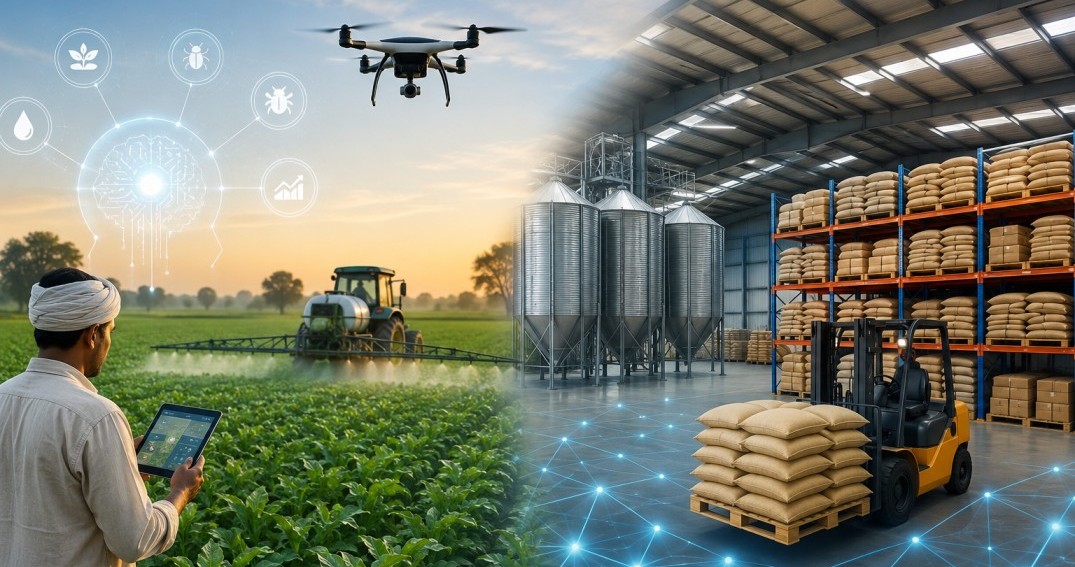
Technology in Indian agriculture is becoming an increasingly important part of that transformation. Through satellite-based crop monitoring, digital marketplaces, warehouse management systems and technology-enabled finance, agritech is helping connect different parts of an agricultural value chain that has traditionally operated in silos.

India’s Digital Agriculture Mission has an approved outlay of ₹2,817 crore and is building digital infrastructure including AgriStack, the Krishi Decision Support System and digital farmer and crop registries. At the same time, StarAgri is combining physical infrastructure with digital capabilities to address challenges across the farm-to-market journey.

What is an agritech company?

If put simply, an agritech platform uses technology to solve challenges across agriculture. This can include solutions for farming, crop monitoring, procurement, warehousing, finance, quality assessment, market access and supply-chain management.

Unlike technology companies focused only on software, modern agritech platforms can combine digital tools with physical agricultural infrastructure. This is the approach behind StarAgri’s “phygital” model, which brings together physical infrastructure and digital technology across pre- and post-harvest activities.

agri startups in india

Importance of agritech in India

Agritech is important in India because technology can help address challenges across farming, procurement, storage, finance, quality assessment and agricultural supply chains. Instead of digitising only one part of agriculture, modern agritech solutions can connect multiple stakeholders and stages of the farm-to-market journey.

The government’s Digital Agriculture Mission is also supporting the development of digital public infrastructure for agriculture, creating opportunities for greater use of data and technology across the sector. Technology can help bridge gaps in:

  • Farm intelligence
  • Market information
  • Access to finance
  • Storage
  • Quality assessment
  • Procurement
  • Traceability
  • Supply-chain visibility

The opportunity is therefore not just about making farming digital. It is about making the entire agricultural value chain more connected.

What are the challenges in Indian agriculture

Farmers have been and still face limited access to organised markets, price uncertainty, post-harvest losses and inadequate storage. Businesses face fragmented supply chains and inconsistent commodity quality. Financial institutions need better visibility into agricultural collateral and borrower risk. There is also a significant information gap.

A farmer may know how much produce has been harvested but not necessarily which market offers the best opportunity. A lender may have a borrower’s financial records but limited real-time visibility into agricultural assets. A buyer may need commodities of a particular quality but struggle to source them consistently.

How an agritech company in India solves these challenges

Agritech connects information, infrastructure and stakeholders.

Digital platforms can improve market access. Remote sensing can generate crop intelligence. IoT can support warehouse monitoring. Digital records can improve traceability. Data analytics can support procurement and financing decisions. The result is a major switch from reactive decision-making towards more informed and connected agricultural operations.

agritech india

StarAgri’s role in the agricultural value chain

StarAgri is an integrated agritech company in India that combines technology, agricultural infrastructure and financial services to address challenges across the farm-to-market value chain.

Technology is not simply an add-on to StarAgri’s agricultural services. It is an important enabler of its integrated value-chain model. The company connects farmers, traders, processors, FPOs, banks, financial institutions and agribusinesses through a combination of physical infrastructure and digital capabilities.

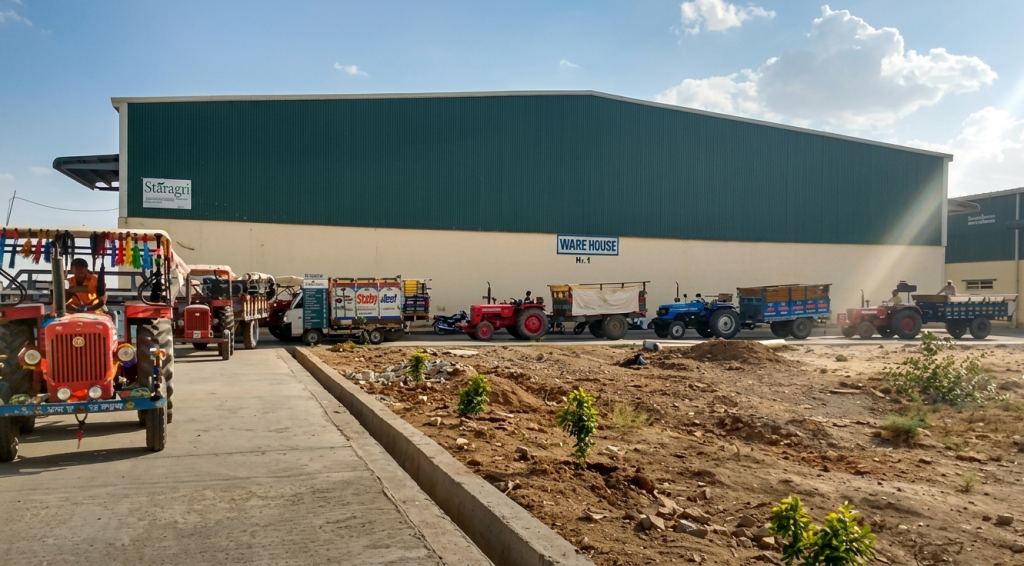
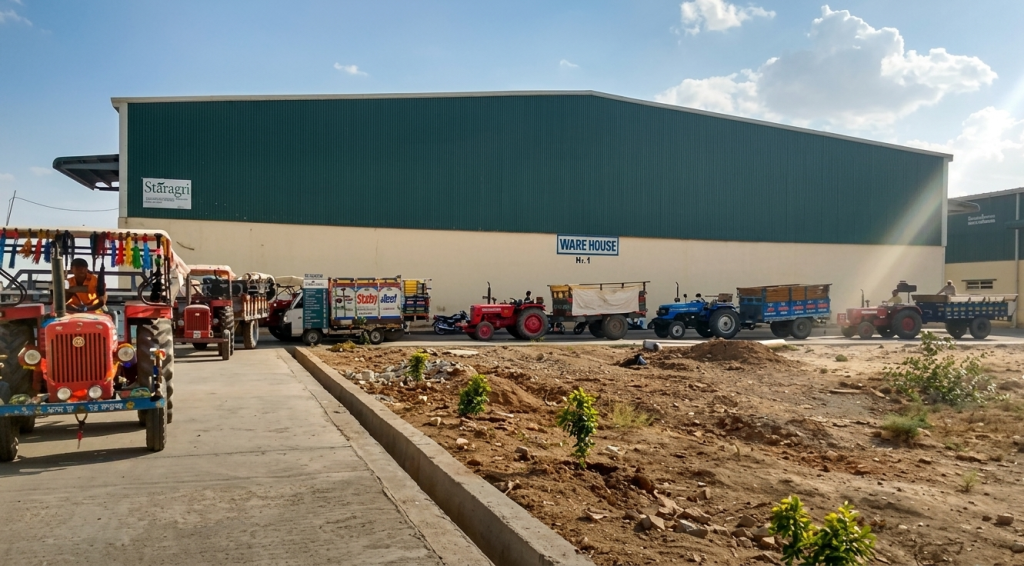
According to StarAgri’s current website, its network includes more than 2,200 scientific warehouses, approximately 5 million metric tonnes of storage capacity and a presence across 19 states.

Core services offered by StarAgri

StarAgri’s agricultural ecosystem includes:

  • Warehousing: Scientific storage solutions designed to protect commodity quality and integrity.
  • Collateral Management: Services that help financial institutions manage commodities used as collateral for agricultural lending.
  • Financing Solutions: Working-capital and other agri/non-agri financing solutions through its ecosystem, including Agriwise Finserv.
  • Procurement: Sourcing of agricultural commodities across a network covering more than 110 commodities.
  • Trade Facilitation: Connecting buyers and sellers for agricultural commodities.
  • Star Labs: NABL, FSSAI, & APEDA certified agricultural commodity testing facilities.
  • Digital Marketplace: Precision agriculture and digital trading through agribazaar.
  • Agri Exports: Supporting agricultural trade beyond Indian markets.

Technologies behind StarAgri’s solutions

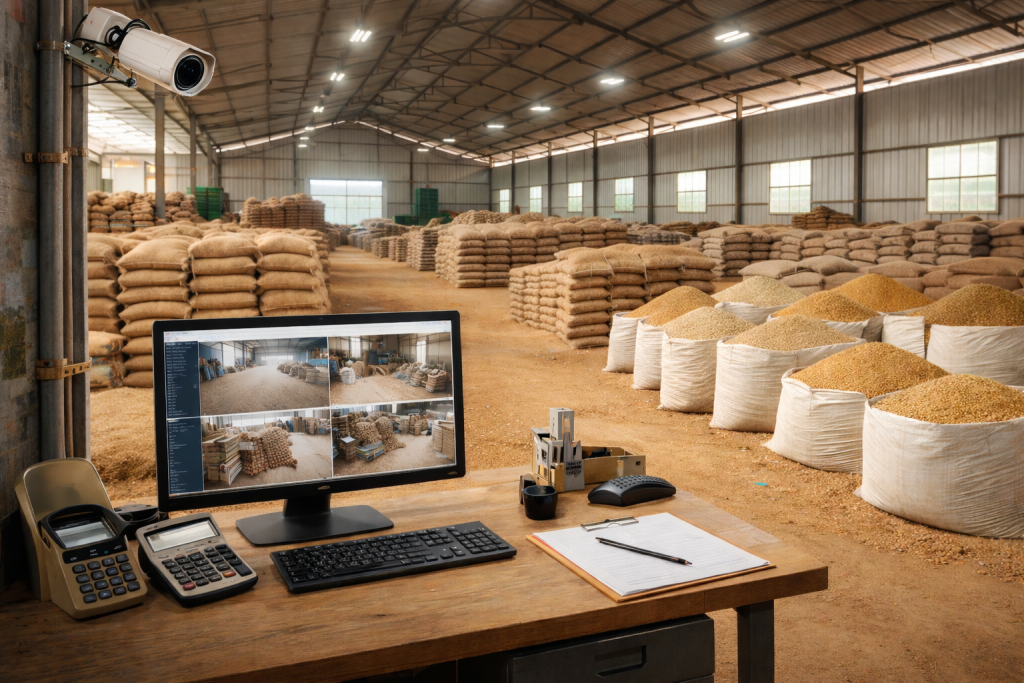
Technology sits across multiple layers of StarAgri’s ecosystem. The company uses AI, Machine Learning, remote sensing, blockchain, IoT and data analytics across different applications. Its Agribhumi platform uses remote sensing and AI/ML to generate agricultural insights, while its warehouse technology supports inventory visibility and digital warehouse receipts.

This combination of physical and digital infrastructure is important because agricultural transformation cannot happen through software alone.
star agri warehouse

Why choose StarAgri

For stakeholders across the value chain, an integrated agritech company in India can offer several advantages:

  • Greater supply-chain visibility
  • Access to scientific storage
  • Better market connectivity
  • Technology-enabled agricultural insights
  • Structured financing opportunities
  • Quality assessment
  • More efficient procurement
  • Reduced operational fragmentation

The value comes from connecting these services rather than treating them as independent activities. StarAgri’s ecosystem serves farmers, FPOs, traders, millers, processors, exporters, banks, NBFCs, MSMEs and corporates. The company has more than 3 lakh stakeholders who rely on its services. This broad stakeholder base highlights the role of agritech beyond the farm itself.

Future of agritech in India

The next phase of agritech is likely to move from individual digital tools towards integrated agricultural ecosystems. AI could help predict crop conditions. Satellite data could strengthen farm intelligence. Digital marketplaces could improve price discovery. Warehouse technology could improve inventory visibility. Alternative data could support more informed agricultural lending. Government-led digital infrastructure will further accelerate this transition.

For agritech companies, the opportunity is therefore to connect data, capital, commodities and markets in ways that create practical value for agricultural stakeholders.

Conclusion

An agritech company in India is not simply about putting an app in a farmer’s hands. The larger opportunity lies in transforming how the agricultural value chain works from farm intelligence and financing to storage, quality assessment, procurement and market access.

StarAgri brings these capabilities together through an integrated combination of physical infrastructure, financial services and technology. By connecting farmers, FPOs, traders, financial institutions, processors and other agricultural stakeholders, the company aims to reduce fragmentation across the farm-to-market journey.

As India’s agricultural ecosystem becomes increasingly connected, agritech companies that combine technology with on-ground execution can play an important role in shaping the future of Indian agriculture.

FAQs

  • What is an agritech company?
    An agritech company uses technology to solve challenges across agriculture, including farming, crop intelligence, finance, storage, procurement, trading and supply-chain management.
  • What does StarAgri do?
    StarAgri provides integrated agricultural value-chain services including warehousing, collateral management, financing solutions, procurement, trade facilitation, quality testing, digital marketplaces and technology-based agricultural insights.
  • How does StarAgri use technology in agriculture?
    StarAgri uses AI, ML, remote sensing, blockchain, IoT and data analytics across areas such as crop monitoring, yield estimation, warehouse management, commodity traceability and agricultural trade.
  • Who can use StarAgri’s services?
    Farmers, FPOs, traders, processors, millers, exporters, banks, NBFCs, MSMEs and other agribusinesses can use different StarAgri services depending on their requirements.
  • Why is agritech important for India’s agricultural future?
    Agritech can help address fragmented markets, limited information, financing gaps, storage challenges and supply-chain inefficiencies by connecting stakeholders through data, digital platforms and physical infrastructure.
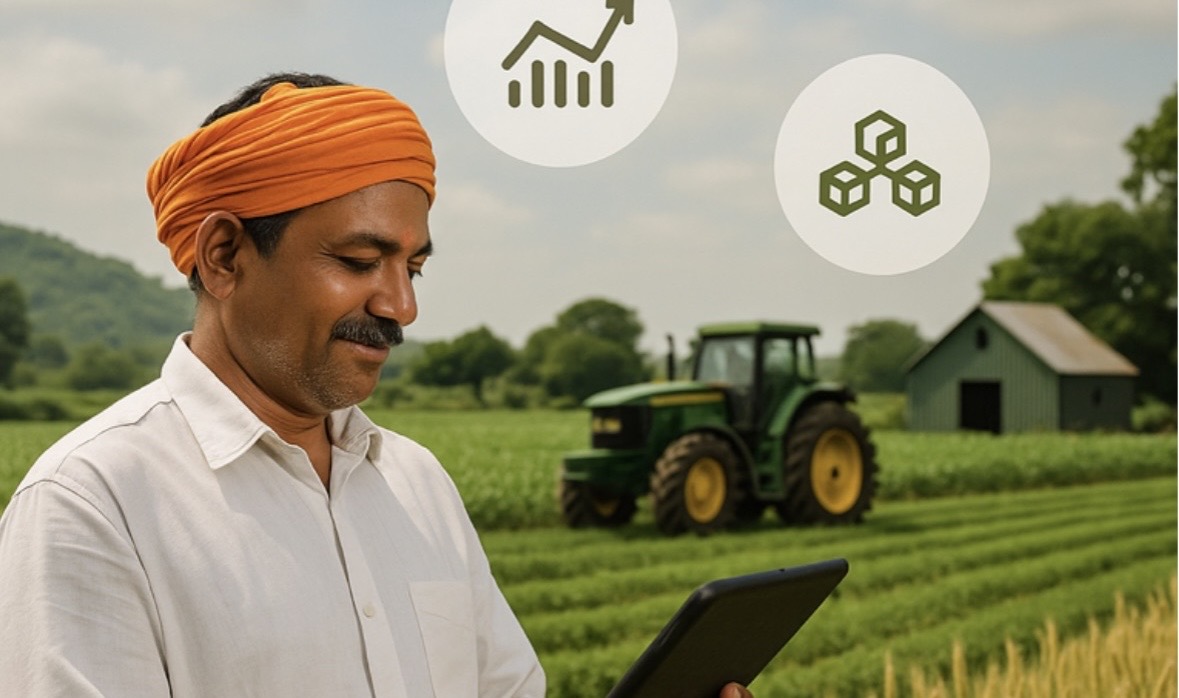


Agriculture has always been the backbone of India’s economy, employing millions of people and contributing a large share to our GDP. Yet, farmers today face major challenges — from unpredictable weather and water scarcity to high input costs and market inefficiencies. Traditional methods alone are no longer enough to meet the growing demand for food in a sustainable way.

This is where technology steps in. Modern farming solutions, often called Agritech, are transforming how crops are grown, monitored, and sold. By blending agriculture with innovation, farmers are now able to improve efficiency, cut costs, and secure better prices for their produce with agritech.

Technology at the Core of Modern Farming

Farming has moved far beyond ploughs and bullock carts. Today, farmers are using data-driven agriculture supported by the Internet of Things (IoT), Artificial Intelligence (AI), automation, and even drones.

Globally, countries like the USA, Israel, and the Netherlands have already seen large-scale adoption of such solutions. In India too, the rise of agritech startups and digital tools is bridging the gap between traditional practices and future-ready agriculture.

Areas Where Farming Technology Creates Impact

a) Resource Optimization


Water and fertilizer are two of the most expensive and limited resources for farmers. With precision farming techniques, farmers can use soil sensors, satellite imagery, and GPS-based tools to apply the right amount of water and nutrients exactly where needed.

For example, smart irrigation systems allow farmers to automate watering based on real-time soil moisture data. This not only saves water but also improves crop yield. According to the Food and Agriculture Organization (FAO), precision agriculture can reduce water usage by up to 30%.

b) Crop Intelligence & Forecasting

One of the biggest risks in farming is uncertainty. Unpredictable rains, pest attacks, or sudden temperature shifts can wipe out entire harvests.

Agritech tools help farmers monitor crop health through drones and satellites, while AI-based platforms give accurate weather forecasts and pest detection alerts. This helps farmers act in time — whether that means spraying the right pesticide or protecting crops ahead of a storm.

By turning raw data into practical insights, technology is helping farmers make smarter decisions with less guesswork.

c) Automation in the Field

Labor shortages are a growing issue in rural India. Automation provides a solution by reducing dependence on manual work.

Self-driving tractors can plough fields with high accuracy.

Robotic harvesters pick fruits and vegetables without damaging them.

Drone spraying ensures uniform coverage of fertilizers and pesticides.

These technologies not only save time but also increase productivity, making large-scale farming more efficient.

d) Market & Supply Chain Transformation

Even if farmers grow good crops, poor supply chains often lead to post-harvest losses and unfair pricing. Here, online agri marketplace are changing the game.

Online agri marketplaces connect farmers directly with retailers, food processors, and consumers. This eliminates middlemen, ensures better profit margins, and reduces wastage.

Agri-tech blockchain-based solutions are also being tested to track the journey of food from farm to table. This boosts transparency and helps consumers trust the origin and quality of what they eat.

e) Financial Access & Risk Management

For small and marginal farmers, access to finance is a constant challenge. Many agritech solutions now integrate financial services directly into farming apps.

Farmers can easily apply for micro-loans, access crop insurance, or receive digital payments through mobile platforms. These services not only reduce dependency on local moneylenders but also give farmers a safety net against crop failures.

f) Sustainability & Climate-Friendly Practices


Sustainable agriculture is no longer optional — it’s a necessity. Climate change is already affecting crop yields, and farmers need eco-friendly solutions to adapt.

Technologies such as hydroponics, vertical farming, and solar-powered equipment are helping farmers grow more food while using fewer natural resources. Vertical farms, for example, use up to 90% less water compared to traditional farms.

By adopting climate-smart farming methods, agriculture becomes both productive and environmentally responsible.

Roadblocks to Large-Scale Adoption

While technology brings immense potential, the journey isn’t without hurdles.

High Costs: Advanced tools like drones and automated machinery are expensive.

Digital Literacy: Many farmers are not yet comfortable using mobile apps or online platforms.

Connectivity Issues: Internet coverage in rural India remains patchy in several regions.

Policy Gaps: Widespread adoption requires stronger government support and incentives.

Overcoming these barriers will require combined efforts from the government, private companies, and the farming community itself.

The Future Outlook

The future of farming is undoubtedly data-driven and tech-enabled. With AI and big data, farmers will be able to predict market demand, manage risks, and plan harvest cycles more efficiently.

Urban farming models like smart greenhouses and vertical farms are expected to expand in Indian cities, ensuring year-round supply of fresh produce. Government initiatives and private investments will play a key role in making these technologies more affordable and accessible for small farmers.

Conclusion

Technology is reshaping agriculture at every stage — from sowing seeds to selling produce. By optimizing resources, improving crop health, automating fieldwork, and opening up better markets, modern farming solutions are creating a more sustainable and profitable future for farmers.

However, true impact will come only when these tools are made affordable and easily accessible, especially for small and marginal farmers who form the backbone of Indian agriculture.

If you are looking for trusted partners in this transformation, StarAgri is one of the top agritech solution providers in India. With expertise in post-harvest management, agri-finance, and digital farming solutions, StarAgri is helping farmers adopt modern practices while ensuring better incomes and long-term sustainability.

Disclaimer

The content published on this blog is provided solely for informational and educational purposes and is not intended as professional or legal advice. While we strive to ensure the accuracy and reliability of the information presented, StarAgri make no representations or warranties of any kind, express or implied, about the completeness, accuracy, suitability, or availability with respect to the blog content or the information, products, services, or related graphics contained in the blog for any purpose. Any reliance you place on such information is therefore strictly at your own risk. Readers are encouraged to consult qualified agricultural experts, agronomists, or relevant professionals before making any decisions based on the information provided herein. StarAgri, its authors, contributors, and affiliates shall not be held liable for any loss or damage, including without limitation, indirect or consequential loss or damage, or any loss or damage whatsoever arising from reliance on information contained in this blog. Through this blog, you may be able to link to other websites that are not under the control of StarAgri. We have no control over the nature, content, and availability of those sites and inclusion of any links does not necessarily imply a recommendation or endorsement of the views expressed within them. We reserve the right to modify, update, or remove blog content at any time without prior notice.

Indian farmers are the backbone of the country’s food supply, working tirelessly despite challenges like rising costs, uncertain weather, and shrinking resources. Today, they face a key question: How can farm productivity increase without increasing input costs?
The answer lies in Agritech  the smart use of agricultural technology. Contrary to popular belief, Agritech isn’t just for large farms or wealthy growers. In fact, many modern solutions are designed to be affordable, accessible, and easy to use, even for small and marginal farmers.

This article explores how Agritech can help improve productivity in Indian agriculture while keeping farming costs under control. From mobile apps to precision tools and smart sensors, we’ll cover real-world solutions that make a real difference.

What Is Agritech?

Agritech, short for agricultural technology, refers to innovations that use science, data, and digital tools to solve farming problems. These include:

  • Weather prediction apps
  • Precision farming tools
  • Soil testing kits
  • Market intelligence platforms
  • Post-harvest management systems

Such technologies are helping farmers make smarter decisions, improve crop health, reduce input waste, and earn better incomes. Most importantly, many of these tools are low-cost or available through shared models making them suitable for all types of farms.

Why India Needs Agritech Now?

Farming has become more complex due to:

  • Climate change, causing unpredictable weather
  • High input prices for fertilizers, pesticides, and seeds
  • Labor shortages during critical seasons
  • Market fluctuations in crop prices

Traditional practices are no longer enough to deal with these challenges. Farmers need data-driven, efficient, and reliable solutions that improve yields without adding financial stress.

What Are the Benefits of Agritech?

The key benefits of agritech include improved farm productivity, lower input costs, better resource management, data-driven decision-making, enhanced crop monitoring, and improved market access. By using technologies such as mobile apps, precision farming tools, smart sensors, drones, and digital marketplaces, farmers can increase yields while keeping costs under control.

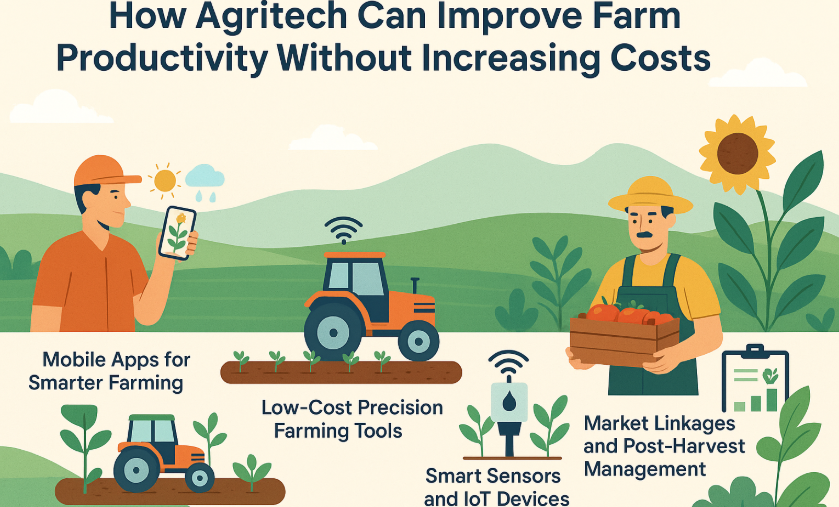
5 Benefits of Agritech That Improve Farm Productivity

Let’s explore how simple Agritech tools can make farming more productive, without requiring high investments.

1. Mobile Apps for Smarter Farming

farm fertiliser

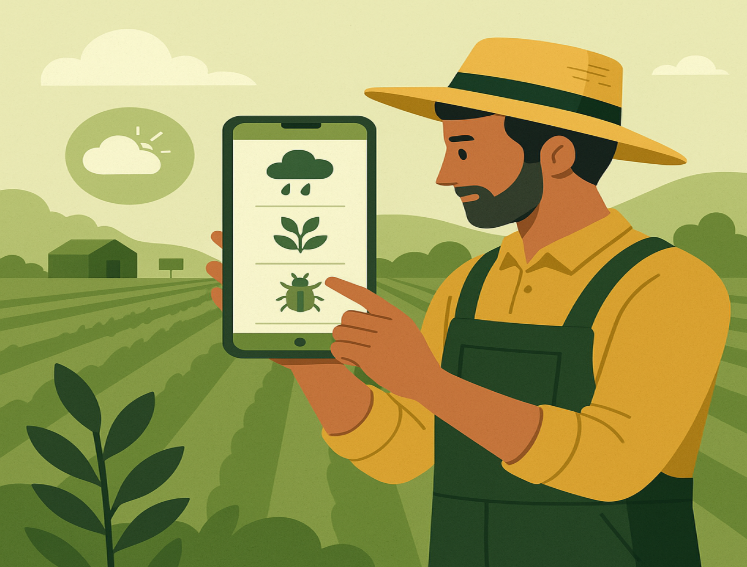
Smartphones have reached even the most remote farming villages. Today, mobile apps offer:

  • Real-time weather forecasts
  • Crop protection advice
  • Pest and disease alerts
  • Seed and fertilizer recommendations
  • Local market price tracking

These tools empower farmers to take the right actions at the right time, improving both yield and quality. A simple weather alert can prevent unnecessary irrigation or spraying, saving both water and input costs.

2. Low-Cost Precision Farming Tools

Precision farming is about using inputs more accurately and efficiently. Affordable technologies include:

  • Soil health testing kits, which guides optimal fertilizer use
  • Seed drill attachments for uniform planting
  • Portable pH meters and nutrient analysers

These tools help avoid overuse of fertilizers and pesticides, reducing costs and minimizing environmental impact. Even small improvements in spacing or nutrient balance can result in higher yields and better crop health.

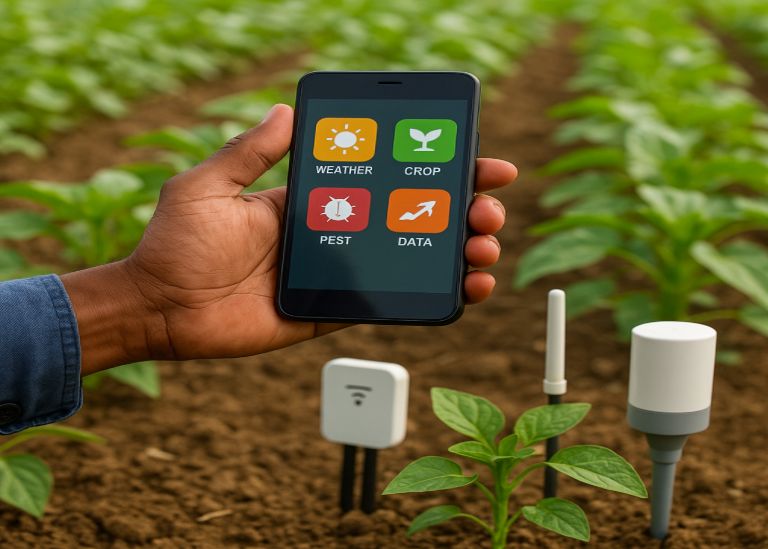
3. Smart Sensors and IoT Devices

crop farming

Affordable IoT (Internet of Things) devices are helping smallholder farmers monitor:

  • Soil moisture
  • Weather conditions
  • Pest presence
  • Crop growth stages

These smart sensors provide real-time data to farmers’ mobile phones. For example, a soil moisture sensor can help apply just the right amount of water, avoiding wastage and preventing crop stress.

4. Drones and Satellite Imaging (Available as a Service)

While owning a drone may be costly, many local service providers and cooperatives now offer drone services on rent. Farmers can use drones for:

  • Crop spraying
  • Aerial field surveys
  • Early disease or pest detection
  • Farm mapping

By sharing the service among groups or villages, costs come down significantly while the benefits remain high  such as better coverage, time saved, and reduced manual labor.

5. Market Linkages and Post-Harvest Management

Agritech is also transforming what happens after the harvest  an area where farmers often lose value due to poor infrastructure and middlemen.

Tech-enabled platforms now offer:

  • Storage and warehousing facilities
  • Quality grading and testing
  • Digital marketplaces and auctions
  • Real-time buyer connections
  • Access to loans and insurance

These systems ensure that farmers can sell their produce at the right time and right price, reducing waste and improving income without changing how they farm.

Real-Life Examples of Impact

Across India, thousands of farmers are already benefiting from Agritech without increasing their costs.

In Gujarat

Groundnut farmers began using mobile-based pest alerts and saved 20% on pesticide costs, while still increasing yield.

In Tamil Nadu

Banana growers adopted affordable irrigation timers connected to soil sensors. Water use dropped by 35%, and plant health improved noticeably.

In Uttar Pradesh

Smallholder wheat farmers formed a cooperative to share a rented drone. Their spraying costs dropped by half, and they saw faster disease control.

These examples prove that smart solutions don’t need to be expensive to be effective.

How to Adopt Agritech Without Spending More?

If you’re wondering how to get started, here are some practical tips to adopt Agritech affordably:

  1. Begin with mobile apps – Choose one for weather or crop guidance
  2. Get your soil tested – Many local agri centers offer this service at minimal cost
  3. Join or form a farmer group – Share sensors, drones, or testing kits
  4. Use local agricultural extension services – They often offer subsidized tools or training
  5. Connect with agri service providers – Many now offer pay-per-use models that reduce upfront investment

The key is to take small but smart steps. Even one technology change can lead to big improvements in farm efficiency and returns.

The Long-Term Benefits of Smart Farming

While initial changes might seem small, the long-term benefits of Agritech adoption are big:

  • Reduced input costs (fertilizers, water, pesticides)
  • Improved crop health and yields
  • Lower labor dependency
  • Faster response to pest and weather challenges
  • Better profits through quality and market access

Most importantly, smart farming helps build resilience against climate risks, which is crucial for future food security.

India’s Agritech Future Is Bright and Affordable

India is fast becoming a hub for agricultural innovation. With increasing digital access in rural areas and a rise in low-cost tech solutions, Agritech is no longer a luxury — it’s a necessity.

Farming is changing, and those who adapt early will lead the way. Whether you grow wheat in Punjab, pulses in Madhya Pradesh, or spices in Kerala — there are affordable tools to make your farm more productive and future-ready.

Partnering With Agritech Leaders

To make the most of these technologies, it helps to work with organizations that understand farming challenges and offer reliable solutions. At StarAgri, we are proud to be one of India’s leading Agritech firm, committed to empowering farmers through innovation and deep-rooted support. With our strong presence across agri-advisory, warehousing, post-harvest management, and market linkages, we help farmers increase productivity, reduce losses, and access better opportunities — all while keeping their costs in check. Our mission is to build a more efficient, transparent, and resilient agricultural ecosystem for India’s farming community.

You can also explore how the Ministry of Agriculture’s Digital Agriculture Mission is laying the groundwork for a farmer-centric digital ecosystem in India. The initiative aims to enhance productivity and improve farmer income through smart technologies and data-driven approaches.

FAQs

1. What is Agritech and how does it help farmers?
Agritech refers to the use of technology in agriculture to improve decision-making, increase productivity, reduce input waste, and enhance farm profitability.

2. Can small farmers afford Agritech solutions?
Yes. Many Agritech tools, such as mobile apps, soil testing services, and shared drone services, are affordable and designed for small and marginal farmers.

3. How does Agritech help reduce farming costs?
Agritech enables precise use of water, fertilizers, and pesticides, helping farmers avoid unnecessary expenses while maintaining or improving crop yields.

4. What are some examples of Agritech tools used in India?
Common examples include weather forecasting apps, soil testing kits, smart irrigation systems, IoT sensors, drones, and digital agricultural marketplaces.

5. How can farmers start using Agritech?
Farmers can begin with simple tools such as weather and crop advisory apps, soil testing services, and shared technology solutions available through cooperatives or agri service providers.


What if the biggest problem in agriculture isn’t growing food but saving it? Every year, India produces record volumes of crops. Yet, a surprising chunk never makes it to the market. 

In fact, India loses nearly 10% of its total food grain production post-harvest. That’s not just inefficiency, it’s lost income, wasted effort, and missed opportunity.

But here’s where things get interesting.

Today, warehouses are becoming data-driven intelligence hubs. Post harvest agriculture losses in India aren’t a small leak, but a massive drain. Estimates suggest losses of over ₹1.5 lakh crore annually due to inefficiencies in storage, transportation, and supply chains.

And it’s not just about storage space. It’s about:

  • Lack of scientific warehousing
  • Poor quality assessment
  • Limited access to post-harvest finance
  • Fragmented supply chains

In some cases, total losses across the value chain can reach 25–30% of output.

So the real question is: Can technology change this story?

harvest agriculture

AI: The invisible hero

Artificial Intelligence has entered agriculture, not only in the fields but also in what happens after harvest.

Take quality grading. AI-powered systems today can detect crop defects with over 96% accuracy, reducing losses by up to 90% in some cases. That’s transformational!

But that’s just the beginning. AI and data are enabling:

  • Predictive storage management (moisture, temperature alerts)
  • Price forecasting to avoid distress sales
  • Demand-supply matching across markets
  • Optimised logistics and routing

Warehouses are evolving into decision-making engines, not just storage facilities.

The rise of smart warehousing

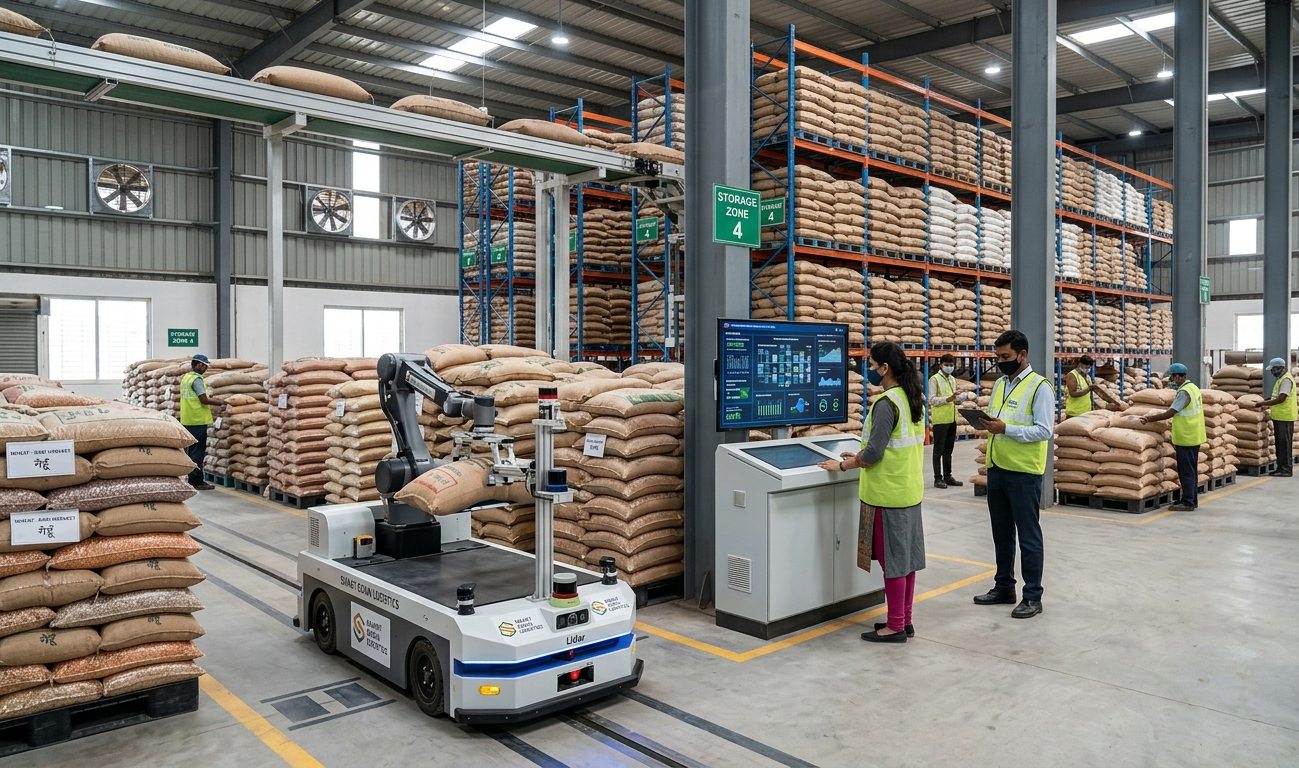
Traditional warehouses stored commodities. Modern warehouses manage risk.

With IoT sensors, real-time monitoring, and data analytics:

  • Grain quality can be preserved longer
  • Spoilage can be predicted before it happens
  • Inventory can be tracked in real time

This shift is critical because storage is no longer just about space. It’s about timing, pricing, and control. And when farmers and traders gain control, they gain power.

Why this matters now

Here’s the paradox: India is producing more than ever, yet farmers often earn less.

Why?

Because without storage and liquidity, they are forced to sell immediately after harvest, often at the lowest prices.

Technology like at agribazaar flips this equation by enabling:

  • Better price discovery
  • Access to 1000+ buyers across India
  • Smarter settlement & payment

Where StarAgri fits in

At the intersection of infrastructure, finance, and technology, StarAgri plays a critical role in this transformation.

With a strong network of scientific warehouses and collateral management services, StarAgri enables:

  • Secure and efficient commodity storage
  • Quality preservation through scientific protocols
  • Warehouse receipt-based financing access
  • Reduced distress selling through structured post-harvest support

By integrating technology with physical infrastructure, StarAgri is helping convert warehouses into value-generating assets, not just storage points.

star agri

What’s the future

The future of agriculture isn’t just about higher yields but also about smarter systems. When AI meets warehousing, something powerful happens. What is it?

  • Waste becomes opportunity
  • Data becomes decision-making
  • Storage becomes strategy

And perhaps most importantly, farmers and traders gain the ability to wait, choose, and benefit.

FAQs

  • How can AI help reduce post harvest agriculture losses?
    AI can analyse data to predict spoilage risks, monitor storage conditions, and automate quality grading. This helps in early detection of issues, better inventory management, and improved decision-making across the supply chain.
  • What is smart warehousing in agriculture?
    Smart warehousing uses technologies like IoT sensors, data analytics, and automation to monitor and manage stored commodities. It ensures better preservation, real-time tracking, and reduced wastage.
  • Why is scientific storage important for farmers and traders?
    Scientific storage helps maintain produce quality, reduces spoilage, and allows farmers and traders to hold their stock for better prices rather than selling immediately after harvest.
  • How does warehouse receipt financing work?
    Warehouse receipt financing allows farmers or traders to use their stored commodities as collateral to secure loans. This provides liquidity while enabling them to wait for favourable market prices.
  • What role do agri-infrastructure companies play in reducing losses?
    They provide storage, quality control, and financial linkages that help streamline the post harvest agriculture processes, reduce inefficiencies, and improve price realisation.

Disclaimer

The content published on this blog is provided solely for informational and educational purposes and is not intended as professional or legal advice. While we strive to ensure the accuracy and reliability of the information presented, StarAgri make no representations or warranties of any kind, express or implied, about the completeness, accuracy, suitability, or availability with respect to the blog content or the information, products, services, or related graphics contained in the blog for any purpose. Any reliance you place on such information is therefore strictly at your own risk. Readers are encouraged to consult qualified agricultural experts, agronomists, or relevant professionals before making any decisions based on the information provided herein. StarAgri, its authors, contributors, and affiliates shall not be held liable for any loss or damage, including without limitation, indirect or consequential loss or damage, or any loss or damage whatsoever arising from reliance on information contained in this blog. Through this blog, you may be able to link to other websites that are not under the control of StarAgri. We have no control over the nature, content, and availability of those sites and inclusion of any links does not necessarily imply a recommendation or endorsement of the views expressed within them. We reserve the right to modify, update, or remove blog content at any time without prior notice.


In 2026, agritech apps in India have become indispensable. The farmers make data-driven decisions, improve productivity, manage risks, and increase profitability. With mobile and internet access expanding in rural India, more farmers are turning to digital agricultural tools to simplify their operations and plan better. 

“According to Inc42 and StarAgri’s Indian Agritech Market Landscape Report, 2025, India’s agritech sector is set to grow from $9 Bn in 2025 to $28 Bn by 2030, expanding at a 25% CAGR.”

Today’s agritech platforms are blending artificial intelligence (AI), Internet of Things (IoT), remote sensing, and marketplace features to bring precision agriculture into the hands of every grower.

agritech apps

So, what should a farmer look for while choosing farm management or agritech apps in 2026?


Top 5 Digital Agriculture Features Every Indian Farmer Should Know in 2026

1. AI-driven insights and predictive analytics: The most powerful agritech apps now leverage artificial intelligence (AI) to deliver actionable insights. These tools process historical farm data, soil health, and weather trends to recommend what to sow, when to irrigate, and how to prevent losses.

Why it matters:

  • Forecasts for pests, diseases, and yield outcomes
  • Optimised sowing and harvesting timelines
  • Tailored advisory in local languages

According to industry reports, AI systems in agritech could expand from a valuation of $0.9 billion in 2025 to an estimated $5.6 billion by 2030, with multilingual AI advisory tools helping millions of farming households make more intelligent decisions in local languages.

2. Hyper-local weather and risk forecasts: Weather remains agriculture’s biggest variable. The best agriculture apps in India go beyond generic forecasts to deliver field-level, crop-specific predictions powered by IoT and advanced analytics.

What to look for:

  • Real-time alerts on rainfall, humidity, and wind
  • Crop-stage recommendations for spraying or harvesting
  • Early warnings on drought, frost, and other weather extremes

This hyper-local intelligence helps reduce climate-related losses and ensures farmers can make more confident operational decisions.

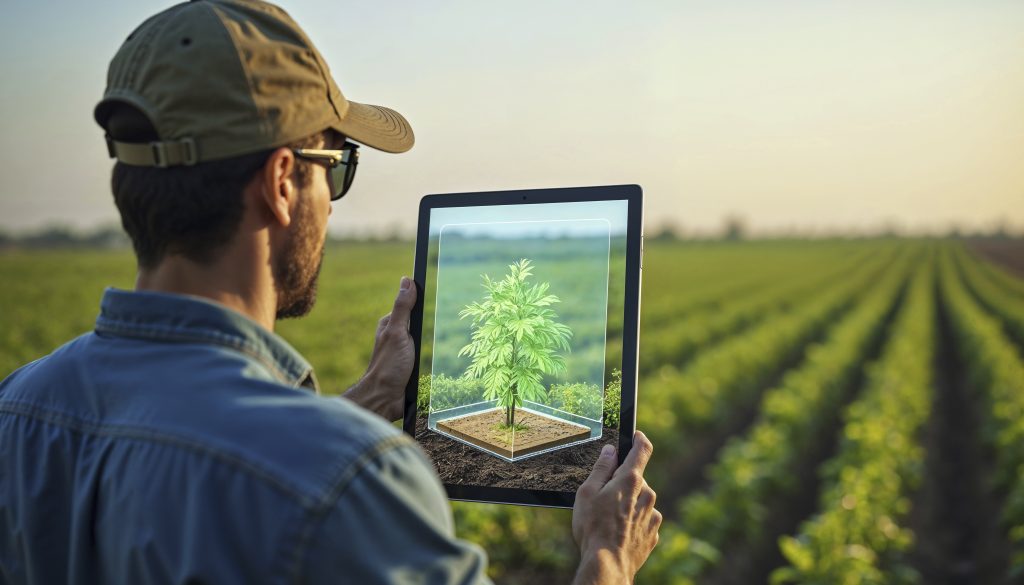
3. Real-time crop monitoring and soil intelligence: The integration of IoT sensors, drones, and satellite data enables robust monitoring of crop and soil health. Today’s agritech apps harness this data to provide real-time metrics on soil moisture, nutrient status, pest infestations, and crop stress zones.

Features to prioritise:

  • NDVI and chlorophyll mapping for early stress detection
  • Soil moisture and nutrient anomaly alerts
  • Pest and disease diagnosis from image uploads

4. Integrated market access, farm business management & embedded finance: In 2026, the most impactful agritech apps are those that seamlessly combine market access, farm management, and financial visibility into a single ecosystem. Farmers no longer want fragmented tools. They want platforms that connect what they grow, how they sell, and how they finance their operations.

Modern agritech apps now integrate real-time mandi prices, buyer discovery, digital trade execution, and post-harvest workflows with built-in financial intelligence. This includes tracking crop-wise expenses, expected revenues, inventory value, and working capital requirements — all in one dashboard.

Key capabilities farmers should look for:

  • Live commodity prices with historical trend analysis
  • Digital buyer–seller connections and transparent trade execution
  • Expense tracking linked to crop cycles
  • Cash-flow visibility aligned with sowing, harvesting, and sales timelines
  • Access to credit, insurance, or financial products based on farm and trade data

5. User-centric design with offline and multilingual support: As agritech apps strive to reach farmers in every corner of the world, usability becomes a core differentiator. Farmers often face connectivity limitations and varying levels of digital literacy, making intuitive design, offline capabilities, and multilingual voice support essential.

Look for:

  • Offline functionality with auto-sync capabilities
  • Intuitive dashboards and local language interfaces
  • Voice-enabled assistance for navigation and queries

Bonus must-have: Complete farm business management tools
Beyond agronomy and marketplaces, the best agritech apps now offer holistic farm management modules that cover financial planning, expense tracking, labour deployment, compliance reporting, and inventory management. This positions agriculture as a business, not just a seasonal activity.

Conclusion

Farmers in 2026 should choose agritech apps that combine cutting-edge technologies, AI forecasts, hyper-local insights, real-time monitoring, market integration, and user-friendly design to harness the full potential of digital agriculture. These capabilities not only drive crop performance but also strengthen the farm’s economic sustainability and resilience.

StarAgri’s digital edge

At StarAgri, we understand what modern farmers expect from today’s agritech apps. Our AgriBhumi platform combines satellite imagery, machine learning insights, and field-level data to empower farmers with precise yield forecasts, soil maps, and crop planning tools built for Indian conditions.

Through Agribazaar, farmers gain seamless market access and digital trade connectivity, while Agriwise provides end-to-end financial solutions, including working capital, crop loans, and trade-linked credit. Together, these platforms create India’s most comprehensive digital ecosystem — connecting farm operations, marketplace opportunities, and financial empowerment under one roof.

FAQs: 

  • What are agritech apps, and why are they essential for farmers?
    Agritech apps are digital platforms that provide farmers with insights, advisory, market access, and financial tools. They help increase productivity, reduce risks, and optimise farm operations by leveraging technologies such as AI, IoT, and satellite data.
  • How can agritech apps improve crop yield?
    Modern agritech apps offer AI-driven recommendations, soil and crop health monitoring, pest and disease alerts, and precise weather forecasts. These tools allow farmers to make data-driven decisions, leading to higher yields and better resource management.
  • Can agritech apps provide financial support to farmers?
    Yes. Many agritech apps, including platforms integrated with Agriwise, provide access to working capital, crop loans, and trade-linked credit. This helps farmers manage liquidity and invest in timely inputs.
  • Are agritech apps suitable for farmers in remote areas with limited internet?
    Yes. Leading agritech apps now include offline functionality, multilingual support, and voice-enabled features, ensuring accessibility even in low-connectivity regions.
  • How do agritech apps help farmers get better market prices?
    Agritech apps provide real-time mandi prices, buyer connections, and trade analytics. This transparency helps farmers choose the right time and channel to sell their produce, maximising revenue and reducing dependence on intermediaries.

Disclaimer

The content published on this blog is provided solely for informational and educational purposes and is not intended as professional or legal advice. While we strive to ensure the accuracy and reliability of the information presented, StarAgri make no representations or warranties of any kind, express or implied, about the completeness, accuracy, suitability, or availability with respect to the blog content or the information, products, services, or related graphics contained in the blog for any purpose. Any reliance you place on such information is therefore strictly at your own risk. Readers are encouraged to consult qualified agricultural experts, agronomists, or relevant professionals before making any decisions based on the information provided herein. StarAgri, its authors, contributors, and affiliates shall not be held liable for any loss or damage, including without limitation, indirect or consequential loss or damage, or any loss or damage whatsoever arising from reliance on information contained in this blog. Through this blog, you may be able to link to other websites that are not under the control of StarAgri. We have no control over the nature, content, and availability of those sites and inclusion of any links does not necessarily imply a recommendation or endorsement of the views expressed within them. We reserve the right to modify, update, or remove blog content at any time without prior notice.