


Just imagine giving your everything into growing a crop only to see a significant portion of it go to waste before it reaches the market. For many Indian farmers, this is a harsh reality. But there’s hope, and it lies in post-harvest management. Let us explain why this is crucial and how it is transforming the lives of farmers across India.
What is post-harvest management?
Post-harvesting is the process that involves dealing with different procedures and methods implemented after the harvesting of produce, focused on reducing losses, maintaining its quality, and preparing these agricultural produce for market. These steps include washing, sorting, grading, holding, packaging, and transporting produce. Simply put, it’s the same care you dedicate to growing your plants, now applied to the fruits they produce. From the field to the consumer’s plate, post-harvest management ensures that all the hard work put into farming is not wasted.
Why is Post-Harvest Management Crucial
Reduces Losses and Wastage
About 30-40% of harvested commodities in India spoil due to improper handling, storage, and transportation. This is heartbreaking, considering the time, effort, and resources farmers put into their farms. However, the correct post-harvest practices can greatly reduce these losses.
Preserves Quality and Nutritional Value
Consumers are becoming more health conscious than ever, demanding fresh, high-quality produce. Proper storage and handling ensure that fruits, vegetables, and grains retain nutritional value and visual appeal.
Increases Farmer Income
Better quality and less wastage means farmers can sell more produce at better prices. For example, grain stored in humidity-controlled warehouses commands a higher price than grain damaged by pests.
Expands Market Access
With the help of advanced techniques like cold storage and logistics networks, farmers can now sell their produce in distant markets or even export globally. Post-harvest management acts as the bridge link between local farms and global consumers.
Boosts Food Security
In countries like India, where agriculture feeds millions, reducing post-harvest losses can significantly contribute to food security. Every saved grain counts in the fight against hunger.
How Can Indian Farmers Implement Post-Harvest Practices?
Storage Solutions
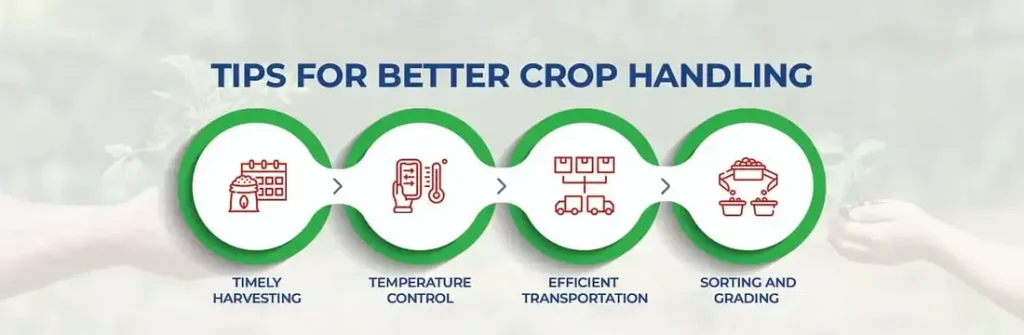
Invest in basic storage systems like hermetic bags or metallic silos. Collaborate with nearby cold storage facilities for perishable goods like fruits and vegetables.
Sorting and Grading
Start sorting your produce by size, quality, and ripeness before selling. Cleaned and graded produce commands a premium in markets.
Leverage Technology
Explore mobile apps and IoT devices that monitor storage conditions and predict spoilage. Indian government and startups offer affordable solutions tailored to small farmers.
Partnerships
Collaborate with organisations like StarAgri or FPOs (Farmer Producer Organizations) that provide post-harvest support, from warehousing to logistics.
Real-Life Success Story
Take the case of a tomato farmer in Maharashtra who stored tomatoes in cold storage during the peak season. Instead of selling at a low price during a market glut, they waited for demand to rise, ultimately earning double the income. Stories like this prove that post-harvest management isn’t just theory; it works.
Government Initiatives for Farmers
The government of India has introduced schemes like the National Horticulture Mission (NHM) and Gramin Bhandaran Yojana, which provide subsidies for building storage facilities and accepting post-harvest technology.
Conclusion
Thus, post-harvest management is much more than just preventing losses. It empowers the farmers to use their harvest efficiently. The minimum wastage and unlocking of improved market access create a ground for profit and sustainability in India’s agriculture sector.
As a leading integrated agritech company in India, StarAgri supports farmers through scientific warehousing and post-harvest solutions that help reduce crop losses and improve income realisation. With a network of 2,200+ warehouses, the company provides secure storage, quality assessment, and financing support against stored produce, enabling farmers to avoid distress sales and access better market opportunities.
FAQs
- What is post harvest management in agriculture?
Post harvest management is everything that happens after a crop is harvested. From cleaning and sorting to storage and transportation, these steps help ensure that the produce stays fresh, reaches the market in good condition, and doesn’t go to waste before it can be sold. - Why is post harvest management important for Indian farmers?
For farmers, every harvested crop represents months of hard work. Post harvest management helps protect that effort by reducing spoilage, maintaining quality, and improving the chances of getting a better price in the market. It can make a real difference to a farmer’s income. - How does post harvest management increase farmers’ income?
When crops are stored and handled properly, farmers lose less produce to damage, pests, or poor weather conditions. Better-quality produce often attracts better buyers and prices, helping farmers earn more from the same harvest. - What are the key components of post harvest management?
Post harvest management includes several important activities such as cleaning, sorting, grading, packaging, storage, and transportation. Each step plays a role in keeping crops safe, fresh, and ready for sale. - What are the main objectives of post harvest management?
The goal of post harvest management is simple: to make sure more of the harvested crop reaches consumers instead of being lost along the way. It helps reduce wastage, maintain quality, improve food safety, and ensure farmers get the best possible value for their produce. - What are the key stages of post harvest management?
The journey doesn’t end when a crop is harvested. It is followed by cleaning, sorting, grading, drying, storage, packaging, transportation, and finally marketing. Managing each of these stages carefully helps preserve quality and reduces unnecessary losses before the produce reaches the market.
