


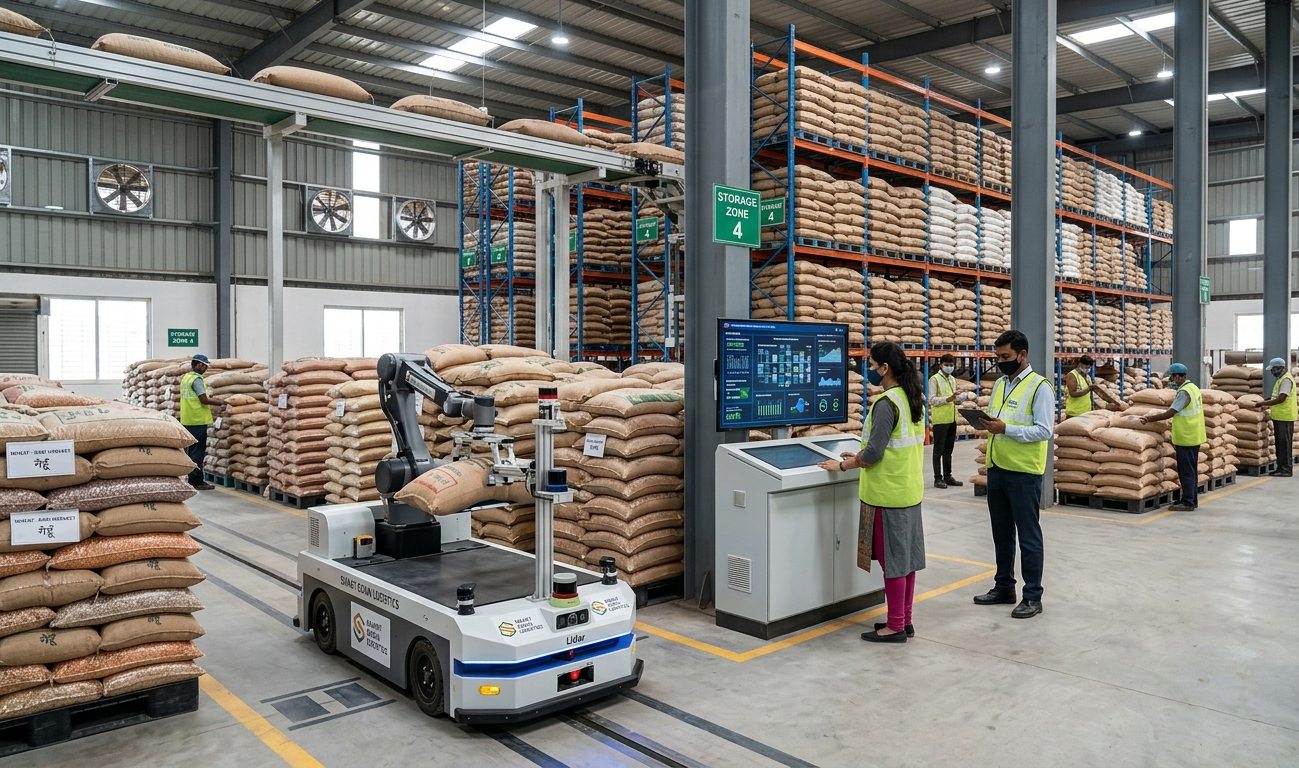
What if the biggest problem in agriculture isn’t growing food but saving it? Every year, India produces record volumes of crops. Yet, a surprising chunk never makes it to the market.
In fact, India loses nearly 10% of its total food grain production post-harvest. That’s not just inefficiency, it’s lost income, wasted effort, and missed opportunity.
But here’s where things get interesting.
Today, warehouses are becoming data-driven intelligence hubs. Post harvest agriculture losses in India aren’t a small leak, but a massive drain. Estimates suggest losses of over ₹1.5 lakh crore annually due to inefficiencies in storage, transportation, and supply chains.
And it’s not just about storage space. It’s about:
- Lack of scientific warehousing
- Poor quality assessment
- Limited access to post-harvest finance
- Fragmented supply chains
In some cases, total losses across the value chain can reach 25–30% of output.
So the real question is: Can technology change this story?
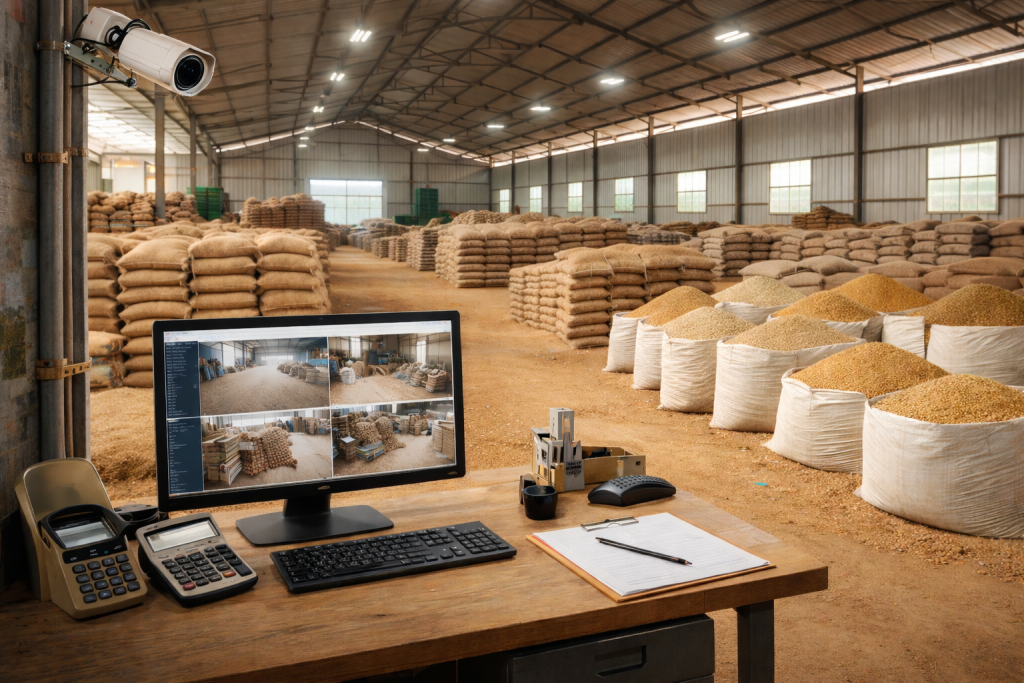
AI: The invisible hero
Artificial Intelligence has entered agriculture, not only in the fields but also in what happens after harvest.
Take quality grading. AI-powered systems today can detect crop defects with over 96% accuracy, reducing losses by up to 90% in some cases. That’s transformational!
But that’s just the beginning. AI and data are enabling:
- Predictive storage management (moisture, temperature alerts)
- Price forecasting to avoid distress sales
- Demand-supply matching across markets
- Optimised logistics and routing
Warehouses are evolving into decision-making engines, not just storage facilities.
The rise of smart warehousing
Traditional warehouses stored commodities. Modern warehouses manage risk.
With IoT sensors, real-time monitoring, and data analytics:
- Grain quality can be preserved longer
- Spoilage can be predicted before it happens
- Inventory can be tracked in real time
This shift is critical because storage is no longer just about space. It’s about timing, pricing, and control. And when farmers and traders gain control, they gain power.
Why this matters now
Here’s the paradox: India is producing more than ever, yet farmers often earn less.
Why?
Because without storage and liquidity, they are forced to sell immediately after harvest, often at the lowest prices.
Technology like at agribazaar flips this equation by enabling:
- Better price discovery
- Access to 1000+ buyers across India
- Smarter settlement & payment
Where StarAgri fits in
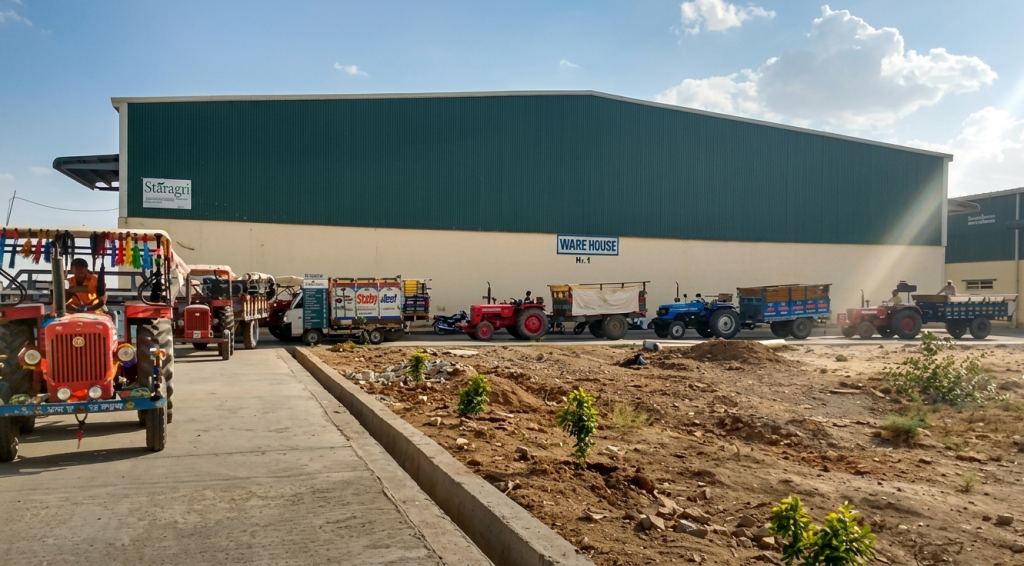
At the intersection of infrastructure, finance, and technology, StarAgri plays a critical role in this transformation.
With a strong network of scientific warehouses and collateral management services, StarAgri enables:
- Secure and efficient commodity storage
- Quality preservation through scientific protocols
- Warehouse receipt-based financing access
- Reduced distress selling through structured post-harvest support
By integrating technology with physical infrastructure, StarAgri is helping convert warehouses into value-generating assets, not just storage points.
What’s the future
The future of agriculture isn’t just about higher yields but also about smarter systems. When AI meets warehousing, something powerful happens. What is it?
- Waste becomes opportunity
- Data becomes decision-making
- Storage becomes strategy
And perhaps most importantly, farmers and traders gain the ability to wait, choose, and benefit.
FAQs
- How can AI help reduce post harvest agriculture losses?
AI can analyse data to predict spoilage risks, monitor storage conditions, and automate quality grading. This helps in early detection of issues, better inventory management, and improved decision-making across the supply chain. - What is smart warehousing in agriculture?
Smart warehousing uses technologies like IoT sensors, data analytics, and automation to monitor and manage stored commodities. It ensures better preservation, real-time tracking, and reduced wastage. - Why is scientific storage important for farmers and traders?
Scientific storage helps maintain produce quality, reduces spoilage, and allows farmers and traders to hold their stock for better prices rather than selling immediately after harvest. - How does warehouse receipt financing work?
Warehouse receipt financing allows farmers or traders to use their stored commodities as collateral to secure loans. This provides liquidity while enabling them to wait for favourable market prices. - What role do agri-infrastructure companies play in reducing losses?
They provide storage, quality control, and financial linkages that help streamline the post harvest agriculture processes, reduce inefficiencies, and improve price realisation.
Disclaimer
The content published on this blog is provided solely for informational and educational purposes and is not intended as professional or legal advice. While we strive to ensure the accuracy and reliability of the information presented, StarAgri make no representations or warranties of any kind, express or implied, about the completeness, accuracy, suitability, or availability with respect to the blog content or the information, products, services, or related graphics contained in the blog for any purpose. Any reliance you place on such information is therefore strictly at your own risk. Readers are encouraged to consult qualified agricultural experts, agronomists, or relevant professionals before making any decisions based on the information provided herein. StarAgri, its authors, contributors, and affiliates shall not be held liable for any loss or damage, including without limitation, indirect or consequential loss or damage, or any loss or damage whatsoever arising from reliance on information contained in this blog. Through this blog, you may be able to link to other websites that are not under the control of StarAgri. We have no control over the nature, content, and availability of those sites and inclusion of any links does not necessarily imply a recommendation or endorsement of the views expressed within them. We reserve the right to modify, update, or remove blog content at any time without prior notice.
