Rising electricity bills and uncertain power supply are becoming serious concerns for farmers and agribusinesses in India. As a result, many people are now considering solar-powered warehousing as a smart, sustainable solution for storing agricultural produce, but is it truly worth the investment?
Let’s take a look at how solar energy for warehouses is changing agriculture, especially for farmers, FPOs (Farmer Producer Organizations), and agri-exporters looking for reliable, cost effective storage.
What Is Solar Powered Warehousing?
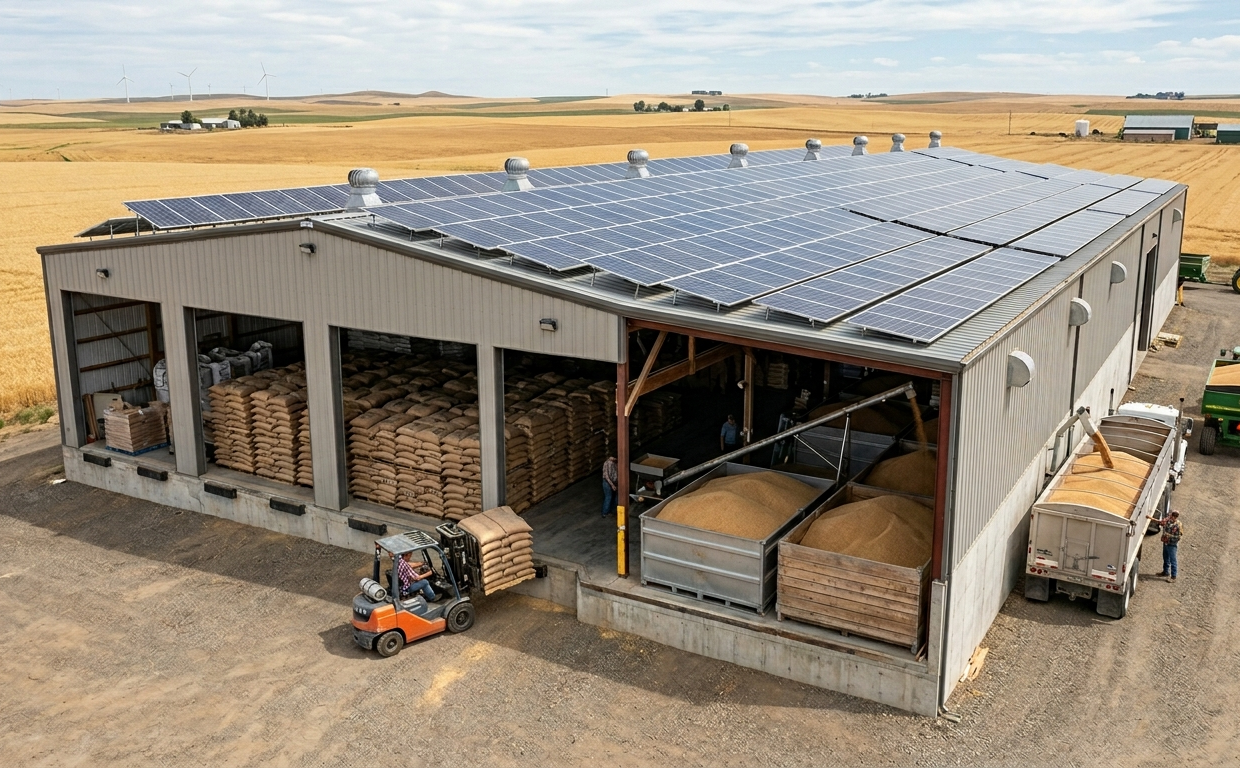
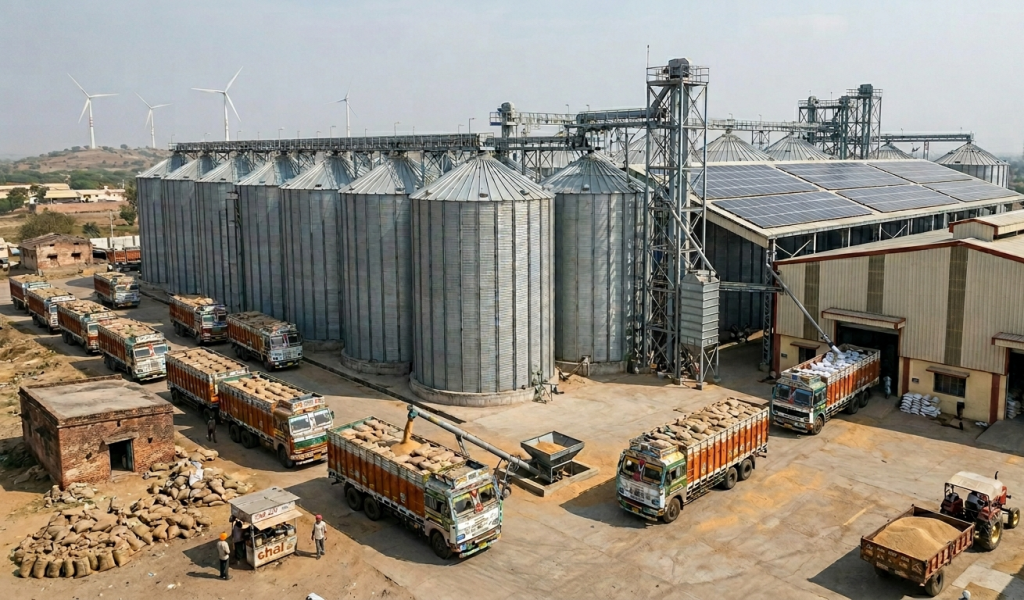
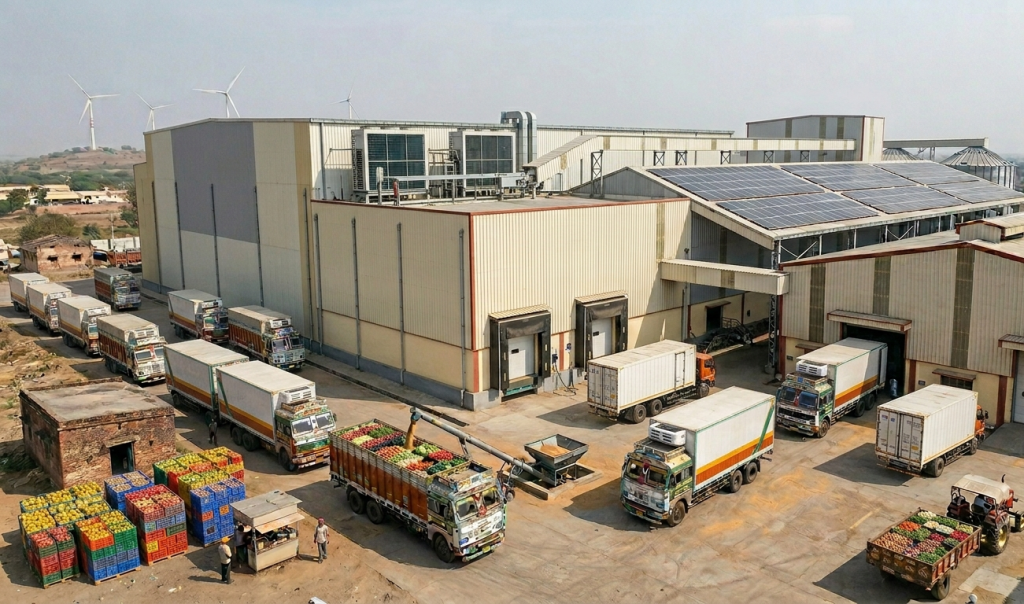
A solar-powered warehouse is a traditional storage facility that uses solar panels, inverters, batteries, and controllers to harness and store solar energy for all its operations, including lighting and ventilation, to running cold storage and grain dryers.
These warehouses use renewable energy for cold storage, grain drying, and preservation systems, which helps in reducing dependency on conventional electricity or diesel powered generators.
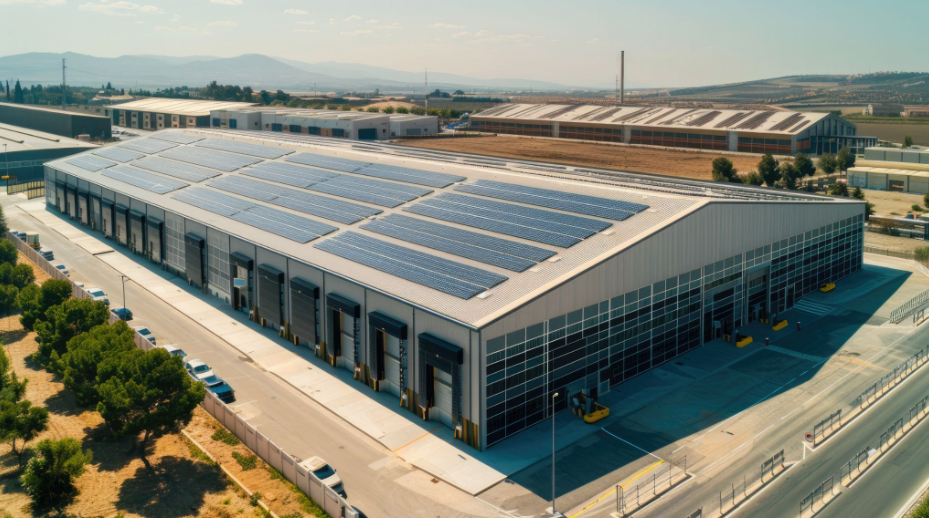
By converting rooftop or nearby open land into solar harvesting space, agribusinesses can turn warehouses into eco-friendly warehousing solutions, reducing costs and emissions in one go.
Why Energy Efficiency Matters in Agri Warehousing?
Agricultural storage isn’t just about walls and roofs, it’s about temperature, humidity, ventilation, and constant electricity.
Energy is critical for:
- Operating cold storage units for perishable commodities like pulses, seeds, and oils
- Operating an aeration system to keep grains mold free
- Powering security and monitoring equipment
However, many rural and semi urban warehouses suffer from erratic electricity supply. Fuel-based generators are expensive and harmful to the environment.
This is why energy efficient warehousing in India is becoming essential, especially when solar power for agricultural warehouses can ensure sustainable operations with minimal operating costs.
Key Benefits of Solar-Powered Warehousing for Farmers & FPOs
Here’s how solar-powered agri warehouses directly benefit farmers, FPOs, and agri cooperatives:
Lower Operating Costs
Once installed, a solar-powered warehouse drastically reduces monthly electricity bills. The sun’s energy is free, and your savings grow every month.
Better Produce Preservation
A steady power supply ensures that favourable climate conditions are maintained in your warehouse, preventing spoilage, fungus, and loss of quality in grains and pulses.
Government Support & Subsidies
Initiatives such as PM-KUSUM and state-level solar incentives provide capital subsidies, easy loans, and tax benefits for agriculture related solar infrastructure.
Eco-Friendly Image & Carbon Credits
Adopting a green approach builds brand value for exporters and agribusinesses while also opening the door to carbon credit income.
Energy Independence
No more dependency on the grid or diesel. You can run your storage facility without interruption, even in areas with power shortages.
5 Facts and Myths about Solar
As interest in solar-powered warehouses continues to grow, so do misconceptions. Let’s bust some common myths and highlight the facts so you can make an informed decision for your agri business.
| Myth | Fact |
| 1. Solar is too expensive for small farmers or FPOs. | With government subsidies, loans, and reduced panel costs, solar-powered agri warehouses are more affordable than ever, even for small and medium-scale operations. |
| 2. Solar systems don’t work in cloudy or rainy weather. | Today’s solar energy systems use high-efficiency panels that still generate electricity even in low light conditions. With a battery backup, you can maintain a power supply even during monsoons. |
| 3. Installation is complicated and time-consuming. | Projects funded by Agriwise often work with reputed solar vendors who manage the entire installation in just a few weeks, minimizing disruption to warehouse operations. |
| 4. Solar panels need constant cleaning and maintenance. | Solar systems require minimal maintenance, requiring only a few cleanings and routine checks per year. Most come with a 20-25 year warranty, ensuring long-term peace of mind. |
| 5. Solar power alone can’t run cold storage units. | With the right system design, solar-powered cold storage is highly efficient. Hybrid systems with batteries or grid backup provide 24×7 climate control. |
Staragri, through its subsidiary Agriwise, offers farmers, FPOs, and agribusinesses access to flexible financing solutions for solar infrastructure, so you can go green without going out of budget.
Is Solar Really a Good Investment for Small & Medium Warehouses?
Yes — and here’s why.
Let’s say you operate a warehouse with an average monthly electricity bill of ₹30,000. With a well planned solar installation, you could cut your electricity costs by 70–80%, saving ₹20,000–₹25,000 every month.
Cost of a 25 kW solar system: ~₹12–14 lakh (before subsidy)
Payback period: 4–5 years (even faster with government subsidies)
After this, your warehouse will operate with minimal energy costs for 15–20 years, improving your margins and long-term profitability.
This is why the solar warehouse investment is becoming popular among small and mid-scale agricultural storage owners as well.
Real-World Example: How Staragri Supports Sustainable Storage
At Staragri, we believe that energy efficiency is crucial for maintaining the quality of stored agricultural produce. That’s why, through our subsidiary Agriwise, we are actively supporting solar financing for agribusinesses aiming to build or upgrade solar-powered agri warehouses in India.
Our financing solutions empower farmers and agribusinesses to invest in clean, cost-saving solar energy infrastructure.
With solar-powered agri warehouses, you can:
- Significantly reduce long term energy bills
- Maintain 24×7 temperature control for sensitive commodities
- Avail benefit from government subsidies and tailored financing through Agriwise
- Store export quality produce without compromising on freshness or grade
Whether you are a small farmer group or a large-scale agri exporter, financing solar power through Staragri and Agriwise means you’re making a smart investment in your yield, profits, and the planet.
How to Get Started with Solar-Powered Warehousing
Here’s a step-by-step guide for FPOs, farmers, and agri companies:
- Assess Energy Needs: Understand your warehouse’s monthly power consumption.
- Evaluate Solar Potential: Measure available rooftop or open land space.
- Choose the Right System: Off-grid, on-grid, or hybrid as per your requirement.
- Apply for Subsidies: Use schemes like PM-KUSUM and state programs.
- Partner with Experts: Choose a trusted financial partner like Staragri for solar financing.
Conclusion: A Smarter Future Starts with Solar
In today’s competitive agriculture market, storing your produce safely and affordably isn’t a luxury; it’s a necessity. And a solar-powered warehouse is proving to be one of the most cost-effective, eco-friendly, and future ready ways to do it.
Whether you are a farmer, FPO, or a growing agribusiness, this is your opportunity to reduce costs, increase reliability, and future proof your operations.
Ready to invest in solar powered storage?
For many agribusinesses, shifting to solar-powered warehousing is no longer just a good idea but a practical next step. With Staragri’s warehousing expertise and financing support from Agriwise, the transition can be simpler than expected.
We’re here to guide you forward if you’re exploring solar for your storage needs.