

In today’s rapidly evolving agricultural economy, building a sustainable future starts not just on the farm, but also in the warehouse.
As agriculture scales up and supply chains advance, green warehousing is emerging as a key pillar in shaping the future of agri infrastructure.
The Urgent Need for Green Transformation
India is one of the world’s largest producers of agricultural commodities. Yet, a large portion of this produce is lost after harvest due to poor storage, outdated facilities, and inefficient energy use.
Traditional warehouses use a lot of electricity, produce carbon emissions, and often do not meet current standards for safe, efficient, and sustainable agricultural warehousing.
With climate change, resource scarcity, and ESG regulations tightening the screws on global trade, ecofriendly warehouses are no longer optional, they’re essential.
What Is Green Warehousing?
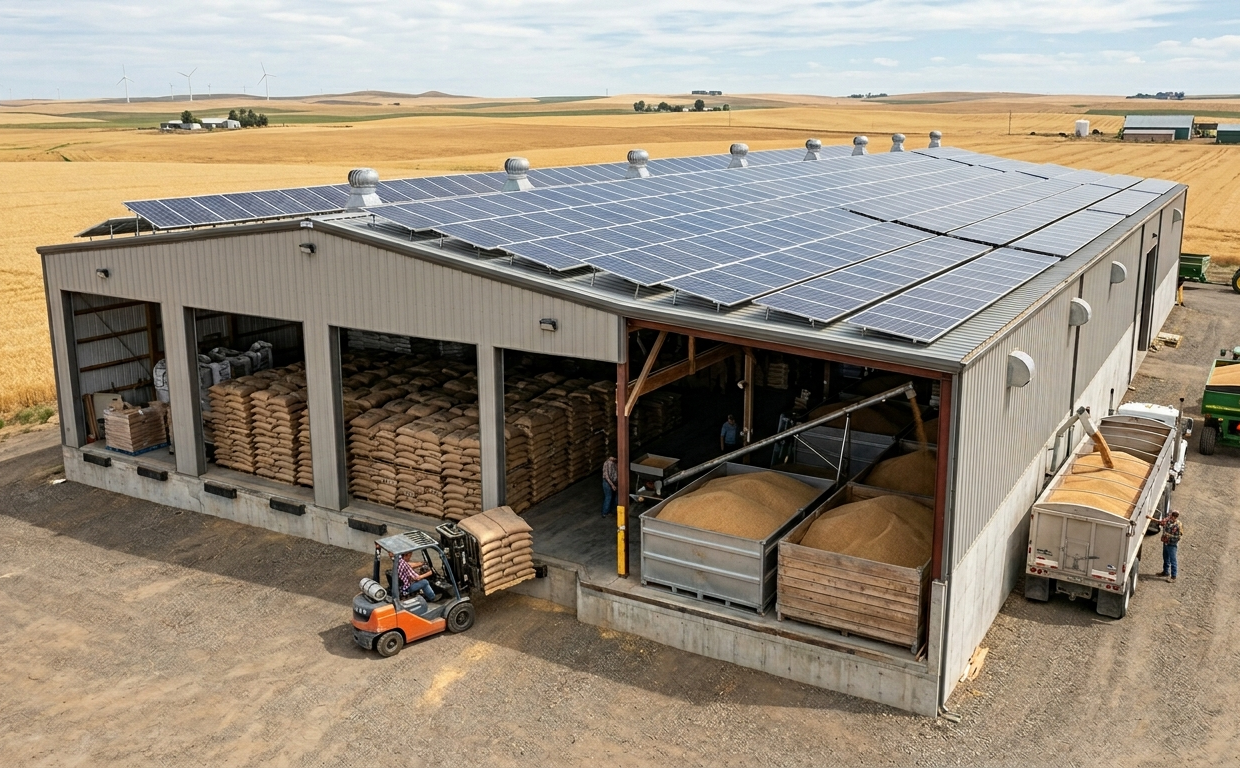
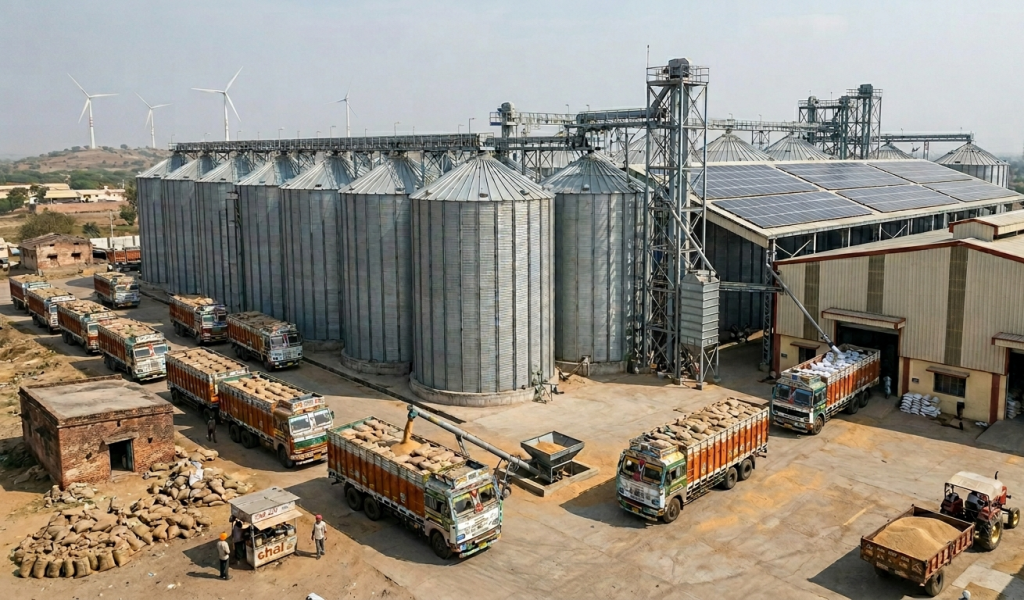
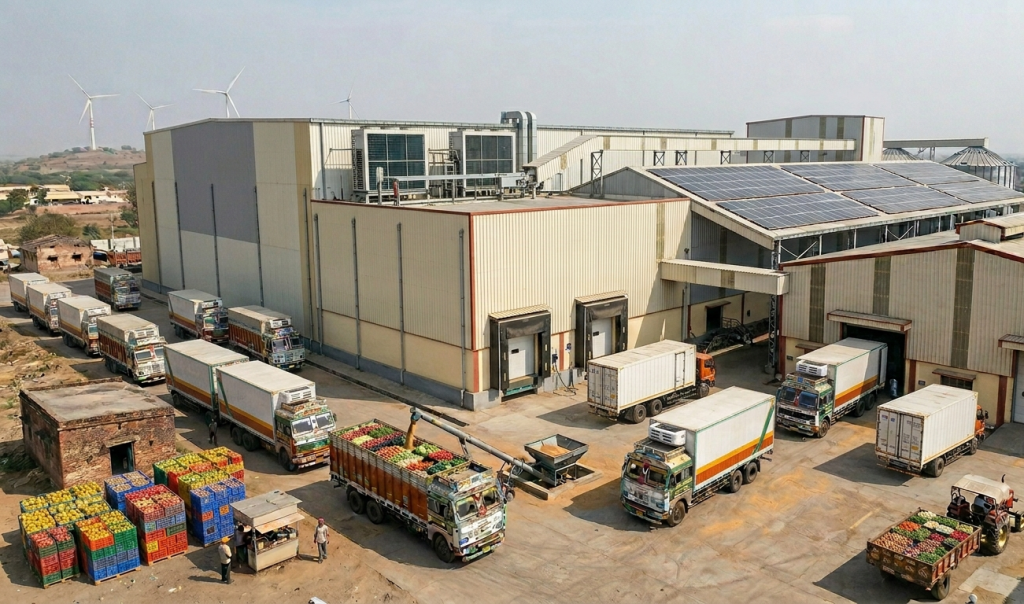
Green warehousing refers to warehouses that are designed and operated with environmental sustainability in mind. These facilities reduce carbon emissions, optimise energy use, and integrate technology to improve operational efficiency without harming the planet.
The key features of a green agri warehouse include:
- Solar-powered lighting and appliances
- Natural ventilation and thermal insulation
- Rainwater harvesting systems
- Energy-efficient temperature control
- Smart sensors for real-time monitoring
- Recyclable materials in construction
- Waste segregation and reuse
For agriculture, this means sustainable post-harvest solutions that not only preserve the quality of commodities but also reduce the environmental impact of food storage and trade.
Why Green Warehousing Matters in Agri Infrastructure
- Reduces Post-Harvest Losses Sustainably
Green warehousing improves storage conditions, temperature, humidity, and air flow, which directly improves the longevity of grain and reduces the spoilage. - Lowers Operational Costs Over Time
Although the initial investment may be high, energy-efficient warehouses reduce electricity bills, minimise wastage, and also provide carbon credits or government incentives. - Improves Agri Export Readiness
Many importing countries are now establishing carbon compliance standards for supply chains. Warehouses powered by renewable energy in agri storage operations can become important export hubs. - Aligns with ESG Goals
For agribusinesses and exporters, switching to sustainable agri infrastructure increases ESG scores and attracts investors looking for environmentally responsible supply chains. - Future-Proofs India’s Agri Logistics
As the agri sector becomes more digital and quality-focused, green warehousing enables better integration with smart supply chains, traceability platforms, and clean energy grids.

How Staragri is Leading the Green Warehousing Shift
At Staragri, we believe that a strong rural economy should also be a sustainable economy. That’s why we have made green innovation central to our warehousing infrastructure across India.
From solar-powered warehouse roofs to smart humidity-controlled storage, we’re building the next generation of agri infrastructure solutions, with the planet in mind.
Our mission is to provide eco-friendly, cost-efficient, and technologically advanced agri warehousing facilities that support farmers, exporters, and agribusinesses alike.
Our Green Initiatives Include:
- Solarization of warehouses in sun-rich states
- Sustainable building materials for new warehouse construction
- Digital warehouse monitoring systems to reduce manual intervention
- Rainwater harvesting and eco drainage systems
- Pilot testing of carbon-neutral agri logistics zones
By integrating green warehousing practices, Staragri not only protects agricultural produce but also supports India’s broader climate and food security goals.
The Business Case: Why Agri Exporters, FPOs & Investors Should Act Now
The future of agri warehousing in India is low-carbon, tech-enabled, and sustainability-driven. Whether you are a:
- Trader/exporter looking for compliant storage
- FPO needs a scalable infrastructure
- Farmers want safe grain storage
- Or an ESG-focused investor exploring green infra opportunities.
Green warehousing is a decision that is beneficial in terms of both profit and planetary impact.
Conclusion:
As the demand for food grows and global trade moves toward stability, India’s agri ecosystem will also have to adapt.
Green warehousing is not just an infrastructure upgrade; it is a strategic investment in a resilient, responsible, and revenue-generating agricultural economy.
At Staragri, we’re proud to lead this movement by blending technology, sustainability, and rural empowerment.
Do you want to learn how our sustainable warehousing solutions can work for your agricultural business?
Contact Staragri today to explore a customised, green-ready warehousing system for the future of agriculture.
FAQs
1. What is green warehousing?
Green warehousing involves designing and operating warehouses using sustainable practices such as renewable energy, efficient resource management, and eco-friendly infrastructure.
2. How does green warehouse benefit the agriculture sector?
It helps reduce post-harvest losses, lowers energy consumption, improves storage efficiency, and supports sustainable agricultural supply chains.
3. What are the key features of a green warehouse?
Common features include solar power systems, rainwater harvesting, natural ventilation, energy-efficient lighting, smart monitoring systems, and sustainable construction materials.
4. Why is the green warehouse important for agri exporters and FPOs?
Green warehouses help meet evolving sustainability standards, improve product quality, and enhance access to domestic and international markets.
5. How does green warehousing support sustainability goals?
By reducing carbon emissions, conserving resources, and promoting efficient operations, green warehousing contributes to environmental sustainability and long-term agricultural resilience.