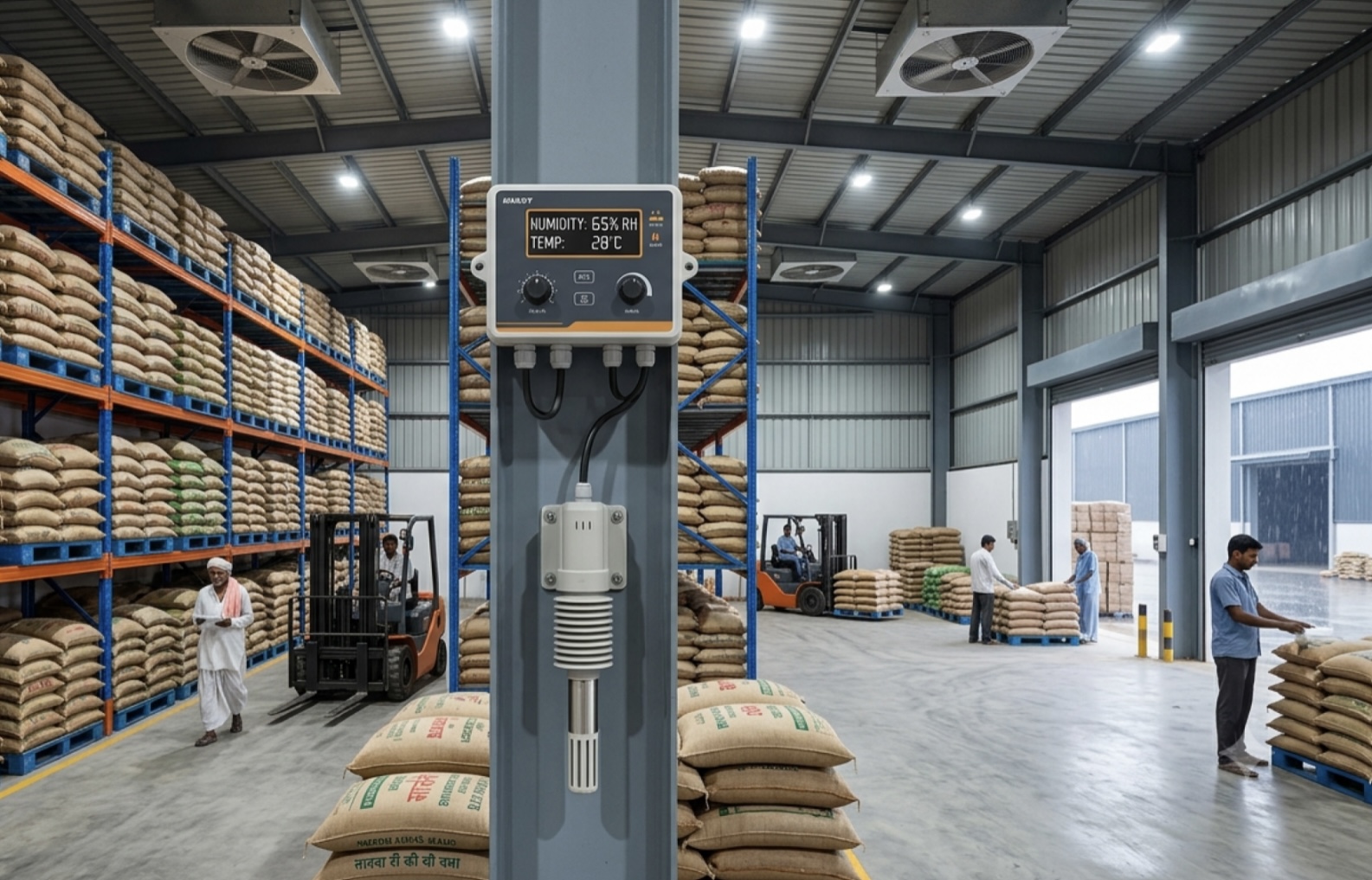
Agricultural commodities can deteriorate during storage if temperature and humidity are not maintained within suitable limits. Excess moisture can encourage mold growth, insect activity and quality deterioration, while unsuitable temperature conditions can affect grain stability and the shelf life of sensitive produce. These risks can lead to financial losses for farmers, traders, processors and warehouse operators.
Traditional warehouse monitoring often depends on periodic manual inspections. Although useful, these checks may not identify sudden environmental changes between inspections. This is where the Internet of Things (IoT) can make a difference.
IoT in agricultural warehousing involves connected sensors that measure storage conditions and transmit readings to digital monitoring systems. By providing timely information, these technologies help warehouse operators identify potential risks, improve storage management and make more informed decisions.
Why Smart Storage Matters
The Food and Agriculture Organisation of the United Nations (FAO) estimated that 13.3% of food was lost globally between harvest and the retail stage in 2023. This includes losses occurring during post-harvest handling, storage, transport, processing and wholesale.
While this figure is not specific to warehouses or attributable solely to inadequate storage, it highlights the importance of improving post-harvest supply chains. Effective monitoring is one part of a broader strategy to protect agricultural produce.
India’s warehouse automation and broader agritech sector is expanding rapidly, with India’s warehouse robotics market valued at approximately USD 560 million in 2025 and growing at a 17.8% CAGR toward USD 1.5 billion by 2031, while the broader India agritech market stands at USD 878.1 million.
These figures show that installing sensors is only the first step. Their accuracy, connectivity, maintenance and integration into warehouse operations determine how useful the collected data will be.
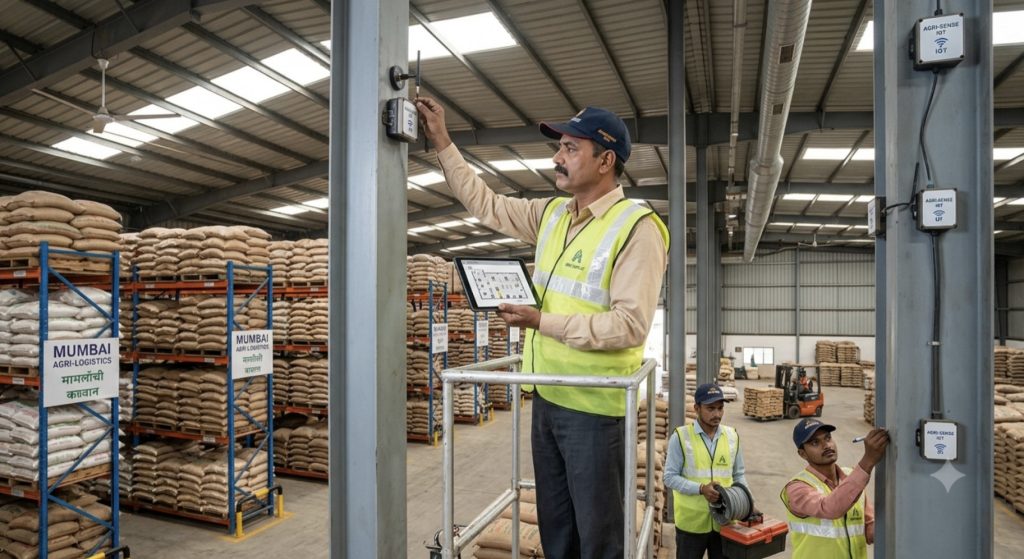
How IoT Sensors in Agricultural Warehousing Monitor Warehouse Conditions
IoT-based monitoring combines sensors, communication networks and software to provide visibility into warehouse environments.
- Temperature sensors: These devices measure ambient or local temperatures at selected warehouse locations. Readings can help operators identify conditions that may affect stored commodities.
- Humidity sensors: Relative humidity sensors measure moisture levels in the surrounding air. This is particularly important for moisture-sensitive grains, seeds and other agricultural commodities.
- Wireless data transmission: Sensors send readings through suitable communication technologies to a central dashboard or monitoring platform. Depending on the system, data may be transmitted over Wi-Fi, cellular networks or low-power wireless networks.
- Automated alerts: Operators can configure thresholds according to the commodity, storage conditions and operating procedures. If readings move outside the defined range, the system can issue an alert for inspection or corrective action.
- Historical data and analytics: Stored readings help warehouse teams identify recurring fluctuations, compare different storage zones and evaluate the performance of ventilation or cooling systems.
The correct monitoring limits depend on the commodity, moisture content, storage duration and facility design. A universal temperature or humidity threshold is not appropriate for every agricultural product.
Challenges in Agricultural Warehouse Monitoring
Manual monitoring can leave gaps between inspections, making it harder to identify short-lived temperature spikes or changing humidity levels. Conditions may also vary between warehouse zones, especially in large facilities or buildings with uneven airflow.
Sensor deployment brings its own challenges. Poor placement can produce readings that do not represent the wider storage environment. Dust, equipment damage, battery failure and connectivity interruptions can also compromise monitoring.
Another concern is the interpretation of data. A sensor reading alone does not identify the cause of a problem. Warehouse teams need operating procedures that explain when to inspect the stock, adjust ventilation, investigate water ingress or seek commodity-quality testing.
Finally, technology must be supported by trained staff and routine maintenance. Digital monitoring is most effective when alerts lead to timely, documented action.
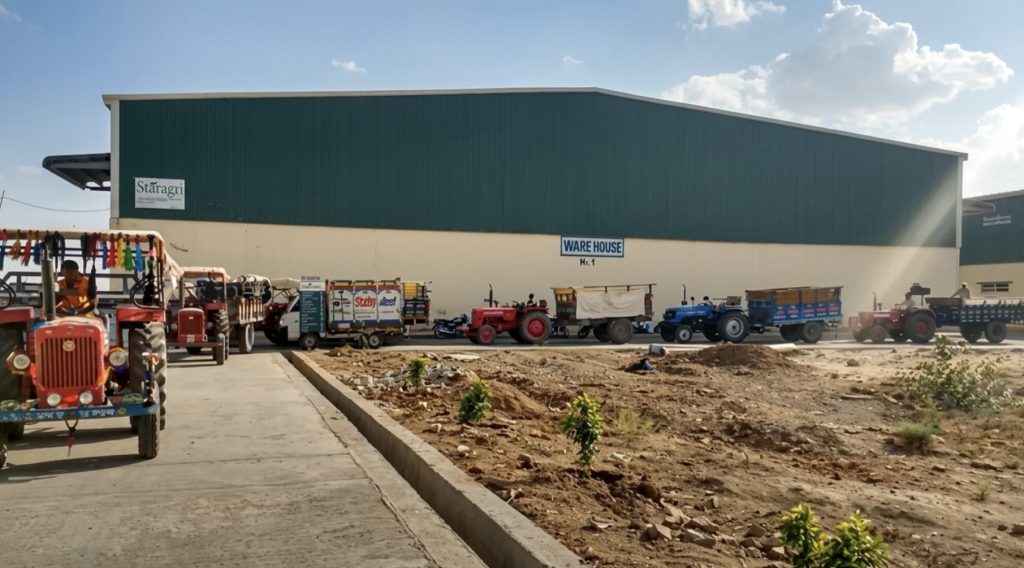
How StarAgri Supports Agricultural Warehousing
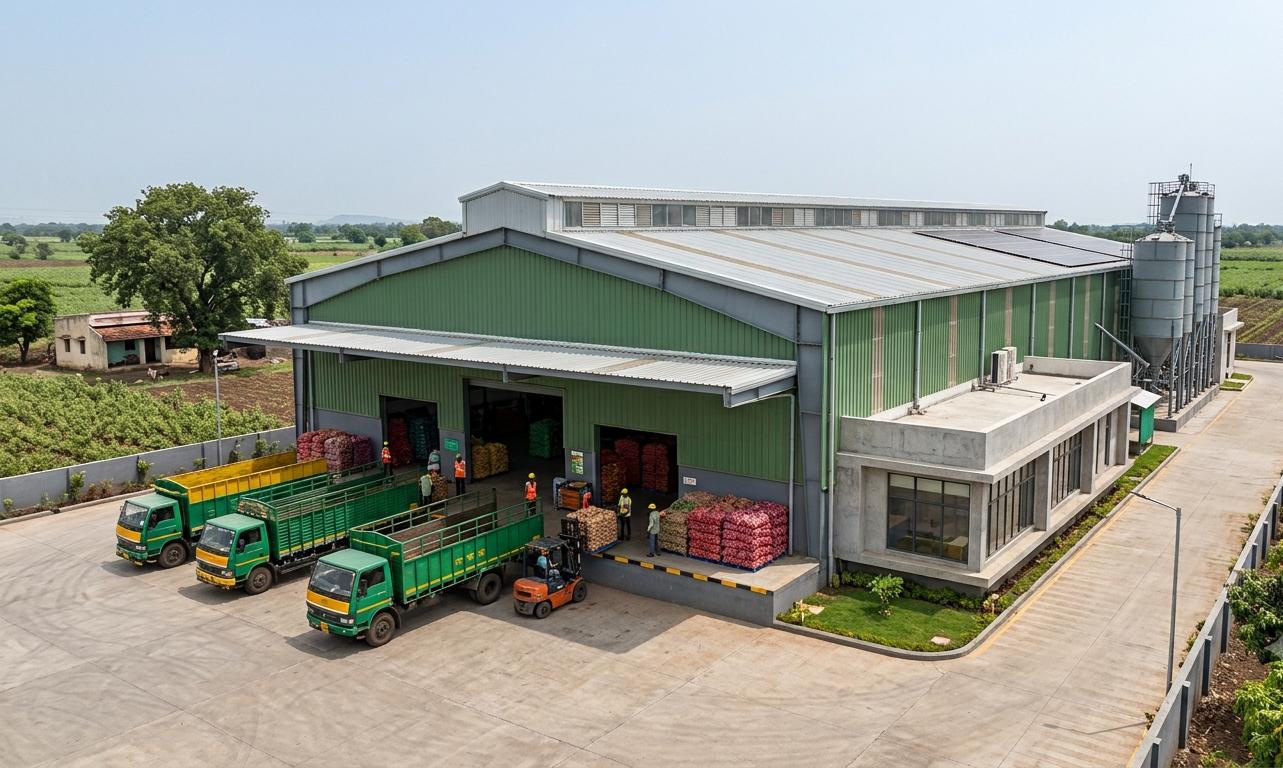
StarAgri provides integrated agricultural warehousing and post-harvest solutions that support commodity storage, quality assessment and inventory management.
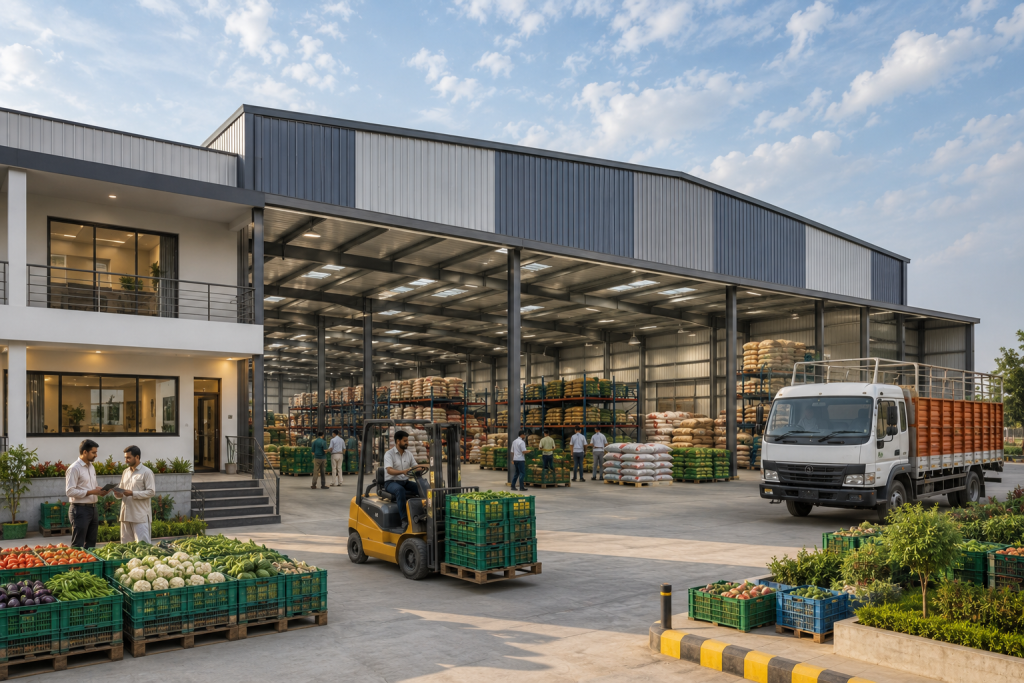
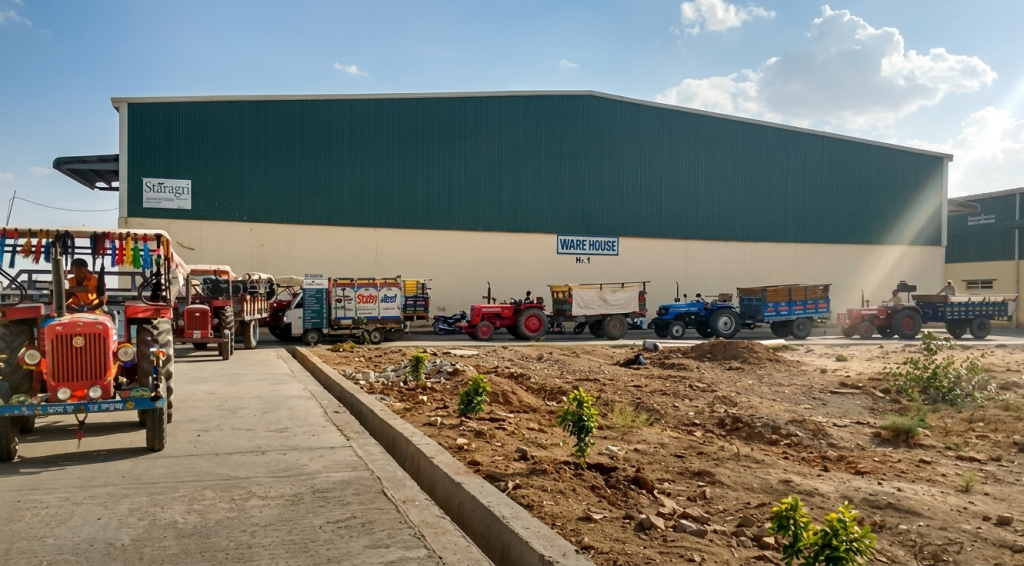
- Agricultural warehousing: StarAgri’s warehouse network provides organised storage infrastructure for agricultural commodities, supporting consistent storage procedures, routine inspections and inventory visibility.
- Commodity quality testing: StarAgri’s laboratory network helps assess the quality and characteristics of stored commodities. Quality testing complements environmental monitoring by providing insights into the actual condition of agricultural produce.
- Warehouse Receipt Finance (WHR Finance): StarAgri supports financing against eligible stored agricultural commodities, helping farmers, traders and other stakeholders access working capital, subject to lender requirements.
- Collateral management: Its collateral management services support the monitoring and management of pledged agricultural stocks through appropriate inventory records and quality-control procedures.
- Support for technology-driven monitoring: IoT sensors in agricultural warehousing can complement established warehousing practices by providing continuous temperature and humidity readings. These insights can help warehouse operators identify potential risks and take timely corrective action.
By combining professional warehousing, quality testing and collateral management, StarAgri supports better post-harvest practices. Specific IoT deployments or features should be verified with the company before being attributed to its facilities.
Conclusion: The Future of IoT Sensors in Agricultural Warehousing
IoT sensors in agricultural warehousing are making warehouse monitoring more timely, measurable and data-driven. When combined with suitable storage infrastructure, trained personnel and quality testing, they can help identify environmental risks before those risks lead to greater commodity losses.
The future of agricultural warehousing will increasingly depend on integrating digital monitoring with preventive maintenance, inventory records and quality-management systems. For businesses handling agricultural commodities, this combination can strengthen storage discipline, improve operational visibility and support better post-harvest outcomes.
FAQs
- What is IoT in agricultural warehousing?
It refers to connected sensors and digital systems used to monitor conditions such as temperature and humidity in agricultural storage facilities.
- Why are temperature and humidity important in warehouses?
Unsuitable conditions can contribute to moisture changes, mould development, insect activity and quality deterioration, depending on the commodity.
- How do IoT sensors in agricultural warehousing alert warehouse operators?
Sensors transmit readings to monitoring software, which can generate alerts when measurements cross configured thresholds.
- Can IoT sensors prevent all agricultural storage losses?
No. They can improve early detection, but outcomes also depend on commodity condition, warehouse design, pest management, ventilation and staff response.
- How does StarAgri support agricultural warehouse management?
StarAgri provides agricultural warehousing, commodity quality testing, collateral management and warehouse receipt finance solutions that support post-harvest operations.