Category Archives: blog

Storing your harvest right is just as important as growing it.
In the world of agriculture, post-harvest storage can mean the difference between profit and loss, quality and spoilage. Whether you’re a farmer, trader, FPO, or exporter, choosing between cold storage vs dry storage is a crucial decision that directly impacts the shelf life, value, and marketability of your produce.

Why Storage Matters in Agriculture?

Every year, a significant portion of India’s produce is lost due to improper storage methods. According to estimates, over 74 million tonnes of food is wasted annually, leading to economic losses of nearly ₹1.5 lakh crore. From grains going moldy in the open to perishable goods rotting in the heat — the lack of scientific storage methods in agriculture hurts both farmers and consumers. With growing exports and evolving consumer demands, investing in proper agricultural warehousing is no longer optional — it’s essential.

At Staragri, we’re on a mission to provide smart, scalable, and cost-effective agri warehousing solutions to minimize post-harvest losses and help agri stakeholders thrive.

What is cold storage in agriculture?

Cold storage in agriculture refers to temperature-controlled warehouses where perishable produce is stored at optimal temperatures to extend shelf life and maintain freshness. This form of temperature-controlled warehousing is ideal for:

  • Fruits and vegetables
  • Dairy products
  • Meat and seafood
  • Floriculture items
  • Specialty crops and herbs

Cold storage helps reduce microbial activity, delay ripening, and maintain nutritional value — making it crucial for preserving export-quality produce and reducing spoilage in transit.

What is dry storage in agriculture?

Dry storage for agriculture is designed for non-perishable and low-moisture commodities like:

  • Grains
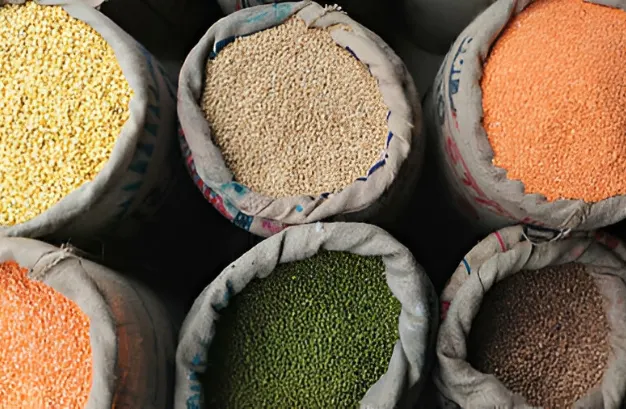
  • Pulses
  • Oilseeds
  • Spices

These products need proper humidity control, aeration, and rodent protection, rather than cooling. Effective dry storage for grains and pulses ensures grain preservation, prevents fungal infestation, and keeps the harvest safe for months. This type of storage is often less expensive and easier to scale for large quantities.
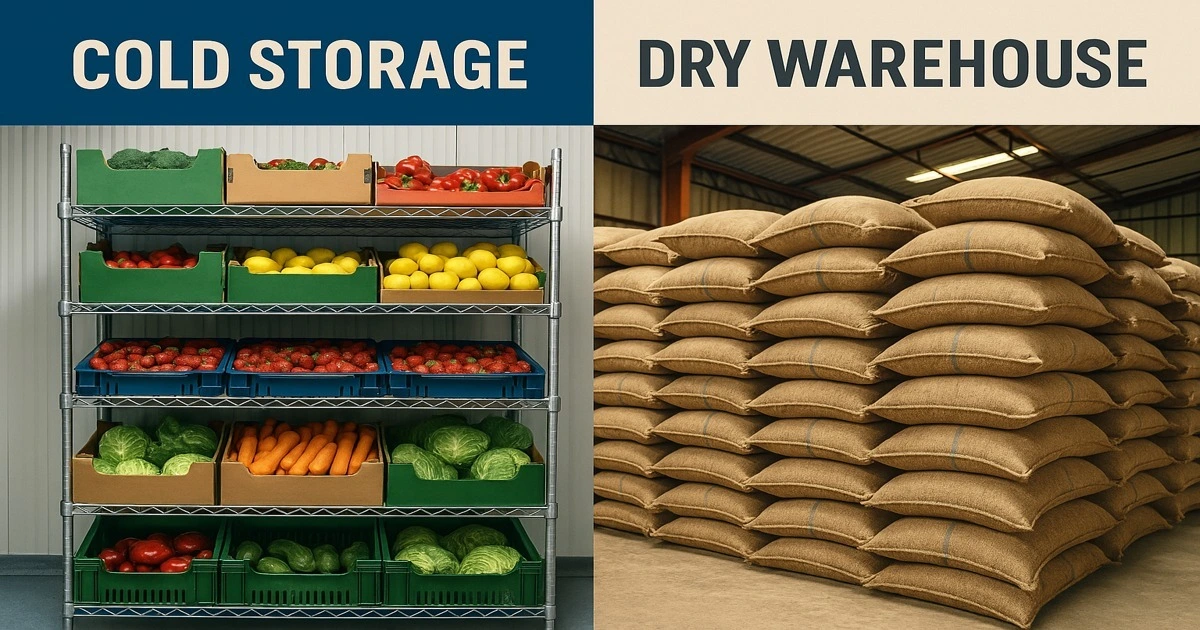
Cold Storage VS Dry Storage

Cold Storage vs Dry Storage: Key Differences

Feature Cold Storage Dry Storage
Temperature Controlled (low temp) Ambient (room temp)
Ideal For Perishable produce Dry, non-perishable goods
Cost Higher setup & maintenance Lower overall cost
Infrastructure Requires cooling units, insulation Requires ventilation, stacking
Shelf Life Significantly extended Moderately extended

Understanding the difference between cold and dry storage in agriculture helps businesses decide based on their crop type, destination market, and duration of storage.

5 Key Benefits of Cold and Dry Storage for Agri Businesses

  1. Minimized Spoilage: Reduces microbial activity and insect infestation.
  2. Improved Shelf Life of Crops: Especially for perishable vs non-perishable crops.
  3. Better Commodity Storage Solutions: Aligns with domestic and export requirements.
  4. Inventory Management: Easier traceability and batch control.
  5. Market Flexibility: Store now and sell when prices are favorable.

Whether you’re dealing with cold storage for perishable agri-products or bulk dry goods, the right storage increases profitability and protects your produce through every step of the farm supply chain.

Best Practices in Agri Warehousing

Following the right agri-warehouse best practices ensures that stored produce remains safe and of high quality. Maintaining proper temperature and humidity helps prevent spoilage, while using pallets keeps the stock off the floor, reducing the risk of contamination. Inventory should be rotated using FIFO or LIFO methods to avoid wastage. Regular pest control and sanitation are also essential for maintaining hygiene. Keeping digital records improves traceability and makes inventory management easier. At Staragri, our warehouse infrastructure is built to do more than just storing, we provide real-time tracking, integrated facilities, and strict safety measures to keep your produce protected at every step.

Which One Should You Choose?

Choosing between cold storage and dry storage depends on factors like the type of produce (perishable vs non-perishable crops), duration of storage, end-market requirements (local vs export), budget and volume, and access to affordable warehousing options for Indian farmers. For example, FPO cold storage is ideal for groups dealing with horticulture, while dry storage is a better fit for cooperatives managing grains and pulses. Many agribusinesses today are even exploring hybrid storage solutions, combining both types to optimize their supply chain.

How Staragri Can Help

As India’s trusted integrated agritech solutions company, Staragri provides secure and efficient warehousing solutions for farmers, traders, FPOs, and agribusinesses. With a pan-India network of 2,189 warehouses across 379 locations in 19 states, Staragri ensures that agricultural produce is stored safely and remains market-ready. Its facilities include modern cold storage and dry storage options, tailored to meet the needs of different crops and commodities. For agri exporters, we offer customized storage solutions along with end-to-end support, covering inventory management, logistics, and documentation. With strategically located warehouses in key agricultural regions, Staragri helps streamline supply chains, reduce post-harvest losses, and facilitate seamless trade. Whether for seasonal crops or long-term storage, Staragri delivers reliable, scalable, and efficient solutions to support India’s agricultural ecosystem.

Conclusion: Make the Right Move with Staragri

Whether it’s cold storage or dry storage for agriculture, the right choice ensures better quality, reduced losses, and higher returns. With Staragri by your side, you get more than just space — you get a partner committed to protecting your harvest and growing your business.

Ready to store smart and sell better?
Get in touch with Staragri today to explore tailor-made post-harvest storage solutions for your agri needs.

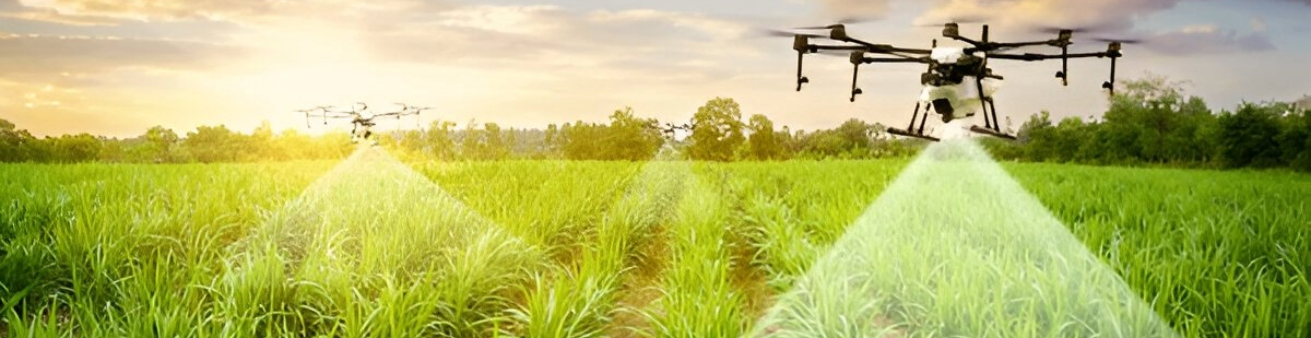
Imagine a world where farmers can predict crop yields with pinpoint accuracy, agribusinesses can track supply chains in real time, and global agricultural trade operates with seamless efficiency. This isn’t just a futuristic vision—it’s already happening, thanks to the advancements in artificial intelligence (AI) and big data.

With AI and big data in agriculture leading the way, technology is completely transforming how agri-commerce technology functions. From smart farming solutions that help optimize crop production to AI-powered farm management that ensures better decision-making, AI is revolutionizing agriculture at every level.

These developments for businesses involved in agricultural commodity trading with AI mean better efficiency, reduced risks, and increased profitability. As the world moves towards digital transformation in agriculture, AI is emerging as a revolutionary tool for farmers, agribusinesses, and agri-tech innovations.

The Growing Role of AI & Data in Agriculture

For decades, the agricultural sector has faced persistent challenges—unpredictable weather, supply chain inefficiencies, market volatility, and increasing production costs. However, with the rise of AI-driven agri-commerce, these traditional obstacles are gradually being overcome.

Here’s how AI and data analytics are shaping the new era of agri-commerce technology:

  • AI in agriculture allows for real-time monitoring, predictive analytics, and automated decision-making, reducing dependence on traditional farming techniques.
  • Agricultural data analytics processes massive amounts of information, enabling farmers and businesses to make data-backed decisions that improve productivity and profitability.
  • Agri supply chain optimization ensures that agricultural products are transported efficiently, reducing food waste and making global trade smoother.

By leveraging AI, AI-driven agri-commerce businesses can streamline operations, reduce costs, and ensure better price predictability, transforming how agricultural commodities are grown, stored, and traded.

AI-Driven Innovations Transforming Agri-Commerce

  1. Smart Farming Solutions & Precision Agriculture

One of the most groundbreaking advancements in agriculture is precision farming with AI, which enables farmers to maximize yields while minimizing resources.

  • Machine learning in farming analyzes historical and real-time data to optimize irrigation, detect pests, and predict crop diseases before they spread.
  • IoT in agriculture integrates smart sensors that monitor soil moisture, weather conditions, and plant health, reducing manual intervention and ensuring optimal resource utilization.
  • AI-powered farm management uses automation to track crop performance, manage labor, and allocate resources efficiently, ensuring higher returns on investment.

By combining AI-driven crop prediction and agri-tech innovations, farmers can now boost their productivity, reduce costs, and enhance sustainability, ultimately leading to higher profits and long-term viability.

  1. AI in Agri Supply Chain & Trade

A strong and efficient supply chain is critical for agribusinesses to remain competitive in the global market. However, disruptions in logistics, transportation, and demand fluctuations often lead to significant losses.

Here’s how AI is solving these supply chain issues:

  • Agri supply chain optimization uses AI-powered analytics to forecast demand, manage inventory, and optimize transportation routes, ensuring products reach their destinations faster and fresher.
  • Blockchain in agri-commerce enhances transparency, trust, and traceability, helping businesses prevent fraud, ensure compliance, and build consumer confidence.
  • AI for agribusiness automates trade negotiations, monitors market fluctuations, and reduces wastage in the supply chain, leading to better efficiency and cost savings.

For exporters, AI in agri exports is reshaping global trade by offering insights into market demands, automating documentation processes, and reducing export-related risks.

  1. AI-Driven Market Trends & Predictive Analytics

The agricultural industry is undergoing a digital shift, with AI-driven crop prediction and market analytics helping businesses stay ahead of demand trends.

  • AI-driven crop prediction helps farmers and traders anticipate market demands, reducing oversupply and price fluctuations.
  • Smart agriculture market trends reveal consumer preferences, allowing agribusinesses to focus on high-demand commodities and increase profitability.
  • Agricultural commodity trading with AI ensures that traders buy and sell at the right time, minimizing risks and maximizing returns.

With AI and predictive analytics, agribusinesses can make strategic decisions, reducing market uncertainties while increasing trade efficiency and revenue generation.

IOT Technology in Agriculture

Challenges & Ethical Considerations

Despite its vast potential, the adoption of AI in agriculture faces several challenges:

  • Data privacy concerns – As AI collects and processes large amounts of farm data, concerns arise regarding who controls this information and how it is used.
  • Technology accessibility – While AI-powered farm management is beneficial, many small-scale farmers lack the financial resources and knowledge to implement these advanced solutions.
  • Adoption barriers – The agriculture sector is traditionally slow to adapt to new technologies, meaning AI adoption may take time and education to become widespread.

For AI-driven agri-commerce to be successful, government policies, industry leaders, and agribusinesses must work together to ensure fair and ethical implementation of these technological advancements.

The Future of AI in Agri-Commerce

Looking ahead, AI for sustainable farming will play a pivotal role in ensuring that agriculture remains profitable, efficient, and environmentally friendly.

  • AI-powered farm management will help farmers reduce resource wastage and increase output with minimal environmental impact.
  • Blockchain in agri-commerce will enhance transparency and build trust among stakeholders in the global agricultural supply chain.
  • AI-driven crop prediction will further refine market forecasting, ensuring farmers and traders can make better-informed decisions.

Staragri is pioneering AI-driven solutions, offering advanced agri-warehousing services that optimize storage, minimize post-harvest losses, and enhance efficiency in the agricultural supply chain. We are dedicated to empowering agribusinesses with cutting-edge AI-driven solutions for agri-warehousing, supply chain management, and market analytics. Future-proof your agribusiness — partner with Staragri today!

Conclusion

The integration of AI and big data in agriculture is not just a trend—it is the future of agri-commerce technology. As AI-powered solutions continue to reshape farming, trading, and supply chain management, businesses that leverage AI-driven agri-commerce will gain a significant edge in efficiency, profitability, and sustainability.

With advancements in precision farming with AI, agri supply chain optimization, and AI in agri exports, the global agricultural industry is moving towards a smarter, data-driven approach. By embracing agri-tech innovations, farmers and agribusinesses can make informed decisions, optimize resources, and navigate market fluctuations with confidence.

India is one of the largest contributors to global agricultural exports, with a diverse range of agri products exports making significant contributions to the economy. As demand for high-quality agricultural commodities continues to rise worldwide, Indian farmers and agri exporters have immense opportunities to expand their reach in the agriculture export market.

In this article, we explore the best agricultural commodities for export in 2025, highlighting their profitability and market demand while considering the impact of India’s agri-export policy and government schemes for agri-exports in India.

Why Are These Commodities Profitable?

Several factors contribute to the profitability of agriculture export commodities, including:

  • Increasing global demand for Indian agricultural commodities due to quality and affordability.
  • Supportive government policies, such as incentives and subsidies for agri exporters.
  • Expanding international trade agreements, opening new export opportunities for Indian farmers.
  • Rising preference for organic and sustainable products in global markets.

Let’s dive into the top agri products for international markets that promise lucrative returns in 2025.

Top 10 Lucrative Agricultural Commodities for Export in 2025

Basmati & Non-Basmati Rice

India remains the world’s largest exporter of rice, with markets in the Middle East, Africa, and Europe. With increasing global food security concerns, rice exports from India are expected to grow further.

Wheat

With improved yields and strong demand from Southeast Asia and Africa, India’s wheat exports are set to expand. Government initiatives under the Indian Agri Export Policy also support this growth.

Pulses (Lentils, Chickpeas, etc.)

Pulses are a vital source of protein globally, with rising demand in Europe, the Middle East, and North America. With production incentives, pulses remain one of the most profitable agricultural exports for Indian farmers.

Spices (Turmeric, Cumin, Black Pepper, Cardamom, etc.)

India is the leading commodity exporter of spices, supplying high-demand agri products for export to the USA, Europe, and the Middle East. The global shift towards natural remedies and health-conscious diets has increased the demand for Indian spices.

Oilseeds (Soybean, Mustard, Groundnut, etc.)

Oilseeds continue to be a strong segment in Indian agri exports 2025, with significant markets in China, the EU, and Southeast Asia. Rising edible oil consumption ensures stable demand.

Agricultural Commodities for Export

Cotton

With strong demand from China, Bangladesh, and Vietnam, cotton remains a key agricultural commodity export. The government’s support for textile exports further enhances its profitability.

Tea & Coffee

India’s premium tea and coffee exports are witnessing growth, particularly in Europe and the USA. With an emphasis on organic and specialty products, these commodities have strong export potential.

Maize (Corn)

Maize plays a crucial role in the animal feed and food processing industries. India’s maize exports are primarily directed toward Vietnam, Malaysia, and South Korea. As a staple agricultural commodity, maize is highly valued for its versatility and nutritional benefits.

Other Industrial Crops (Guar Gum, Medicinal Plants, Herbs)

Industrial crops like guar gum have gained popularity due to their applications in food processing and pharmaceuticals. India is a major agri products exporter of medicinal plants and herbs, supplying raw materials to global wellness and pharmaceutical industries. With the increasing shift toward natural and organic products, these exports are expected to see sustained growth.

Sugar

India is among the top agricultural commodity export leaders in sugar, catering to markets such as Indonesia, Bangladesh, and the UAE. Favorable export policies make sugar one of the most profitable agri-export products from India.

Future Trends & Market Growth Potential

  • Increasing global demand for Indian agri commodities in the organic and sustainable farming sectors.
  • Government schemes for agri exports in India, promoting export infrastructure.
  • Expansion of free trade agreements, reducing barriers for agri products export.
  • Adoption of advanced agricultural technologies is boosting productivity and quality.

Staragri: Your Trusted Partner in Agri Exports

For businesses looking to tap into the best agricultural commodities for export, Staragri offers end-to-end solutions for agri commodity export, including quality sourcing, supply chain management, and global trade facilitation. Whether you are a farmer, trader, or agri products exporter, partnering with Staragri ensures seamless access to international markets.

Conclusion

The export opportunities for Indian farmers in 2025 are immense, with demand surging for high-demand agri products for export. By leveraging government policies on agricultural exports and choosing the right commodities, exporters can maximize profits in the agricultural export market.

Looking for a reliable partner for agricultural export? Staragri is here to help you navigate the global markets with ease. Connect with us today to explore the best agri export opportunities!

Choosing the right agricultural warehouse is an important decision that can affect the quality, shelf life, and market value of your crops. As an individual small farmer or owning a large agribusiness, selecting the right storage facility that meets your requirements can save you from unnecessary loss and increase your profit significantly. A suitable agri warehouse not only safeguards your crops but also offers the potential for improved financial management through facilities such as Negotiable Warehouse Receipt (NWR). In this detailed guide, we will take you through the most important considerations so that you can make a well-informed decision and secure your agriculture investments.

Location & Accessibility

The location of your agricultural warehouse plays an important role in logistics and transportation costs. It saves traveling time, saves your money, and reduces spoilage risk. Secondly, having a strategically located agri warehouse with proper connectivity with prime markets, processing centers, and export destinations can enable you to expand market coverage and get the advantage of better price opportunities.

Key Considerations:

  • Distance from your farm to the warehouse
  • Road conditions and accessibility in all weather conditions
  • Accessibility to major ports, markets, and distribution channels
  • Access to reliable and affordable transport services

Storage Requirements Based on Crop Type

Various crops have various storage requirements, and you must choose an agri warehouse that aligns with these requirements to maintain quality and prevent loss. For instance, grains like wheat and rice need dry and ventilated rooms to keep them from mold, while perishables like fruits and vegetables need cold storage or a controlled atmosphere warehouse to keep them fresh. Understanding the specific needs of your crops will help you to select the most suitable facility.

Common Storage Types:

  • Dry Storage: Ideal for grains, pulses, oilseeds, and spices
  • Cold Storage: Necessary for fruits, vegetables, dairy, meat, and flowers
  • Controlled Atmosphere Storage: For crops like apples and potatoes that need controlled humidity and temperature levels to maintain freshness
  • Multi-Commodity Warehouses: Flexible facilities that allow for the storage of multiple different products under numerous conditions

Infrastructure & Facilities

A well-designed agricultural warehouse provides a protective and safe environment for your crops. Good quality infrastructure minimizes the chances of damage from pests, moisture, or unfavorable climatic conditions. An agriculture warehouse that offers services like sorting, grading, and packaging can increase the marketability of your produce, and help you get a better market price as well as streamline the supply chain.

Must-Have Features:

  • Strong, weather-resistant construction with leak-proof roofing
  • Proper ventilation systems to prevent moisture buildup and spoilage
  • Regular pest management and fumigation services
  • Fire safety systems and emergency response measures
  • On-site handling equipment for easy loading and unloading

Capacity & Scalability

Your selected agri warehouse should have sufficient space for your existing capacity level for production, with the possibility of future expansion. As your farm grows or your production level increases, having the flexibility to expand storage capacity without changing facilities saves you time as well as money. An expandable warehouse offers you the ability to prepare ahead of time and accommodate larger harvests without being concerned about running out of space.

Ask yourself:

  • Can the agri warehouse handle your peak harvest volumes without overcrowding?
  • Are there options to lease extra space or increase storage space?
  • Does the facility allow for seasonal capacity adjustments?

secure agriculture warehouse

Safety & Security Measures

Keeping your crops safe is as important as cultivating them. A good agricultural warehouse must have strong security measures, such as CCTV cameras, a secure entry gate, and on-site personnel to oversee activities 24/7. Theft, damage, and carelessness can lead to huge losses, so it is a good investment to have a secure facility.

At StarAgri, our agricultural warehouses are scientifically built and digitized to optimize storage and management. With tech-enabled solutions like real-time monitoring, automated alerts, and efficient systems, we enhance both security and operational efficiency. This integration of digitization ensures precise crop protection and enhances the overall efficiency of your warehouse operations.

Security essentials:

  • 24/7 surveillance with high-definition CCTV cameras
  • Alarm systems and smoke detectors
  • Access control with restricted entry for authorized personnel only
  • Regular safety audits and inspections

Regulatory Compliance & Certification

Selecting an agriculture warehouse registered with the Warehouse Development and Regulatory Authority (WDRA) guarantees that it adheres to national quality and safety standards. WDRA-certified agricultural warehouses are more trustworthy and provide farmers and traders with access to financial instruments like the Electronic Negotiable Warehouse Receipt (E-NWR) system. The E-NWR allows farmers to use their stored crops as collateral to secure loans, offering much-needed liquidity without the urgency of selling their crops immediately. This system enables farmers to hold onto their goods, wait for better market prices, and avoid selling at a loss. It also ensures transparency, and security, and reduces the risk of fraud, making it a reliable and secure way for farmers and lenders to manage their transactions effectively.

Regulatory benefits:

  • Assured quality and adherence to safety standards
  • Availability of government-backed financing options
  • Increased market credibility and trust with buyers

Technology & Modern Features

Advanced agricultural warehouses use technology to gain maximum efficiency and protection for their crops. Agri Warehouses equipped with IOT sensors can track temperature, humidity, and inventory in real-time, avoiding loss of goods due to environmental conditions. Inventory systems for produce can be easily tracked with digital tools, and automated notifications can alert you to any changes that could impact your crops.

Tech-driven benefits:

  • Real-time monitoring with IoT-equipped sensors
  • Automated tracking and inventory management
  • Digital alerts for temperature or humidity fluctuations
  • Data analytics for better decision-making and yield optimization

Cost & Value-Added Services

Agri warehouses offering bundled services like logistics, crop insurance, and advisory services can significantly streamline post-harvest management. These added services help farmers by ensuring timely deliveries, safeguarding crops, and providing expert guidance, all of which contribute to higher efficiency and better outcomes. Focusing on these value-added services can lead to long-term benefits, making the investment in high-quality storage a smarter choice.

What to look for:

  • Transparent pricing structures with no hidden fees
  • Subsidy eligibility and government-backed incentives
  • Additional services like transportation, quality testing, and packaging

Final Thoughts

Choosing the appropriate agricultural warehouse is a strategic decision that can protect your crops, minimize post-harvest losses, and enable you to get better prices in the market. By carefully considering parameters such as location, crop-specific needs, infrastructure, security, and technology, you can get an agriculture warehouse that perfectly aligns with your requirements and maximizes your farm’s profitability.

With over 2100+ warehouses across India, StarAgri provides scientific storage solutions that ensure the quality and quantity integrity of your agricultural produce. Warehouses undergo rigorous quality checks, offer fumigation services, and are WDRA-accredited, giving you access to financial benefits like Electronic Negotiable Warehouse Receipts (e-NWR). Whether you’re a farmer, trader, or agribusiness, StarAgri’s warehousing solutions are designed to safeguard your harvest and enhance market opportunities.

Are you ready to choose the perfect warehouse for your harvest? Explore Staragri’s agriculture warehouse services today and take the next step toward securing your produce!

In an increasingly interconnected world, the agricultural industry is one of the main pillars of global trade. Food safety is a primary issue when nations trade crops, fruits, vegetables, and other agricultural commodities. Maintaining the quality and safety of agricultural exports is not just about fulfilling regulatory needs; it is about building trust, safeguarding consumers’ health, and sustaining market access.

If you are an exporter or in the agricultural supply chain, it becomes important to know how food safety and quality testing can affect your global success. Let’s understand why food safety is important, how testing supports exports, and what you can do to implement a strong food safety strategy.

The Importance of Food Safety in Agri Exports

Food safety is the backbone of sustainable agriculture and international trade. Strict regulations are imposed by countries to safeguard consumers from harmful contaminants, toxins, and diseases. For exporters, compliance is mandatory. Rejection of shipments, financial loss, and reputation damage in the long term can be the result of non-compliance with safety requirements.

In addition to compliance, food safety is also about consumer trust. When consumers believe in the safety of imported foods, they will be more inclined to buy and recommend them. Such trust is priceless for exporters who want to penetrate new markets.

Suppose you’re shipping fresh fruits to Europe — a market famous for its strict safety controls. Without quality testing, you might unwittingly ship products with pesticide residues above permissible levels. One rejected shipment can be expensive, and repeated failures could mean losing access to the market altogether. That’s the reason, safety controls and testing are so important.

Grain Testing, Food Safety, and Agri Exports

How Quality Testing Strengthens Agricultural Exports

Quality testing is a powerful tool for maintaining food safety and boosting export potential. Let’s break down exactly how it makes a difference:

  1. Ensure Regulatory Compliance:

    Quality testing helps exporters to comply with importing countries’ safety requirements. Exporters can ensure that their products are safe for consumption by analyzing them for pesticide residues, heavy metals, pathogens, and other impurities. Collaborating with accredited laboratories and staying up to date on the most recent regulations in your target markets ensures your products always remain compliant.

  2. Prevents Costly Recalls:

    Catching safety issues before shipment prevents expensive recalls and protects brand reputation. Proactive testing reduces the risk of rejected shipments and the associated financial burden. Think of it as an investment — a small upfront cost for testing can save you from significant losses down the line.

  3. Builds Global Trust:

    Reliable, high-quality products on a regular basis help establish trust with global consumers and buyers. This trust solidifies trading relationships and supports long-term business relationships. When your buyers know you value food safety, they will tend to select your products above others who might not have such a high set of testing standards.

  4. Expands Market Opportunities:

    Complying with strict safety standards creates the potential to access the high-value market with strict import requirements. Exporters who focus on quality testing are at a competitive advantage and can access more profitable trade channels. For instance, nations such as Japan and the US have strict food safety regulations, but once you prove compliance, you can access the large, stable consumer markets.

  5. Promotes Sustainable Practices:

    Quality testing promotes sustainable agricultural practices by helping farmers minimize the usage of toxic chemicals and adopt safer, more environmentally friendly methods. This is good for both consumers and the environment. Eventually, the implementation of sustainable practices can even act as a selling proposition that separates your brand, appealing to conscious consumers who value environmental responsibility.

Adopting food security as a Growth Strategy

Food safety is not just a regulatory hurdle — it’s a growth strategy. Agricultural businesses can enhance product value, protect consumer health, and unlock new global markets by integrating thorough quality testing into their export processes. As international trade evolves, companies prioritizing safety and quality will lead the way, setting new standards for excellence in agricultural exports.

If you’re new to export markets or looking to strengthen your food safety protocols, start by building relationships with certified testing laboratories, staying updated on global regulations, and creating a robust internal quality control system. StarAgri, with its presence in the agricultural ecosystem, is well aware of the challenges exporters face and the role that quality assurance plays in overcoming them.

As an integrated agritech company, StarAgri ensures that commodities are handled, stored, and managed properly, which is essential to the agricultural supply chain. By emphasizing quality assurance, it contributes to the preservation of agricultural products’ integrity and guarantees adherence to safety regulations at different phases. By following stringent regulatory criteria and utilizing its expertise in warehousing, logistics, and commodity management, StarAgri facilitates the smooth flow of goods. By becoming a part of the food safety-focused ecosystem, StarAgri helps to reduce post-harvest losses, minimize risks, and preserve the caliber of agricultural exports.

Procurement in the agricultural sector plays a significant role in ensuring decent prices for farmers and ensuring quality produce reaches the consumers. Individual farmers and Farmer Producer Organizations (FPOs) must learn about the process of procurement so that they can tap into enhanced market access, lower costs, and greater profitability. Let’s break step by step into practical measures.

Step 1: Understanding Procurement Basics

Procurement is the process of purchasing agricultural products directly from farmers, government agencies ,corporates, or the FPOs themselves can perform this. It is primarily undertaken for stabilizing returns for farmers, safeguarding farmers from exploitation by markets, and creating effective supply chains that are profitable for the farmers as well as consumers.

Key Procurement Models:

  • Minimum Support Price (MSP):

    The government levies a minimum price to rescue farmers from declining market prices, and they get a guaranteed minimum income on their crop.

  • Direct Procurement by FPOs:

    FPOs buy and pool produce from member farmers, negotiate at higher prices, and sell in bulk without the intervention of middlemen.

  • Contract Farming:

    Farmers cultivate crops as specified by the buyer, at a pre-agreed price which guarantees them a market for their produce.

Step 2: Forming and Strengthening FPOs

FPOs serve as collective entities that empower small and marginal farmers. Joining as an FPO gives farmers the legal right to access government help, subsidies, and training programs. A well-organized FPO can aggregate resources, access credit, and invest in infrastructure such as warehouses, cold storage, and transport facilities.

Tips for FPO Success:

  • Capacity Building:

    Train FPO members in procurement processes, quality standards, and market trends to improve their knowledge and negotiation skills.

  • Market Research:

    Conduct thorough research to gain insights on buyer requirements, demand levels, and prices to make efficient decisions.

Step 3: Building Market Linkages

Connect with reliable buyers to secure profitable procurement. FPOs should have to proactively establish relationships with local wholesalers, food processing firms, retailers, and even online marketplaces to secure long-term market opportunities.

Tools to Support Market Access:

  • eNAM (National Agriculture Market):

    A digital platform linking buyers and sellers across the country, facilitating transparent price discovery.

  • Agri-Expos and Trade Fairs:

    Valuable opportunities wherein farmers and FPOs can display their produce, network with buyers, and secure bulk buy orders.

Step 4: Managing Logistics and Storage

Good post-harvest management is essential to minimize losses and ensure quality produce. Investment in high quality storage, transportation, and sorting facilities ensures farmers to supply buyer specifications and receive better prices.

Logistics Best Practices:

  • Cold Storage for Perishables:

    Prevent spoilage and maintain freshness for perishable goods like fruits, vegetables, and dairy products.

  • Bulk Transport Solutions:

    Use shared transport services to reduce per-unit transport costs and improve profit margins.

 Step 5: Leveraging Government Schemes

Several government programs support agricultural procurement, especially for FPOs. Availing of these schemes can provide access to financial support, technical expertise, and access to subsidized infrastructure.

Schemes of Special Significance:

  • PM AASHA:

    Provides MSP-based procurement in order to protect farmers from the market fluctuations.

  • Agriculture Infrastructure Fund:

    Provides low-interest loans for developing post-harvest infrastructure in the form of warehouses and processing units. 

  • FPO Promotion Scheme:

    Facilitates FPO promotion, development of capacity, and market outreach.

How StarAgri Helps With Agricultural Procurement

StarAgri makes selling agricultural produce easier by offering procurement solutions that are well-structured, transparent, and seamless. Through StarAgri, more than 145,000 stakeholders, including FPOs, traders, processors, and millers, are assisted in furnishing their markets at economically reasonable prices. StarAgri owns and operates 1,165+ warehouses, strategically located in 200+ sites across 19 Indian states, serving as procurement and delivery points. It works directly with farmers and FPOs to market their produce at real market prices, reducing dependency on middle-men. Additionally, StarAgri ensures strong market linkages by connecting farmers with institutional buyers, processors, and retailers, guaranteeing supply and reducing market fluctuations.

Conclusion

Agricultural procurement is not just about selling crops, it’s about developing sustainable livelihoods. By understanding the procurement landscape, developing strong FPOs, establishing market linkages, and accessing available government resources, farmers can secure better prices and achieve long-term growth. Farmers and FPOs can be market makers rather than price takers with the right approach, and unlock new opportunities for profitability and stability.

Agriculture is the backbone of many economies, and a venture of uncertainties, unstable prices in the market, uncertain weather, and seasonal liquidity often leave farmers with a cash crunch. Credit can be a welcome relief, but getting it is not always that simple, particularly when conventional lenders insist on fixed assets. But wait.. there’s another option!

Agricultural commodities serve as good financial instruments, functioning as collateral to secure credit. This allows farmers and agricultural businesses to take credit without necessarily selling their produce immediately, giving them a stronger grip on money and market decisions. So, what commodities make good collateral? Let’s explore key categories that financial institutions commonly accept.

What Types of Agricultural Commodities Are Accepted as Collateral?

1. Cereal Grains

Cereal grains are one of the most widely accepted forms of collateral due to their long shelf life, high demand, and relatively stable market prices. These grains are essential food staples globally, making them reliable assets for securing credits. Key grains used as collateral include:

  • Wheat – A fundamental crop with large-scale global consumption, wheat remains a safe and widely accepted commodity in collateral management.
  • Rice – Rice, as a staple food, is important, especially in Asian and African markets.
  • Maize (Corn) – Used for human consumption, animal feed, and industrial applications.
  • Barley – Important for brewing and animal feed, the dual-purpose nature of barley increases its collateral value.

2. Pulses and Legumes

Pulses and legumes are high-protein, nutrient-rich crops widely traded and stored, making them ideal collateral assets. Their global demand for direct consumption and food processing strengthens their appeal in agricultural financing. Notable examples include:

  • Lentils – Lentils and Pulses, which are included in the diet in many areas, are easy to store and have stable market demand.
  • Chickpeas – Consumed in various forms worldwide, gram is highly valued in local and international markets.
  • Beans (Kidney Beans, Black Beans, etc.) – Popular globally.
  • Peas – A key ingredient in processed foods and livestock feed.

3. Oilseeds

Oilseeds are highly valuable commodities because they are crucial in edible oil production, animal feed, and industrial applications. These crops have strong market demand and are commonly accepted as collateral:

  • Soybean – A globally traded crop with diverse applications, soybean is a highly liquid asset.
  • Rapeseed & Mustard Seeds – There is a constant demand for these seeds used in oil production in the market.
  • Groundnuts (Peanuts) – Valued for oil production and direct consumption as snacks.
  • Sunflower Seeds – Valued for oil extraction, sunflower seeds are reliable collateral commodities.

4. Spices and Cash Crops

High value crops with stable market demand and long shelf life make excellent collateral options. These include:

  • Turmeric – A spice widely used in food and traditional medicine.
  • Black Pepper – A valuable commodity with international demand.
  • Cardamom – A premium spice primarily grown for export markets.
  • Coffee & Cocoa – Essential cash crops that are major players in global trade and have consistently high value.

5. Cotton and Other Fiber Crops

Cotton and other fiber crops, especially those essential to the textile industry, are widely accepted as collateral because of their long storage life and steady demand. Key examples include:

  • Raw Cotton – Has a stable market due to demand from the textile industry.
  • Jute – Jute is a valuable secondary asset used in packaging, handicrafts, and durable products.

6. Horticultural Produce (Under Controlled Conditions)

Though perishability limits their collateral use, certain horticultural products can be used as collateral if stored in controlled environments like cold storage facilities. Examples include:

  • Onions & Potatoes – Can be stored for extended periods.
  • Apples & Citrus Fruits – When preserved in cold storage, these fruits retain value and market demand.
  • Tea & Coffee – High value crops with long shelf lives and global market importance.

The Role of Collateral Management in Agri Financing

Collateral management is essential in agricultural financing by converting valuable agricultural assets into secured collateral. This strategic process reduces risk for lenders by ensuring stored commodities maintain their quality and market value. At the same time, it empowers farmers and agribusinesses to unlock liquidity, improve cash flow, and access better credit terms. Transparent asset valuation and diligent risk assessment promote sustainable growth in the agriculture sector. Strong collateral management practices foster innovation and ensure long-term financial stability in a dynamic market—a winning lead.

Conclusion

Access to finance is essential for the growth and sustainability of agriculture. Farmers and traders can use agricultural commodities as collateral to unlock financing opportunities, increase operational flexibility, and address seasonal cash flow challenges. As collateral management services evolve, this form of financing will continue to empower the agricultural sector, driving growth and resilience in rural economies.

Imagine you’re a farmer with a warehouse full of crops. You need money now, but the market price isn’t great, and selling might not be the best option. What if there was a way to access funds without selling off your goods? That’s where warehouse receipt financing comes in. By using your stored crops as collateral, you can get access to the money you need right away. It’s like turning your inventory into cash, without the pressure to sell. Let’s take a closer look at how this financing option can benefit farmers and agri-traders

Warehouse receipt financing is revolutionizing the way farmers and agri-traders manage cash flow and operational risks. By using stored commodities as collateral, this financing solution turns passive agricultural products into active assets. This helps optimize farm operations and also ensures that agri-businesses can secure the required funds at competitive rates. With the growing demand for loans against agri commodities and agri-commodity finance, warehouse receipt financing is rapidly becoming a cornerstone in modern agricultural finance.

What is Warehouse Receipt Financing?

Warehouse receipt financing is a type of financial arrangement in which a commodity in storage acts as collateral for a loan. The process works like this:

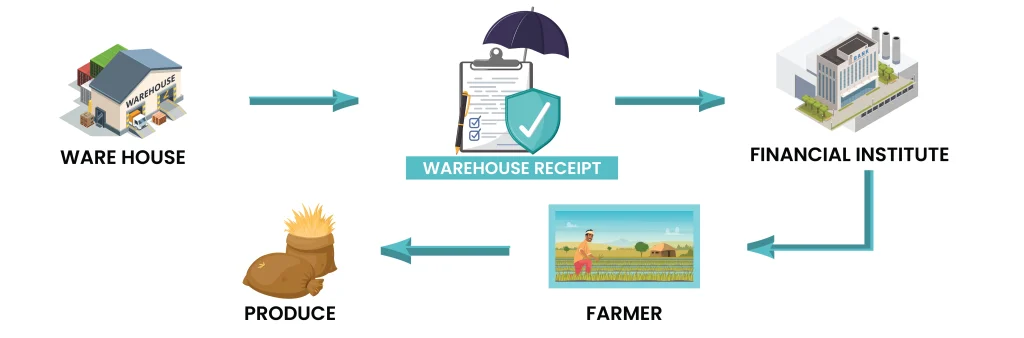
  • Storage as Security: Farmers or agri-traders deposit their commodities in certified warehouses. In return, they receive a warehouse receipt, a document certifying the stored goods’ type, quantity, and quality.
  • Loan Against Warehouse Receipt: These receipts can be presented to banks or financial institutions as collateral to secure a warehouse receipt loan.
  • Negotiable and Electronic Options: Modern advancements have paved the way for negotiable warehouse receipts and electronic warehouse receipts, making the process faster, more secure, and easier to transfer or trade.

This system not only ensures that the stored commodities are secure but also provides lenders with a reliable and transparent way to access the collateral value.

Features and Benefits of Warehouse Receipt Financing

For Farmers and Agri-Traders

  1. Increased Liquidity: By converting stored commodities into financial assets, farmers gain immediate access to credits, ensuring that operational expenses and investments are managed seamlessly.
  2. Risk Mitigation: Warehouse receipt financing reduces the risk of price volatility. Farmers can store their produce until the market conditions become favorable and are not burdened with unsold inventory.
  3. Improved Credit Access: Small farmers and agri traders can also secure loans at competitive interest rates by providing tangible collateral.
  4. Efficient Capital Utilization: The system allows for effective capital recycling, ensuring that money is available when needed without prematurely selling commodities.

For Banks and Financial Institutions

  1. Lower Default Risks: Loans backed by verifiable physical assets reduce the credit risk associated with unsecured lending.
  2. Transparent Valuation: Certified warehouses and standardized receipts ensure that the collateral is valued accurately, facilitating easy loan disbursement processes.
  3. Market Expansion: By offering warehouse receipt loans, banks can tap into a larger segment of the agricultural market, thereby broadening their customer base.
  4. Enhanced Portfolio Security: The dual benefit of physical and digital verification (via electronic warehouse receipts) adds an extra layer of security and efficiency to the loan process.

system of warehouse receipt financing

Who is Eligible for the Warehouse Receipt Loan?

In the eligibility for warehouse receipt financing, we have a lot of people:

  • Farmers and Agribusinesses: Individuals or entities engaged in farming who have stored goods in certain kinds of warehouses.
  • Agri-Traders and Cooperatives: Organizations involved in the purchase and sale of high volumes of agri commodities, if capable of presenting a valid warehouse receipt or electronic warehouse receipt.
  • Registered Producers: Those with proper documents that show ownership and prove that the commodities meet the quality standards as per the warehouse certification.

Financial Institutions usually work with agricultural cooperatives and government programs to make the eligibility criteria less rigid, so that the benefits of agri financing go to as many shareholders as possible. 

Eligible Commodities for Warehouse Receipt Financing

Ultimately, not all agricultural commodities are eligible for warehouse receipt financing.

  • Cereal grains- maize, wheat, rice, barley etc.
  • Pulses and legumes- lentils, beans, peas.
  • Oilseeds- soybean, sunflower, rapeseed.
  • Horticultural products- fruits and vegetables of non-perishable nature or preserved by other means.
  • Other agri-commodities- have met the quality standards and conditioned storage provided by certified warehouses.

The choice of the above commodities was made with the consideration of their market stability, and storage has unearthed security and liquidity in investment able to benefit lenders and borrowers equally. 

Conclusion

Warehouse receipt financing stands out as a transformative tool in the realm of agricultural finance. By turning stored commodities into liquid assets, this financial model provides farmers and agri-traders with the flexibility to manage cash flow, mitigate risks, and take advantage of market opportunities. Whether you’re looking to secure a loan against warehouse receipt or explore electronic warehouse receipt solutions, this innovative approach promises a more secure and profitable future for the agricultural community.

Embracing warehouse receipt financing could very well be the key to unlocking a new era of growth and sustainability in the agricultural sector. Stay ahead of the curve and explore how this financing model can empower your agri-business today!

Just imagine giving your everything into growing a crop only to see a significant portion of it go to waste before it reaches the market. For many Indian farmers, this is a harsh reality. But there’s hope, and it lies in post harvest management. Let us explain why this is crucial and how it is transforming the lives of farmers across India.

What is post harvest management?

Post harvesting is the process that involves dealing with different procedures and methods implemented after the harvesting of produce, focused on reducing losses, maintaining its quality, and preparing the agricultural produce for market. These steps include washing, sorting, grading, holding, packaging, and transporting produce. Simply put, it’s the same care you dedicate to growing your plants, now applied to the fruits they produce. From the field to the consumer’s plate, postharvest management ensures that all the hard work put into farming is not wasted.

Importance of Post Harvest Management

Reduces Losses and Wastage

About 30-40% of harvested commodities in India spoil due to improper handling, storage, and transportation. This is heartbreaking, considering the time, effort, and resources farmers put into their farms. However, the correct post-harvest practices can greatly reduce these losses.

Preserves Quality and Nutritional Value

Consumers are becoming more health conscious than ever, demanding fresh, high-quality produce. Proper storage and handling ensure that fruits, vegetables, and grains retain nutritional value and visual appeal.

Increases Farmer Income

Better quality and less wastage means farmers can sell more produce at better prices. For example, grain stored in humidity-controlled warehouses commands a higher price than grain damaged by pests.

Expands Market Access

With the help of advanced techniques like cold storage and logistics networks, farmers can now sell their produce in distant markets or even export globally. Post-harvest management acts as the bridge link between local farms and global consumers.

Boosts Food Security

In countries like India, where agriculture feeds millions, reducing post-harvest losses can significantly contribute to food security. Every saved grain counts in the fight against hunger.

How Can Indian Farmers Implement Post Harvest Practices?

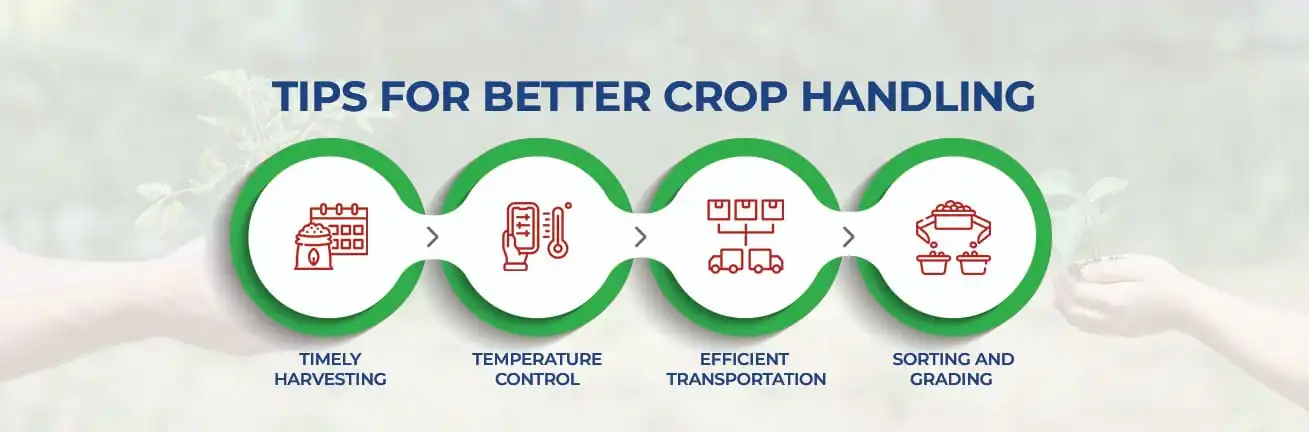
tips for better crop handling

Storage Solutions

Invest in basic storage systems like hermetic bags or metallic silos. Collaborate with nearby cold storage facilities for perishable goods like fruits and vegetables.

Sorting and Grading

Start sorting your produce by size, quality, and ripeness before selling. Cleaned and graded produce commands a premium in markets.

Leverage Technology

Explore mobile apps and IoT devices that monitor storage conditions and predict spoilage. The Indian government and startups offer affordable solutions tailored to small farmers.

Partnerships

Collaborate with organisations like StarAgri or FPOs (Farmer Producer Organizations) that provide post-harvest support, from warehousing to logistics.

Real-Life Success Story

Take the case of a tomato farmer in Maharashtra who stored tomatoes in cold storage during the peak season. Instead of selling at a low price during a market glut, they waited for demand to rise, ultimately earning double the income. Stories like this prove that postharvest management services aren’t just theory; they work.

Government Initiatives for Farmers

The government of India has introduced schemes like the National Horticulture Mission (NHM) and Gramin Bhandaran Yojana, which provide subsidies for building storage facilities and adopting postharvest technology.

Conclusion

Thus, postharvest management is much more than just preventing losses. It empowers the farmers to use their harvest efficiently. The minimum wastage and unlocking of improved market access create a ground for profit and sustainability in India’s agriculture sector. So, beloved farmers, take the first step now. Every grain saved is a step closer to prosperity. If you found this helpful, share it with your fellow farmers and spread the knowledge.

Agriculture is the cornerstone of India’s economy, contributing around 14% to the GDP, 13% to exports, and providing livelihood to nearly half of the population. Indian farmers play a vital role in nourishing the nation, showcasing immense potential for growth and productivity. However, accessing financial resources can often be challenging. This is where collateral management becomes a key enabler, acting as a bridge between farmers and financial institutions, ensuring seamless access to agri-finance. Through this vital function, STARAGRI is making remarkable strides in supporting farmers, helping them unlock their full potential and achieve sustainable growth.

What is Collateral Management in Agriculture?

Collateral management deals with the protection of risk and loss by banks and financial institutions about any amounts lent. In agriculture, this is characterized as pledging physical goods such as commodities or agricultural produce against the agri finance. This ensures that lenders have a safer side in case the borrower is unable to repay. In the context of agriculture, it includes:

  • Safe storage of agri commodities in secure and certified warehouses.
  • Quality and quantity checks to ensure fair valuation.
  • Regular monitoring of the stored produce to protect them.

By effective collateral management, financial institutions can trust the value of the stored commodities, making it easier for them to finance the farmers.

Challenges Indian Farmers Face Without Collateral Management

  1. Limited Financing Options: Many farmers lack the documentation or fixed assets required for traditional finance.
  2. Post-Harvest Losses: Without proper storage, most of the farmers lose a significant portion of their produce, reducing their bargaining power.
  3. Market Price Volatility: Selling at cheapest prices due to immediate cash needs leads to reduced income.

How Collateral Management Can Help in Agri Finance?

Collateral management plays a critical role in making agri finance more accessible to farmers. Here’s how:

  1. Ensuring Fair Valuation

    When farmers store their produce for the long term in well structured and professionally managed warehouses, they get fair and transparent pricing. This ensures they do not have to undervalue their commodity to secure finance.

  2. Timely Access and Instant Credit

    Farmers can get agri finance instantly without unnecessary delays, especially during critical times like sowing and harvesting.

  3. Reduced Dependency on Unofficial Sources

    With better access to formal financial options, farmers can avoid high interest financing from moneylenders and improve financial security for farmers.

Examples of collateral management in agriculture

  1. Warehouse Receipt Financing in India

    Suppose a farmer harvests agri commodities but does not want to sell them immediately due to low market prices. The farmer stores their agricultural produce in a certified warehouse operated by a collateral management company. The warehouse issues a Negotiable Warehouse Receipt (NWR) that certifies the quantity and quality of the stored commodity, by using the NWR as collateral, farmers can secure short-term finance from a bank or financial institution, to get immediate liquidity.

  2. Seasonal Lending for Cash Crop Farmers

    Farmers who grow cash crops like sugarcane or cotton always face cash flow issues between harvesting. To deal with this issue farmers can harvest and store their agricultural produce in a certified warehouse. Farmers, through their collateral, receive a warehouse receipt that can be used as collateral to secure agricultural financing from a bank or financial institution. By obtaining this financing, farmers gain immediate liquidity to cover operational expenses until the next planting or harvesting cycle.

  3. Community Warehousing for Small Farmers

    Small farmers need a secure place to store agricultural commodities but lack personal capacity for professional storage, A community storage is managed by a collateral management company. Farmers can store their produce and use pooled warehouse receipts to obtain financial solutions for group activities or individual needs. The warehouse ensures quality maintenance, enabling farmers to secure better market rates.

STARAGRI’s Collateral Management & Agri Finance Services

STARAGRI has been a trusted partner to farmers, providing top class collateral management and financing solutions. Here’s how STARAGRI is revolutionizing the agri finance sector:

  1. Advanced Warehousing

    Advanced warehousing plays a crucial role in improving collateral management by providing safe and secure storage for agricultural produce. When farmers store their commodities in STARAGRI’s scientifically designed warehouses, it ensures that the produce is protected from weather damage, pests, and theft. This secure storage increases the value of the collateral, as banks and financial institutions can have confidence in the condition of the assets. With safe storage, the risk to the financial institution is reduced, making it easier and faster for farmers to access financing based on the collateral they offer.

  2. Commodity Testing

    Accurate commodity testing ensures the quality and proper valuation of the stored agricultural produce. By conducting rigorous checks through NABL-certified labs, STARAGRI helps establish the exact value of the collateral. This proper valuation gives both the farmers and financial institutions clarity, making it easier for the farmer to secure financing. When the collateral is accurately tested and valued, it builds trust with financial institutions and reduces the risk associated with the loan process, facilitating smoother collateral management.

  3. Streamlined Collateral Management

    STARAGRI simplifies collateral management by helping farmers connect easily with banks and financial institutions. This reduces paperwork, accelerates the loan approval process, and ensures a faster turnaround time. By streamlining the process, STARAGRI makes it easier for farmers to use their stored produce as collateral and receive financing. This efficiency in collateral management leads to quicker access to funds, enabling farmers to invest in their operations without delays.

  4. End-to-End Support

    STARAGRI’s end-to-end support provides comprehensive assistance at every step of collateral management. From the secure storage of agricultural produce to the monitoring of its quality and even facilitating financing, STARAGRI ensures that the entire process is well managed. This holistic approach to collateral management guarantees that the value of the collateral is maintained throughout its storage period, and farmers receive the necessary support to unlock the value of their stored produce through financing. This full support system adds an extra layer of security, making it easier for both farmers and financial institutions to manage collateral effectively.

Benefits for Farmers

STARAGRI offers advantages in services like collateral management and agri finance:

  • Safe Storage:

    Farmers don’t have to worry about their produce getting damaged or stolen.

  • Better Financing Terms:

    Secure storage and fair valuation lead to better financial deals.

  • Reduced Post-Harvest Losses:

    Proper management of storage facilities ensures that farmers retain the maximum value from their commodity.

  • Financial Literacy:

    STARAGRI educates farmers about the importance of financial planning and availing collateral for growth.

The Future of Agri Finance

With advancements in technology, the future of collateral management and agri finance looks promising. Digital tools like real-time monitoring, blockchain for transparency, and AI powered assessment systems are fast-tracking these processes which are intended to be quick and more reliable. STARAGRI is at the forefront of adopting these innovations to empower Indian farmers.

As India’s agricultural sector grows, the demand for robust collateral management services will increase. STARAGRI stands firmly to bridge the gap between farmers and financial institutions so that farming as a community can have a brighter prospect.

Conclusion

Collateral management is not just about securing the finance; it is about empowering farmers with financial stability and growth opportunities. With its expert services, STARAGRI is helping farmers access much-needed credit, reduce post-harvest losses and unlock their true potential.

If you are a farmer looking for reliable collateral management or a financial institution looking for secure solutions, STARAGRI is here to help.