


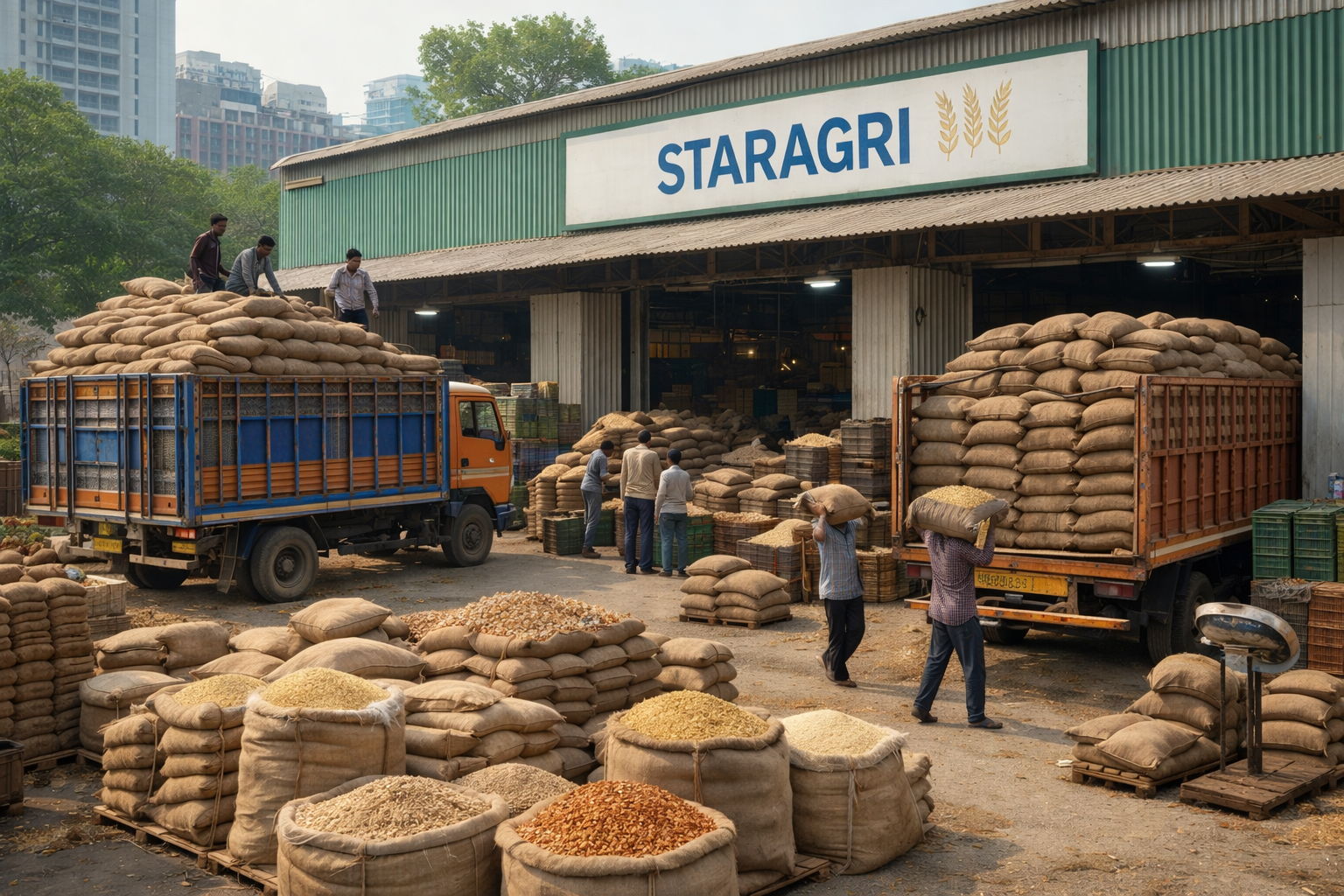
Agriculture doesn’t stop at harvest. It’s where the movement begins.
Once commodities leave the farm, they travel through storage, financing, logistics, and markets before reaching end users. Efficiently managing this journey is what makes modern agriculture work. That’s where supply chain management plays a defining role.
Today, as agricultural trade becomes faster, more digital, and more integrated, strong supply chain management is a mandate. It is becoming a strategic advantage for farmers, traders, lenders, and agribusinesses alike.
What is agriculture supply chain management?
In simple terms, agriculture supply chain management refers to the coordinated handling of commodities from the farm to the final buyer. It involves storage, quality control, logistics, financing, and market linkages working together in sync.
Globally, the agriculture supply chain management market is estimated at about USD 1.1 billion in 2025 and is projected to cross USD 1.2 billion in 2026, reflecting the growing need for visibility, efficiency, and traceability across agri-value chains. As agricultural markets become more connected, the importance of integrated systems continues to rise.
In India, this need is even more pronounced. With large production volumes across grains, pulses, and oilseeds, and with consumption and exports expanding, the ability to move commodities smoothly has become central to agricultural growth.
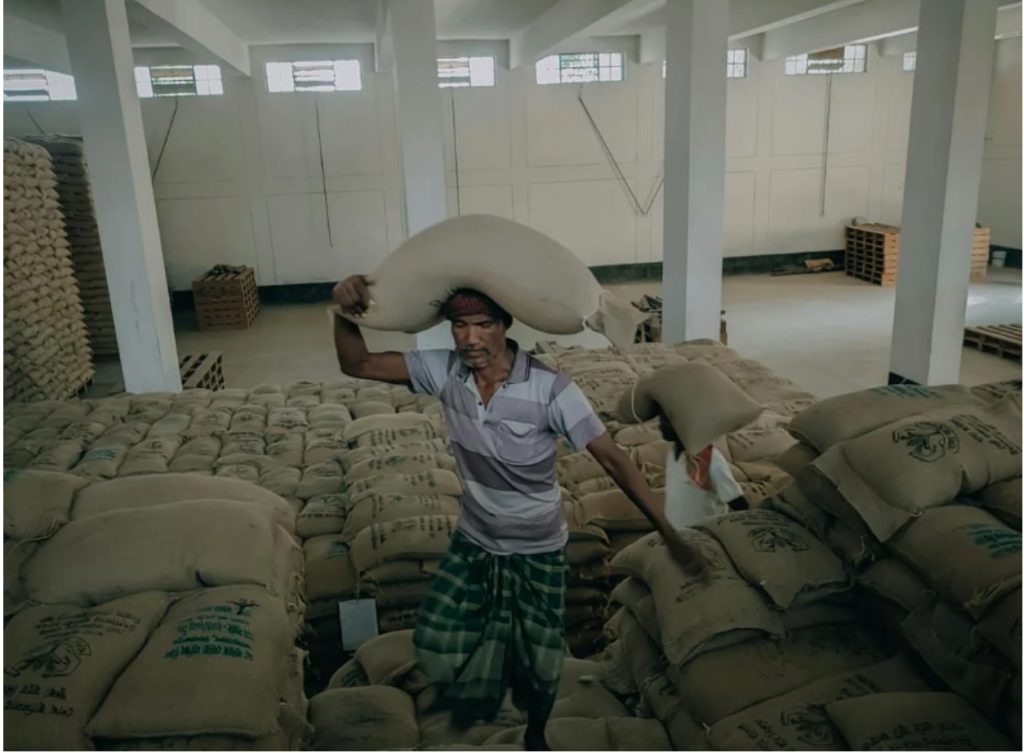
Supply chain management is gaining importance in 2025–26
Warehousing capacity in India has expanded significantly, and cold chain infrastructure now exceeds 40 Million Metric Tonnes nationwide. At the same time, agricultural credit is expected to surpass ₹32 lakh Crore by FY26, underscoring the growing linkages among storage, trade, and finance.
These numbers reflect a broader shift. Efficient supply chain management helps reduce post-harvest losses, improve price discovery, and ensure commodities reach markets on time and in the right condition.
For agribusinesses, this also means better inventory visibility, stronger risk management, and more predictable cash flows. For farmers, it can translate into improved market access and timely payments. For lenders, it enables more secure and structured financing.
From fragmented systems to integrated networks
Traditionally, agricultural supply chains in India were fragmented, with multiple intermediaries and limited transparency. Today, technology and organised infrastructure are changing that narrative. Digital platforms, quality-assured warehousing, and integrated logistics are improving efficiency in commodity movement.
Modern supply chain management is about creating connected ecosystems where storage, finance, and market linkages operate together. This integrated approach helps reduce inefficiencies, strengthen trust among stakeholders, and unlock more value across the chain.
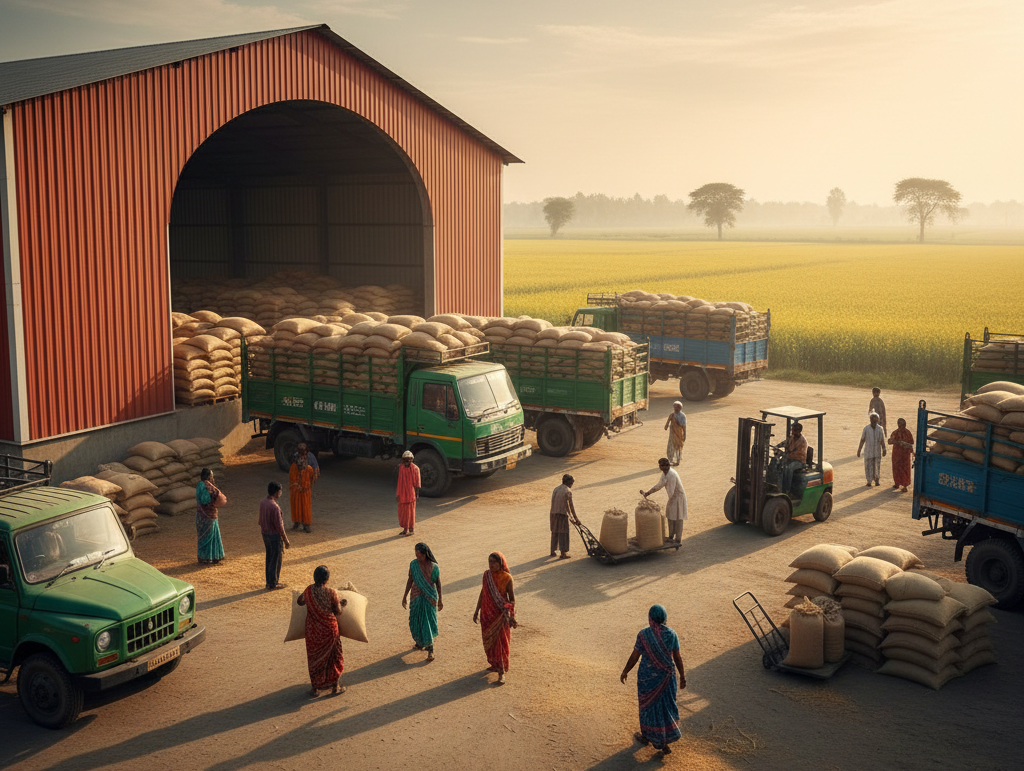
Where StarAgri fits into the picture
At StarAgri, agriculture supply chains are viewed as interconnected systems that require reliability, transparency, and strong operational support. The company’s services are designed to strengthen different points across the agri-value chain.
- Warehousing & storage infrastructure: StarAgri operates and manages a network of 2200+ warehouses across 380+ key locations in 19 states, enabling safe, quality-assured storage of commodities.
- Collateral management services: Through structured inventory monitoring and risk controls, StarAgri supports lenders and traders with secure collateral management for stored goods.
- Agri financing solutions: By enabling warehouse-linked and trade-linked finance, StarAgri improves liquidity across the agricultural ecosystem through Agriwise Finserv, supporting farmers, traders, and processors.
- Integrated tech platform: Technology-led solutions on agribazaar provide visibility into yield & acreage prediction, commodity trading, and maintaining the quality of the stock through NABL- certified StarLabs.
- Market insights & trends: By analysing price movements, demand–supply dynamics, and crop outlooks, StarAgri offers actionable market insights that help stakeholders take informed decisions across storage, financing, and trade.
Technology is reshaping supply chain management
Digital tools are playing an increasingly important role in agricultural logistics and storage. With real-time inventory tracking, quality monitoring, and analytics, technology is helping stakeholders make faster, more informed decisions. Even incremental improvements, such as better warehouse monitoring or streamlined documentation, can significantly enhance supply chain management outcomes. As data becomes more accessible, supply chains are becoming more transparent and responsive.
This evolution is particularly important as India strengthens its position in global agricultural trade and domestic demand continues to diversify.

Looking ahead
The next phase of agricultural growth will be shaped by how effectively commodities move through the system. Investments in storage, financing, and technology will continue to bring greater integration across the value chain.
For organisations like StarAgri, the focus remains on enabling dependable, technology-driven supply chain management that supports farmers, strengthens trade, and improves efficiency across the ecosystem. When supply chains function well, agriculture becomes more resilient, and markets become more accessible, from farm to the future.
FAQs
- What is agriculture supply chain management?
Agricultural supply chain management refers to the coordinated movement of commodities from farm to market, including storage, logistics, financing, and distribution, to ensure efficiency and quality throughout the value chain. - Why is supply chain management important in agriculture today?
It helps reduce post-harvest losses, improves price discovery, enables faster market access, and supports better financing decisions for farmers, traders, and agribusinesses. - How is technology changing agricultural supply chains?
Digital tracking, smart warehousing, and data-driven insights are improving transparency, inventory visibility, and decision-making, making supply chains more efficient and reliable. - What role does financing play in agri supply chains?
Access to warehouse-linked and trade-linked finance ensures liquidity across the chain, allowing farmers and businesses to store, trade, and sell commodities at the right time. - How does StarAgri support the agriculture supply chain management?
StarAgri supports the ecosystem through warehousing, collateral management, financing solutions, and market insights that help strengthen commodity movement from production centres to end markets.
