
Tag Archives: star labs

A farmer harvests a bumper crop of wheat. A trader negotiates a bulk deal on pulses. An exporter ships a container of spices. In each case, there is a single question that determines whether that transaction goes through smoothly, at a fair price, and without dispute: Can you prove the quality?
In India’s agri commodity markets, quality is not just a selling point. It is the currency of trust, and without independent verification, that trust breaks down fast. Adulteration, moisture manipulation, and inconsistent grading cost farmers price premiums they have rightfully earned, expose buyers to supply risk, and erode the credibility of Indian agri commodities in global markets.

This is the problem Star Labs, StarAgri’s scientific quality testing division, is solving.

The Scale of the Quality Challenge in Indian Agriculture

India’s agriculture testing, inspection, and certification market was valued at USD 24,997 million globally in 2024 and is projected to reach USD 31,088 million by 2030, at a CAGR of 3.5%. India is expected to register the highest growth rate of any country in the Asia-Pacific region during this period.

Meanwhile, the agricultural testing market, specifically covering soil, seed, and commodity quality testing, is valued at USD 7.0 billion in 2025 and projected to reach USD 10.0 billion by 2030 at a CAGR of 7.3%. Quality assurance already accounts for 52% of the market by application share.

Yet for much of India’s agri supply chain, quality testing remains an afterthought, a box to be ticked rather than a system that adds measurable value. Star Labs is changing that.
agricultural commodities

What Star Labs Does

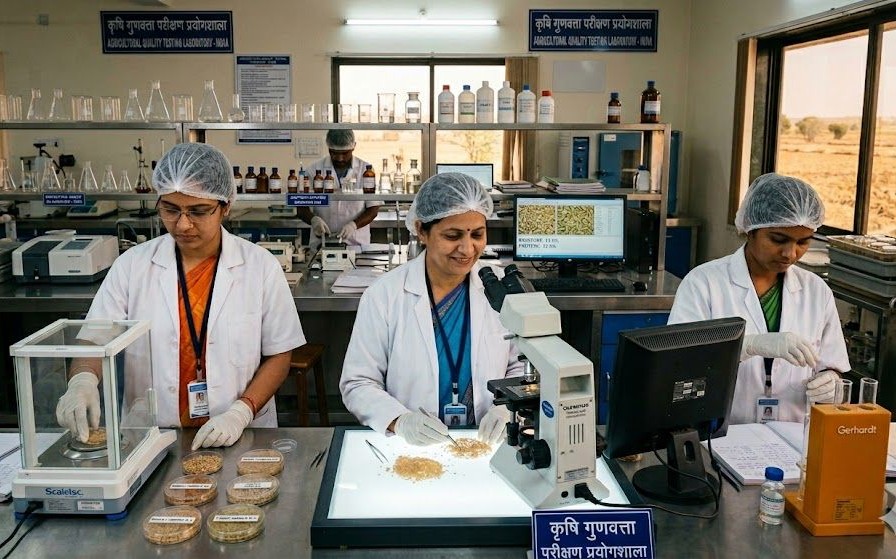
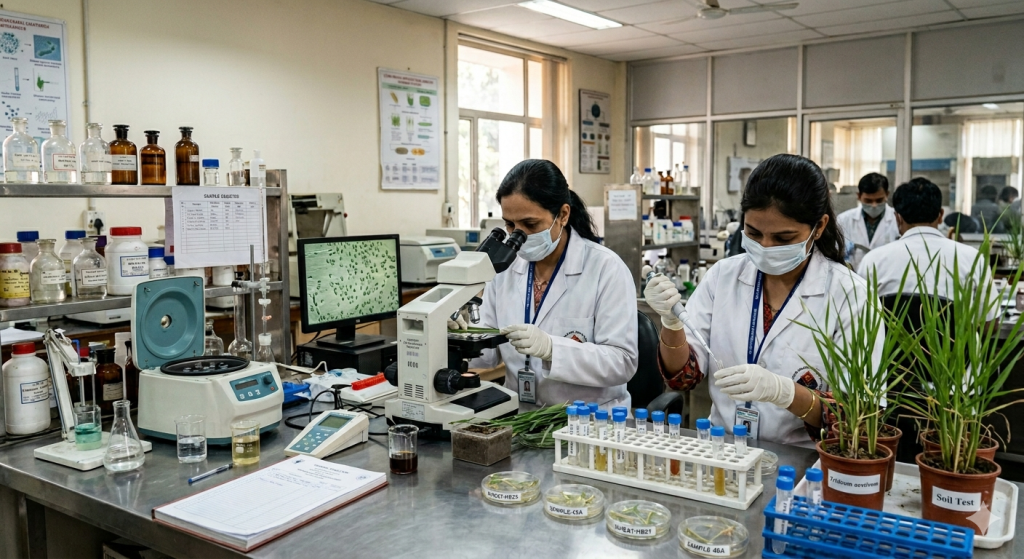
Star Labs provides end-to-end scientific assaying and commodity quality testing services, delivered at scale, aligned to national and international standards, and embedded directly into the commodity storage and trade workflow.

Its testing capabilities span:

  • Moisture Content Analysis: One of the primary determinants of commodity grade and storage suitability. Incorrect moisture readings lead to spoilage in storage and disputes at delivery.
  • Foreign Matter & Impurity Detection: Rigorous screening to identify non-commodity contaminants that affect trade value and compliance.
  • Grain Quality & Grading Assessment: Evaluation against AGMARK-prescribed standards, which currently cover multiple agri commodities including cereals, pulses, oilseeds, spices, and edible oils.
  • Chemical & Residue Testing: Testing for pesticide residues, aflatoxins, and other chemical parameters that are mandatory for export compliance and increasingly expected in domestic premium trade.
  • Nutritional & Active Component Analysis: Critical for value-added agri commodities, processed products, and speciality crops commanding premium market prices.

StarAgri has established 10 Star Labs across India, operational for 70+ commodity types, serving various clients, including farmers, traders, processors, and financial institutions.

Why It Matters for Every Player in the Value Chain

Quality testing at Star Labs is not just about passing a certificate. It creates measurable value at every point in the commodity chain:

  • For Farmers: Certified quality documentation strengthens their negotiating position and unlocks access to premium buyers. AGMARK-certified products command better prices, particularly for the smallholder farmers who make up the majority of India’s farming population.
  • For Traders & Processors: Independent testing reduces disputes, speeds up negotiations, and provides the standardised quality language that makes bulk commodity transactions efficient and auditable.
  • For Banks & Lenders: When agri commodities stored in warehouses are pledged as collateral for financing, quality certification is what gives lenders the confidence to extend credit. Star Labs’ testing underpins StarAgri’s entire collateral management ecosystem.
  • For Exporters: India’s agricultural export compliance requires alignment with FSSAI, APEDA, Codex Alimentarius, and destination-country SPS requirements. Star Labs provides the testing documentation stack that keeps export shipments moving.
soil testing lab for agriculture

Integrated Into the Agri Value Chain

What sets Star Labs apart from standalone testing labs is its position within StarAgri’s integrated agritech ecosystem. Testing happens at the point of warehouse intake, at intervals during storage, and at the point of commodity release, not as a one-off event but as an ongoing quality assurance process embedded in commodity management.

This integration means that by the time a commodity leaves a StarAgri warehouse, its quality history is documented, verifiable, and linked to a chain of custody that supports both trade and financing. In a market where global buyers demand proof over promises, that documentation trail is a competitive advantage.

FAQs

  1. What types of commodities does Star Labs test?
    Star Labs tests a wide range of agricultural commodities, including cereals, pulses, oilseeds, spices, and edible oils, covering quality parameters such as moisture content, foreign matter, chemical residues, and nutritional composition.
  2. How does quality testing help farmers get better prices?
    When commodities carry certified quality documentation, farmers have verified proof of grade to present during price negotiations. This removes subjectivity from the transaction and prevents buyers from undervaluing produce on the basis of unverified quality claims.
  3. Is quality testing mandatory for commodity trade in India?
    For most commodities, AGMARK certification is voluntary. However, it is mandatory for certain categories, such as blended edible oils. For export, testing and certification aligned to FSSAI, APEDA, and destination-country standards is effectively non-negotiable.
  4. How is Star Labs connected to StarAgri’s warehousing and financing services?
    Star Labs is embedded within StarAgri’s integrated agritech ecosystem. Commodities stored in StarAgri warehouses are tested at intake and during storage, ensuring that quality is documented throughout the custody chain, which directly supports the collateral management and financing services offered.
  5. Can exporters use Star Labs testing for international trade compliance?
    Yes. Star Labs testing is aligned to national and international standards, including AGMARK, FSSAI, and Codex Alimentarius benchmarks, providing exporters with the documentation required for cross-border trade compliance.

Disclaimer

The content published on this blog is provided solely for informational and educational purposes and is not intended as professional or legal advice. While we strive to ensure the accuracy and reliability of the information presented, StarAgri make no representations or warranties of any kind, express or implied, about the completeness, accuracy, suitability, or availability with respect to the blog content or the information, products, services, or related graphics contained in the blog for any purpose. Any reliance you place on such information is therefore strictly at your own risk. Readers are encouraged to consult qualified agricultural experts, agronomists, or relevant professionals before making any decisions based on the information provided herein. StarAgri, its authors, contributors, and affiliates shall not be held liable for any loss or damage, including without limitation, indirect or consequential loss or damage, or any loss or damage whatsoever arising from reliance on information contained in this blog. Through this blog, you may be able to link to other websites that are not under the control of StarAgri. We have no control over the nature, content, and availability of those sites and inclusion of any links does not necessarily imply a recommendation or endorsement of the views expressed within them. We reserve the right to modify, update, or remove blog content at any time without prior notice.
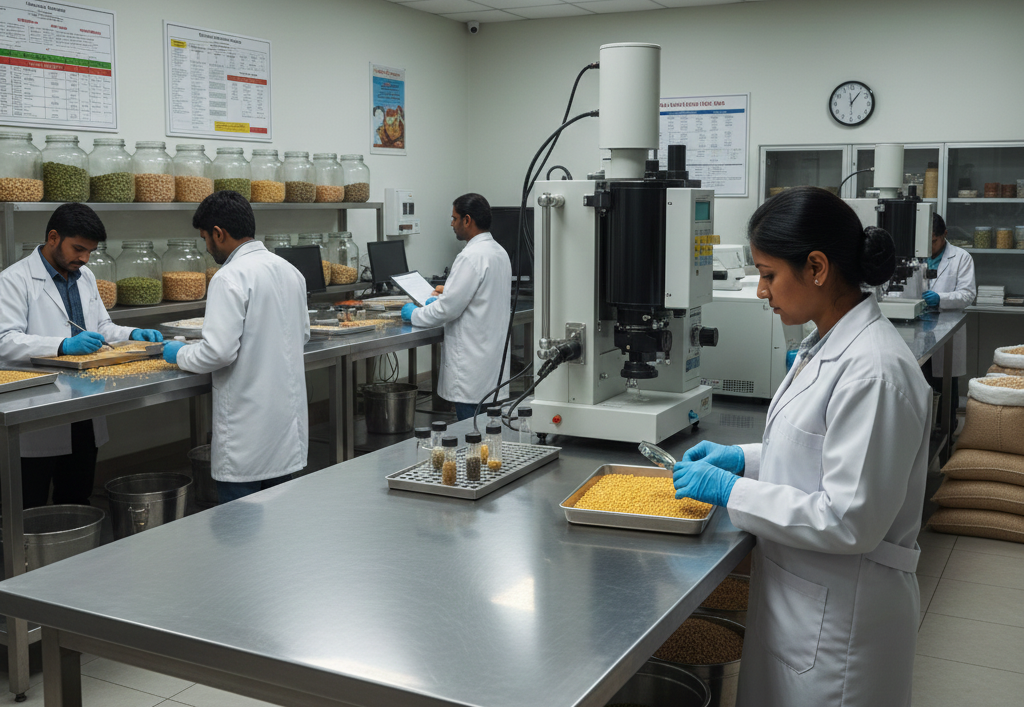
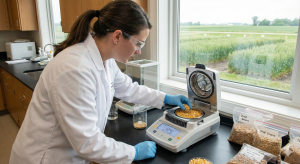
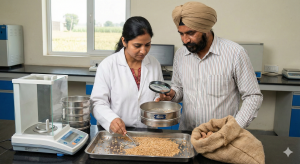
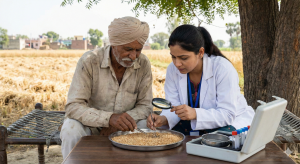
With the Indian agri economy evolving, simply harvesting a good crop is no longer enough. Buyers, processors, warehouses, and exporters expect standards to be scientifically validated. That’s why performing a few key quality tests before selling produce can help farmers lock in better prices, avoid rejections, and ensure compliance.
According to a recent nationwide assessment by NABARD Consultancy Services (NABCONS) commissioned by the Ministry of Food Processing Industries (MoFPI), post-harvest losses across cereals, pulses, oilseeds, fruits and vegetables still hover between roughly 3.9% to 15%, depending on the commodity, underlining how critical testing and proper handling remain.

How can these be reduced? Well, getting the crops assayed is one of many ways. Below are 5 standardised tests that farmers should consider.

  1. Moisture Content Test
    One of the first and most essential quality tests is measuring moisture content, typically following internationally recognised methods such as ISO 712 (for cereals) or AOAC standards. Moisture determines how well grains and oilseeds store, whether they’re safe from fungal damage, and whether they retain their weight up to delivery. For example, for many common grains, the safe moisture content limit is around 12–14% (depending on the crop and standards). Exceeding these limits frequently causes spoilage or leads to rejection at the mandi or warehouse gate. Using a calibrated moisture meter or lab-based drying method gives dependable readings.quality tests
  2. Test Weight / Bulk Density Test
    Another essential measure is the test weight (or bulk density) of grains, which indicates their quality, maturity, and suitability for processing or milling. In India, national grade standards under Agmark and referenced BIS/ISI norms set clear expectations for such parameters. A higher test weight generally correlates with better milling yield, cleaner grain, and higher market value. Conducting this test before sale helps farmers and buyers agree on a fair price based on scientifically measurable quality rather than just appearance or expectation.
  3. Impurity & Foreign-Matter Test
    Quality isn’t just about what’s present; it’s also about what’s not present. Impurities and foreign matter (stones, straw, dust, weed seeds, chaff, husk, etc.) reduce edible yield, cause safety risks, and often lead to lot rejection or price deduction. Under Agmark and food-safety standards, there are defined upper limits for foreign matter and impurities for various commodities. Running an impurity/foreign-matter test — by sieving, cleaning and inspecting a representative sample — helps confirm whether the lot meets accepted standards. For instance, Agmark norms for many grains restrict extraneous matter to not more than 1% by weight (with defined limits for mineral and animal-origin impurities). 
  4. Varietal Purity & Admixture Test
    Beyond physical cleanliness and density, the genetic or varietal purity of a grain or seed lot is increasingly critical, especially for pulses, spices, basmati rice or other high-value crops. Standards set by Agmark and globally respected protocols under the International Seed Testing Association (ISTA) are used to verify that a lot contains only the declared variety and isn’t mixed with inferior or undesired ones. A consistent varietal profile ensures uniform processing results, predictable yields, and trust from processors or buyers.
  5. Aflatoxin & Pesticide Residue (Food Safety) Test
    Finally, and increasingly relevant, are safety and contaminant tests: checking for aflatoxins, mycotoxins, pesticide residues, and other chemical contaminants. With stricter norms by national regulators and growing demand from exporters and institutional buyers, these scientific quality tests are often non-negotiable. This global trend is reflected in the growing size of the food-safety testing market. According to a 2024 industry report, the market was valued at USD 24.37 billion and is projected to reach USD 48.01 billion by 2033, growing at a CAGR of 7.8% from 2025 to 2033.

Importance of these tests

A 2024 study by NABCONS, under MoFPI, reports post-harvest losses ranging from ~3.9% to ~5.9% for cereals, 5.6–6.7% for pulses, 2.9–7.5% for oilseeds, and up to 15% for fruits/vegetables across various commodities in the 2020–22 period, the impact of untested or poorly graded produce on farmer income becomes clear. These losses stem from spoilage, contamination, rejection, and quality discounts, but many can be avoided or reduced if farmers run proper quality tests before sale.
By using recognised tests (such as moisture, bulk density, impurity checks, varietal purity, and safety screening), farmers not only ensure better acceptance but can also tap into higher-value markets, such as institutional buyers, processors, and exporters, that demand documented proof of quality and safety. Moreover, in a world where the global food-safety testing market is booming, investing in quality checks isn’t just about compliance; it’s about positioning produce as premium, trustworthy, and export-ready. 

Star Labs: A crop quality assessment facility by StarAgri

This is where a service-oriented agritech infrastructure becomes crucial!
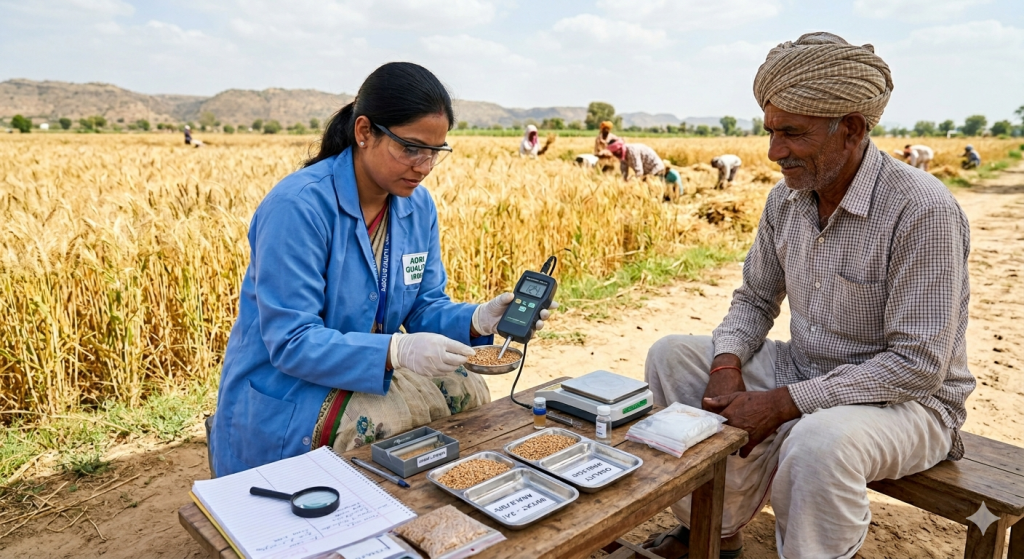
StarAgri, through its Star Labs network, offers accessible, standard-compliant testing services: moisture meters, calibrated bulk density measurements, impurity and foreign-matter analysis, seed/varietal purity tests, and residue screening (mycotoxin, pesticide) via accredited partner labs. By combining these tests with transparent sampling protocols, documentation, and traceability, StarAgri lowers barriers to farmers’ access to premium value chains, reduces disputes at mandis or warehouses, and helps build trust with buyers and institutions.

FAQs:

  • What are the most important quality tests farmers should perform before selling produce?
    The most essential quality tests include moisture content, test weight, impurities & foreign matter, varietal purity, and aflatoxin or pesticide residue checks. These tests help farmers determine market grade, meet buyer specifications, and secure better pricing.
  • Why is moisture content testing so critical for crop quality?
    Moisture content directly affects shelf life, storage losses, and price discovery. High moisture levels lead to fungal growth, aflatoxins, and buyer rejection. Most commodities have recommended moisture limits—e.g., wheat (≤12%) and chana (≤10%)—to ensure safe handling and reduce spoilage.
  • Can farmers access scientific quality testing without expensive lab equipment?
    Yes. Facilities such as Star Labs by StarAgri offer ISO-aligned, FSSAI-compliant testing for moisture, impurities, mycotoxins, and more. Farmers can walk into the nearest StarAgri warehouse or partner point to get quick, accurate quality reports at affordable rates.
  • How does quality testing help farmers get better prices?
    Quality tests determine grading (A/B/C), which directly impacts price negotiations. Produce that meets buyer standards—especially in moisture and purity—can receive 5–15% higher rates in mandis, auctions, and B2B procurement channels.
  • Are aflatoxin and pesticide residue tests required for domestic sales?
    While not mandatory for all local trade, many processors, exporters, and food companies require compliance with aflatoxin (<20 ppb for groundnuts) and pesticide limits as per FSSAI MRLs. These tests are essential if farmers supply to premium markets or export-oriented buyers.
  • How does StarAgri support farmers with quality testing?
    StarAgri provides scientific sampling, commodity grading, lab-certified testing, and quality assurance reports through Star Labs. These tests help farmers access finance, reduce disputes with buyers, and improve overall transparency in the supply chain.

Disclaimer

The content published on this blog is provided solely for informational and educational purposes and is not intended as professional or legal advice. While we strive to ensure the accuracy and reliability of the information presented, StarAgri make no representations or warranties of any kind, express or implied, about the completeness, accuracy, suitability, or availability with respect to the blog content or the information, products, services, or related graphics contained in the blog for any purpose. Any reliance you place on such information is therefore strictly at your own risk. Readers are encouraged to consult qualified agricultural experts, agronomists, or relevant professionals before making any decisions based on the information provided herein. StarAgri, its authors, contributors, and affiliates shall not be held liable for any loss or damage, including without limitation, indirect or consequential loss or damage, or any loss or damage whatsoever arising from reliance on information contained in this blog. Through this blog, you may be able to link to other websites that are not under the control of StarAgri. We have no control over the nature, content, and availability of those sites and inclusion of any links does not necessarily imply a recommendation or endorsement of the views expressed within them. We reserve the right to modify, update, or remove blog content at any time without prior notice.