Tag Archives: agri warehousing

India is among the world’s largest producers of agricultural commodities, with foodgrain production crossing 350 lakh MT in 2024-25, that is 7.65% increase from the previous year. Yet, storage inefficiencies continue to erode farmer income, disrupt supply chains, and impact national food security. As the country aims to modernise its agri-logistics ecosystem, strengthening storage infrastructure and adopting technology-led solutions has become critical.

What are the biggest agriculture storage challenges in India, and how are  StarAgri’s integrated technology and infrastructure solutions helping address them? Let’s find out.
agriculture loss

The scale of India’s agriculture storage challenge

Despite record production, India loses a significant share of its produce post-harvest due to inadequate storage and logistics. Estimates suggest:

  • India loses around 10% of its total foodgrain production post-harvest and over 30% of itsfruits and vegetables due to poor storage and handling.
  • Annual post-harvest losses amount to nearly ₹1.5 lakh crore, highlighting the economic cost of inefficiencies.
  • The country has 917.83 lakh metric tonnes of grain storage capacity and about 8,815 cold storage units with a total capacity of ~40 million tonnes, but distribution remains uneven and insufficient in many regions.
  • Even as government stocks are losing value, thousands of tonnes of grain have been damaged in recent years due to agriculture storage issues.

Biggest agriculture storage challenges in India

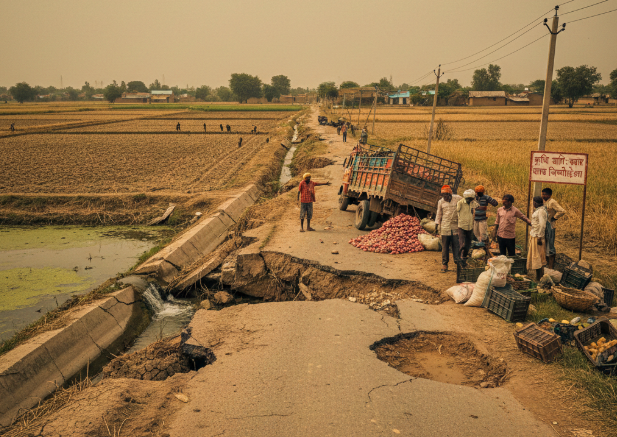
  • Inadequate and uneven storage infrastructure: Although storage capacity has grown, modern warehouses and cold chains are concentrated in select states and commodities. Many farmers still rely on traditional or open storage, which leads to moisture damage, pest infestations, and quality deterioration. This mismatch between production growth and storage infrastructure results in supply gluts during harvest seasons and distress selling by farmers.
  • High post-harvest losses: Losses occur across the value chain, from farm-level handling to storage and transportation. Cereals alone face losses of over 12 million tonnes, while horticulture losses exceed 49 million tonnes annually. Poor agriculture storage not only reduces available food but also impacts price realisation and export competitiveness.
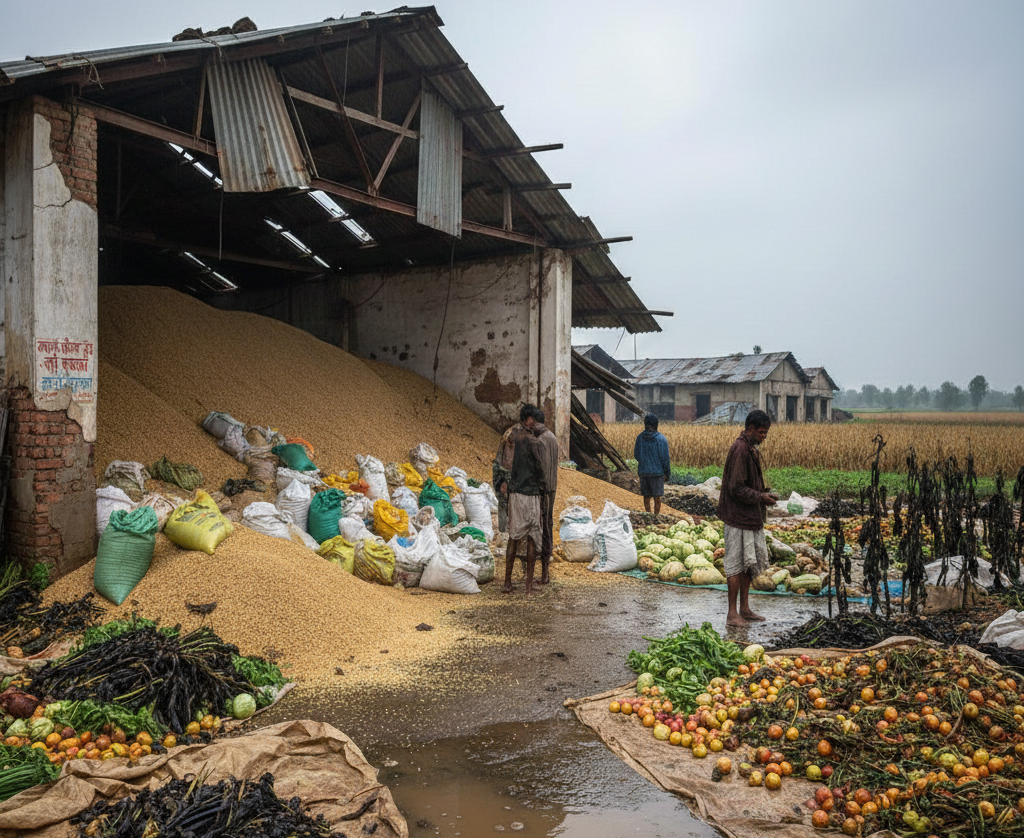
  • Lack of scientific warehousing and quality monitoring: Traditional storage methods often lack temperature control, aeration, and quality testing. This leads to grain spoilage, contamination, and inconsistent quality, making it difficult for farmers and traders to access premium markets or financing.
  • Limited access to finance linked to storage: Farmers often sell produce immediately after harvest due to cash flow constraints. Without access to warehouse-receipt financing or collateral management systems, they cannot hold produce to benefit from better prices.
  • Fragmented supply chains and limited transparency: India’s agri-supply chain involves multiple intermediaries and limited digital tracking. This fragmentation reduces visibility on stock levels, quality, and movement, leading to inefficiencies and wastage.

StarAgri’s technology-led solutions for storage challenges

As one of India’s leading integrated agritech players, StarAgri combines physical infrastructure with digital tools to modernise agricultural storage and post-harvest management.

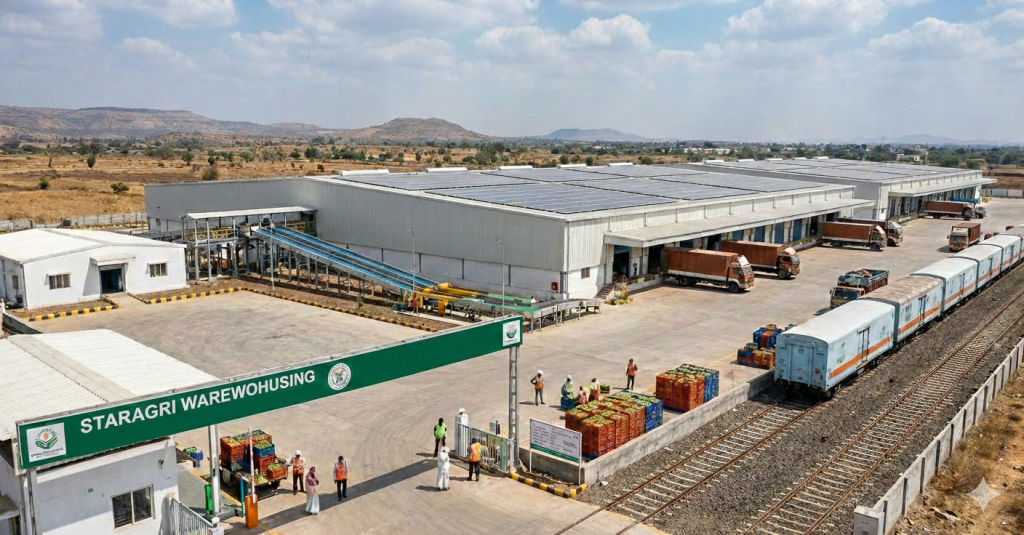
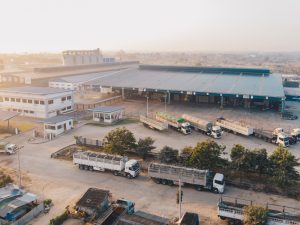
  • Scientific warehousing network: StarAgri operates 2,200+ warehouses across 400 locations, with a storage capacity of over 5 Mn metric tonnes. These facilities are designed for scientific storage with proper grading, fumigation, and monitoring, helping reduce spoilage and maintain quality. By providing reliable storage close to production centres, StarAgri enables farmers and agri-businesses to store produce safely and avoid distress sales.
  • Collateral management and warehouse receipt finance: StarAgri’s collateral management ecosystem supports warehouse-receipt-backed financing of over ₹1.5 lakh crore cumulatively, enabling farmers, traders, and processors to access working capital. This allows stakeholders to store produce and sell when market conditions are favourable, improving price realisation and liquidity.
agriculture storage

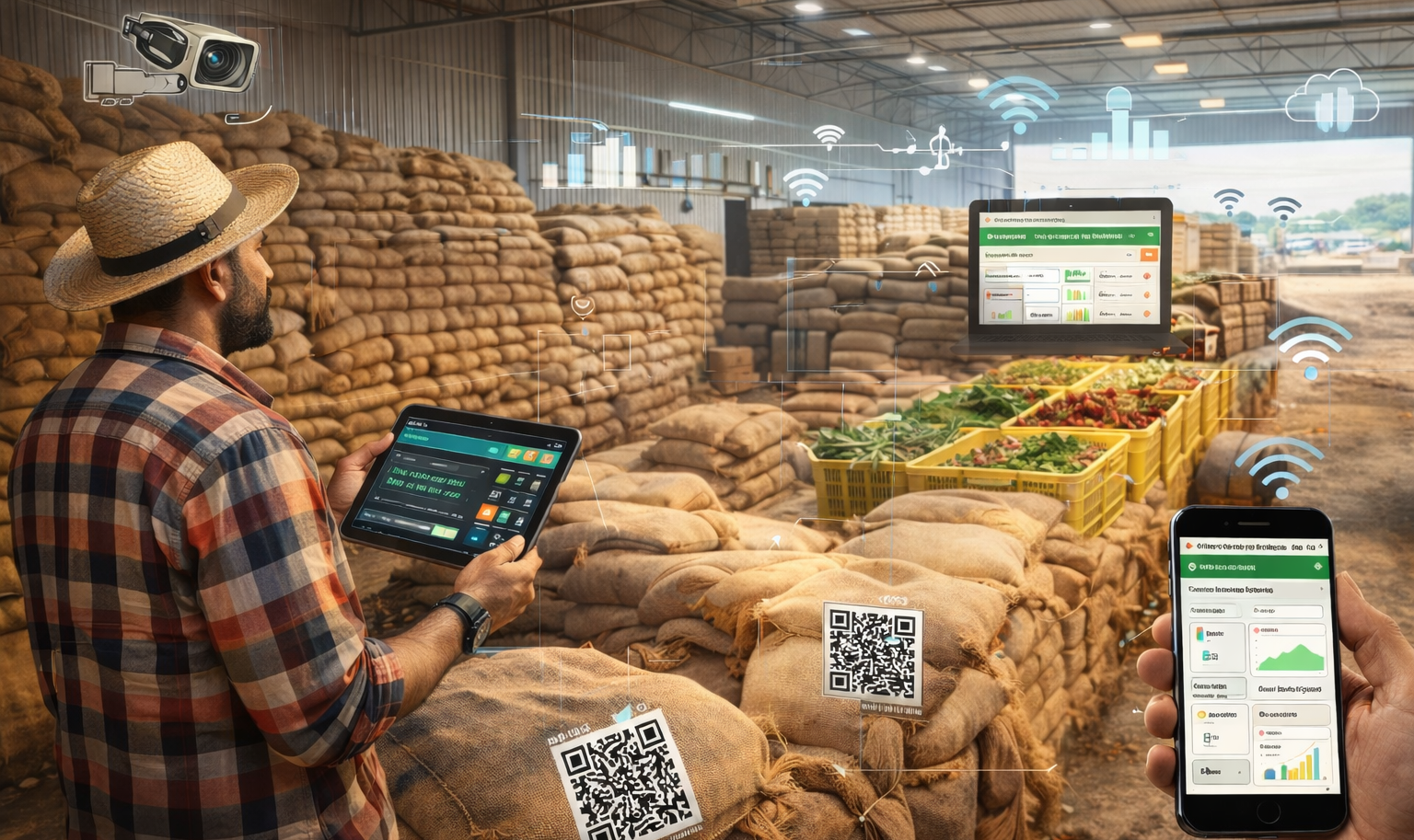
  • Digital inventory and supply-chain visibility: Through proprietary platforms like AgriGate and stocyard (across the UAE), StarAgri enables real-time monitoring of stock, quality, and movement across warehouses.

These technology tools help:

    • Improve transparency
    • Reduce pilferage and losses
    • Enable data-driven decision-making
  • Integrated marketplace and trade ecosystem: StarAgri’s digital marketplace, agribazaar, has facilitated the trade of over 12 million metric tonnes of commodities and connects more than 300,000 farmers to buyers. By integrating storage with digital trade and finance, StarAgri ensures that stored commodities can be monetised efficiently.
  • Data-driven decision making: With proprietary analytics, satellite-linked farm data, and credit models built on years of repayment data, StarAgri supports better storage planning, credit decisions, and risk management. This tech-enabled approach reduces risk for banks and improves access to finance for agri-stakeholders.

The road ahead

India’s agricultural growth story is increasingly dependent on how efficiently crops are stored, financed, and connected to markets. Reducing post-harvest losses and strengthening storage infrastructure could unlock billions in value for farmers and the economy.

Private sector participation, especially through integrated and technology-driven models, will be key to closing the storage gap. By combining scientific warehousing, digital platforms, and financing solutions, StarAgri is helping transform India’s post-harvest ecosystem, ensuring that harvests are not just produced but preserved, valued, and efficiently brought to market.

FAQs

  • What are the biggest agriculture storage challenges in India?
    India faces several storage challenges, including inadequate scientific warehousing, uneven distribution of storage infrastructure, high post-harvest losses, limited cold chain facilities, and restricted access to finance linked to stored commodities. These issues often force farmers to sell produce immediately after harvest, leading to lower price realisation.
  • How do storage issues impact farmers and agri-businesses?
    Poor storage leads to quality deterioration, pest infestation, and wastage, which reduces market value. Farmers often resort to distress selling due to a lack of storage and liquidity, while traders and processors face supply inconsistencies and higher operational risks.
  • How can technology improve agricultural storage in India?
    Technology enables real-time monitoring of inventory, quality tracking, digital warehouse receipts, and data-driven supply-chain decisions. Smart warehousing systems, sensors, and digital platforms improve transparency, reduce losses, and help stakeholders access better financing and markets.
  • What solutions does StarAgri offer for agri storage challenges?
    StarAgri provides integrated solutions, including scientific warehousing, collateral management, warehouse-receipt-based financing, digital inventory tracking, and an online commodity marketplace through Agribazaar. These solutions help reduce post-harvest losses and improve access to credit and markets.
  • Why is scientific warehousing important for India’s agri supply chain?
    Scientific warehousing ensures proper storage conditions, quality preservation, and traceability. It helps reduce wastage, stabilise supply, and enables farmers and traders to store produce safely and sell at favourable market prices, strengthening the overall agricultural value chain.

Disclaimer

The content published on this blog is provided solely for informational and educational purposes and is not intended as professional or legal advice. While we strive to ensure the accuracy and reliability of the information presented, StarAgri make no representations or warranties of any kind, express or implied, about the completeness, accuracy, suitability, or availability with respect to the blog content or the information, products, services, or related graphics contained in the blog for any purpose. Any reliance you place on such information is therefore strictly at your own risk. Readers are encouraged to consult qualified agricultural experts, agronomists, or relevant professionals before making any decisions based on the information provided herein. StarAgri, its authors, contributors, and affiliates shall not be held liable for any loss or damage, including without limitation, indirect or consequential loss or damage, or any loss or damage whatsoever arising from reliance on information contained in this blog. Through this blog, you may be able to link to other websites that are not under the control of StarAgri. We have no control over the nature, content, and availability of those sites and inclusion of any links does not necessarily imply a recommendation or endorsement of the views expressed within them. We reserve the right to modify, update, or remove blog content at any time without prior notice.
India’s agricultural story doesn’t end at the farm gate, but often hinges on what happens after the harvest. While farmers work tirelessly to grow quality produce, outdated storage systems, limited access to finance, and fragmented supply chains have historically eroded its true value.

“The Indian warehousing market is predicted to reach US$ 34.99 billion (Rs. 2,872.10 billion), expanding at a CAGR of 15.64% from 2022 to 2027.”

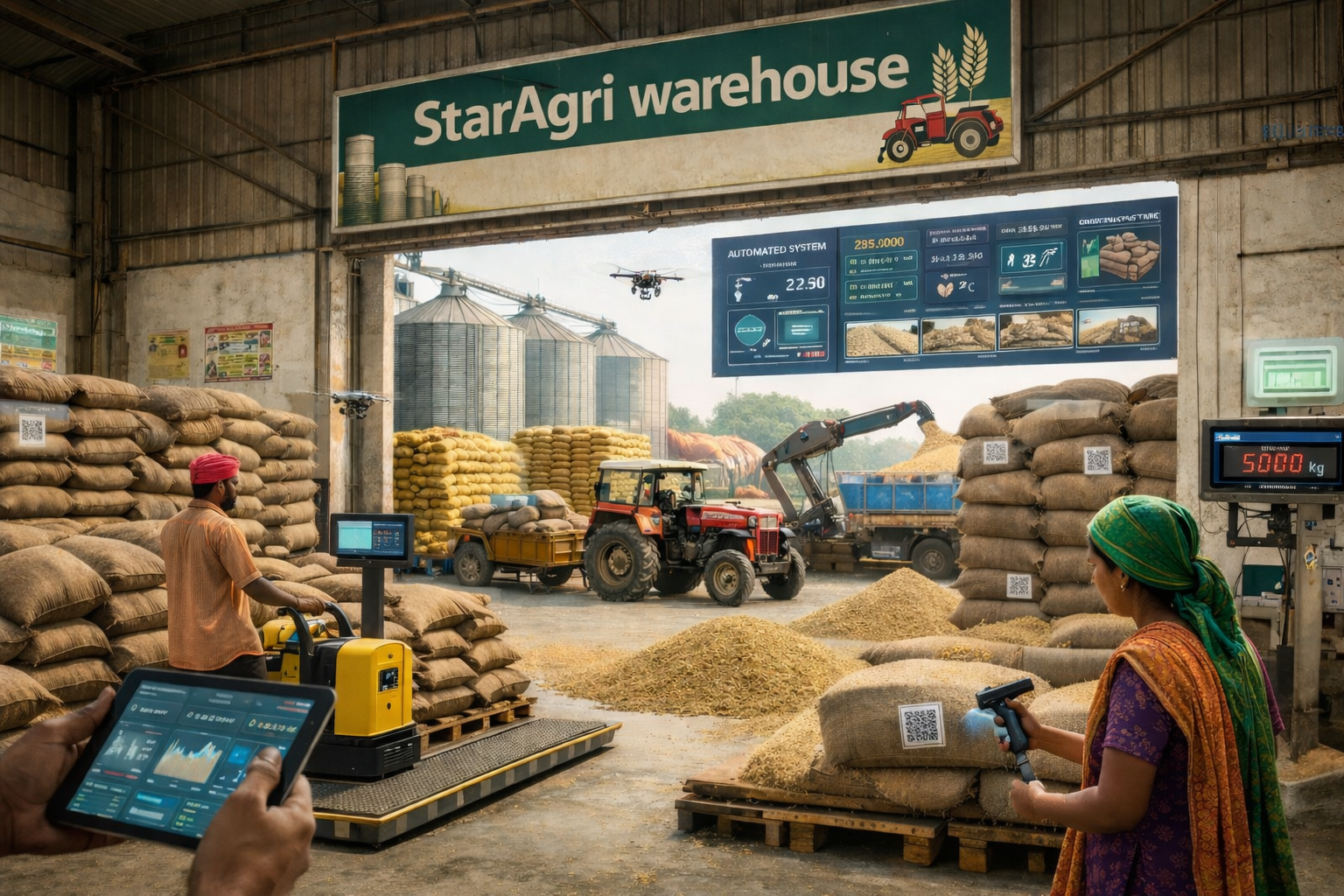
Today, that narrative is changing! As agritech innovations move beyond seeds and soil, they are reshaping India’s agri-warehousing landscape, turning warehouses into smart, data-driven hubs that protect crops, unlock liquidity, and connect farmers more efficiently to markets. This shift is not just modernising storage; it is redefining how agricultural value is preserved and realised across India.

warehousin industry

Let’s explore the top five ways agritech is revolutionising the Indian agri-warehousing industry in 2025.

  • Digital warehousing platforms & real-time visibility: Traditional warehousing in India has often been plagued by fragmentation, limited transparency, and inefficient utilisation of storage capacity, resulting in significant post-harvest losses estimated at around ₹1.5 lakh crore annually.

Emerging agritech platforms now offer digital warehousing networks that standardise operations across regions and provide real-time visibility into stock levels, environmental parameters, lease conditions, and accreditation status. These platforms aggregate data across hundreds or thousands of facilities, enabling stakeholders to discover, book, and manage storage digitally, effectively turning warehouses into integrated nodes in a tech-enabled supply chain.

Innovative digital tools also ensure compliance with industry standards and enable remote monitoring via dashboards or mobile apps, drastically reducing information asymmetry and inefficiencies.

  • IoT, sensor integration & predictive analytics: The Internet of Things (IoT) has become central to modern agricultural warehousing. Sensors deployed within storage facilities continuously monitor temperature, humidity, gas composition, and pest activity, ensuring ideal conditions for a wide range of commodities like grains, pulses, and oilseeds.

Coupled with predictive analytics and machine learning, these technologies can forecast spoilage risks, detect anomalies early, and optimise warehouse operations. Predictive models are particularly powerful during the highly volatile post-harvest period, helping operators anticipate storage demand, adjust inventory allocation, and dynamically control environments, reducing losses and improving quality.

  • AI-powered quality assessment & automation: Artificial intelligence (AI) is increasingly transforming agri supply chains. The broader agritech market in India is projected to grow from around $900 million in 2025 to $5.6 billion by 2030, with AI-led solutions expanding at a staggering 44% CAGR, outpacing the broader agritech sector.

Within warehousing, AI-based quality assessment tools can instantly evaluate the condition of stored produce using image recognition and sensor data, enabling rapid decision-making. Automated sorting, grading, and robotic movement further streamline operations and reduce dependency on manual labour. These advancements help warehouses maintain consistent quality, reduce human error, and ensure better price realisation for farmers.

  • Blockchain & transparent record-keeping: Blockchain technology is improving traceability and trust across the agri supply chain. By recording every transaction, inspection, and movement of produce in an immutable ledger, stakeholders can securely verify quality parameters, ownership history, and compliance credentials. This is especially valuable for export markets and premium buyers, who demand transparent proof of origin and quality.

Blockchain-linked warehouse receipts can also be used more reliably for financing, enabling farmers and traders to access credit against transparent, trustworthy digital records.

  • Collateral management & finance integration: Perhaps one of the most impactful agritech innovations in warehousing is the integration of collateral management and agri-fintech services. Warehouses are no longer just storage assets; they are gateways to structured credit for farmers and agri-businesses.

Tech-driven collateral management systems allow produce stored in certified facilities to be pledged as collateral for loans. Digitally issued warehouse receipts backed by verified storage data reduce risk for lenders and open up access to working capital at competitive rates. This convergence of warehousing and financial services is critical in a country where liquidity constraints often force farmers to sell produce at low prices due to cash flow pressures.

warehouse automation

Industry Context: India’s Warehousing Evolution

The holistic transformation of the warehousing landscape in India is supported by broader macro trends:

  • The warehousing sector in India is growing rapidly, with estimates suggesting the overall logistics infrastructure market could reach $35 billion by 2027, driven by digital adoption and policy reforms.
  • Industrial and warehousing leasing hit record levels in 2025, absorbing 36.9 million sq ft across major Indian cities, reflecting strong demand for advanced logistics space.
  • With government policies such as the PM Gati Shakti initiative and the National Logistics Policy, investments in multimodal connectivity and modern storage ecosystems are gaining traction.

These trends create an enabling environment for agritech to flourish and to improve the robustness of the agricultural supply chain.

StarAgri: Powering Tech-Enabled Agri-Warehousing

At the forefront of this tech-enabled transformation is StarAgri — India’s largest integrated agritech company offering a suite of solutions that bridge physical infrastructure with digital intelligence:

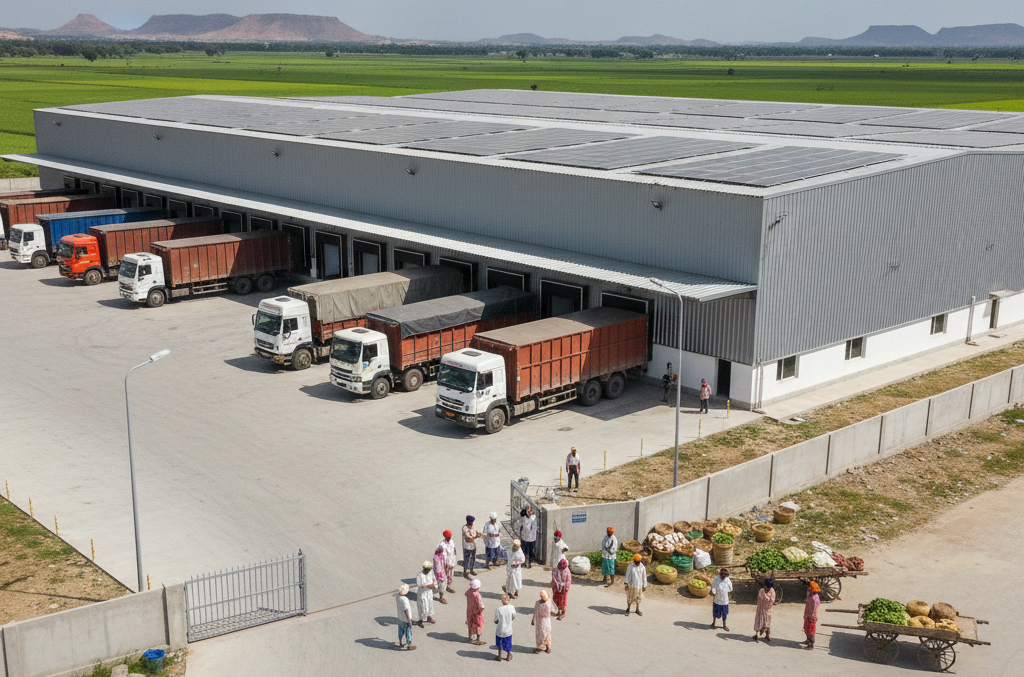
  • Scientific warehousing network: With over 2,200 scientific warehouses across India, StarAgri provides secure, compliant storage solutions tailored for crops of diverse profiles.
  • Collateral management services: StarAgri enables farmers and agribusinesses to unlock working capital by using stored produce as collateral, coordinated with top financial institutions nationwide.
  • Digital supply chain tools: Platforms like agribazaar and Agriwise Finserv streamline pre-harvest solutions, agri trading, agri finance, working capital, and much more, making warehousing and commodity financing more transparent and efficient.
  • Advanced monitoring & IoT integration: Real-time tracking and remote sensing technologies minimise spoilage risks and optimise storage conditions across the network.
  • Value-added Services: With offerings like commodity testing (Star Labs) and geo-tagged analytics via AgriBhumi, StarAgri empowers stakeholders with insights for better decision-making.

staragri warehousing

Conclusion

Agritech is redefining how India handles agricultural warehousing, from siloed storage facilities to data-driven, interconnected ecosystems that enhance quality, transparency, and financial inclusion. By integrating digital platforms, IoT, AI, blockchain, and fintech, the sector is transforming the agricultural value chain and empowering farmers to capture higher value for their produce.

As 2026 unfolds, these innovations are not just future possibilities. They are shaping the present of Indian agri-warehousing, offering scalable, resilient, and inclusive solutions that will underpin India’s agrarian success in the years to come.

FAQs

  1. What is the role of agritech in modern Indian warehouses?
    Agritech integrates technologies like IoT, AI, blockchain, and digital platforms into warehouses, enabling better inventory management, real-time monitoring, quality assessment, and streamlined supply chains. It reduces post-harvest losses and increases efficiency for farmers and agribusinesses.
  2. How does blockchain improve transparency in agri warehousing?
    Blockchain provides an immutable, tamper-proof record of all warehouse transactions, including storage, ownership, and quality checks. This enhances trust among farmers, traders, and financial institutions, while facilitating access to loans and credit using warehouse receipts as collateral.
  3. Can agritech help farmers access credit through warehousing?
    Yes. Tech-enabled collateral management systems allow farmers to pledge produce stored in certified warehouses as collateral. Digital warehouse receipts backed by verified data make it easier for lenders to offer working capital and other financial solutions at competitive rates.
  4. What emerging technologies are transforming agri-warehouses?
    Key technologies include IoT sensors for temperature and humidity monitoring, AI for quality assessment and predictive analytics, automated sorting and robotics, and blockchain for transparent record-keeping.
  5. How is StarAgri leveraging agritech in its warehousing operations?
    StarAgri combines scientific warehousing, IoT-enabled monitoring, digital platforms, and collateral management services to create a seamless and secure storage ecosystem. With over 2,200 warehouses across India, StarAgri ensures quality preservation, transparency, and easy access to financing for farmers and agri-businesses.

Disclaimer

The content published on this blog is provided solely for informational and educational purposes and is not intended as professional or legal advice. While we strive to ensure the accuracy and reliability of the information presented, StarAgri make no representations or warranties of any kind, express or implied, about the completeness, accuracy, suitability, or availability with respect to the blog content or the information, products, services, or related graphics contained in the blog for any purpose. Any reliance you place on such information is therefore strictly at your own risk. Readers are encouraged to consult qualified agricultural experts, agronomists, or relevant professionals before making any decisions based on the information provided herein. StarAgri, its authors, contributors, and affiliates shall not be held liable for any loss or damage, including without limitation, indirect or consequential loss or damage, or any loss or damage whatsoever arising from reliance on information contained in this blog. Through this blog, you may be able to link to other websites that are not under the control of StarAgri. We have no control over the nature, content, and availability of those sites and inclusion of any links does not necessarily imply a recommendation or endorsement of the views expressed within them. We reserve the right to modify, update, or remove blog content at any time without prior notice.