Tag Archives: agri storage

India is among the world’s largest producers of agricultural commodities, with foodgrain production crossing 350 lakh MT in 2024-25, that is 7.65% increase from the previous year. Yet, storage inefficiencies continue to erode farmer income, disrupt supply chains, and impact national food security. As the country aims to modernise its agri-logistics ecosystem, strengthening storage infrastructure and adopting technology-led solutions has become critical.

What are the biggest agriculture storage challenges in India, and how are  StarAgri’s integrated technology and infrastructure solutions helping address them? Let’s find out.
agriculture loss

The scale of India’s agriculture storage challenge

Despite record production, India loses a significant share of its produce post-harvest due to inadequate storage and logistics. Estimates suggest:

  • India loses around 10% of its total foodgrain production post-harvest and over 30% of itsfruits and vegetables due to poor storage and handling.
  • Annual post-harvest losses amount to nearly ₹1.5 lakh crore, highlighting the economic cost of inefficiencies.
  • The country has 917.83 lakh metric tonnes of grain storage capacity and about 8,815 cold storage units with a total capacity of ~40 million tonnes, but distribution remains uneven and insufficient in many regions.
  • Even as government stocks are losing value, thousands of tonnes of grain have been damaged in recent years due to agriculture storage issues.

Biggest agriculture storage challenges in India

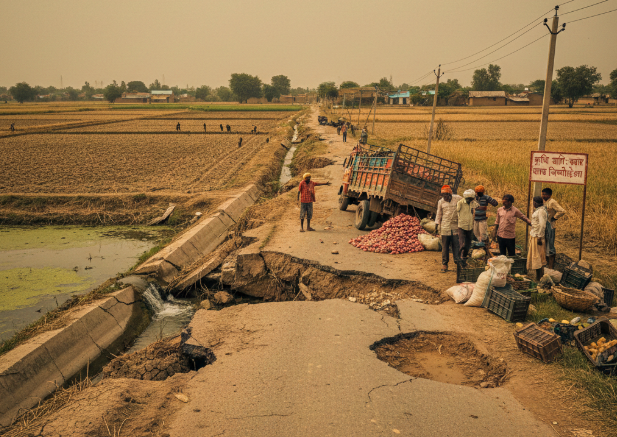
  • Inadequate and uneven storage infrastructure: Although storage capacity has grown, modern warehouses and cold chains are concentrated in select states and commodities. Many farmers still rely on traditional or open storage, which leads to moisture damage, pest infestations, and quality deterioration. This mismatch between production growth and storage infrastructure results in supply gluts during harvest seasons and distress selling by farmers.
  • High post-harvest losses: Losses occur across the value chain, from farm-level handling to storage and transportation. Cereals alone face losses of over 12 million tonnes, while horticulture losses exceed 49 million tonnes annually. Poor agriculture storage not only reduces available food but also impacts price realisation and export competitiveness.
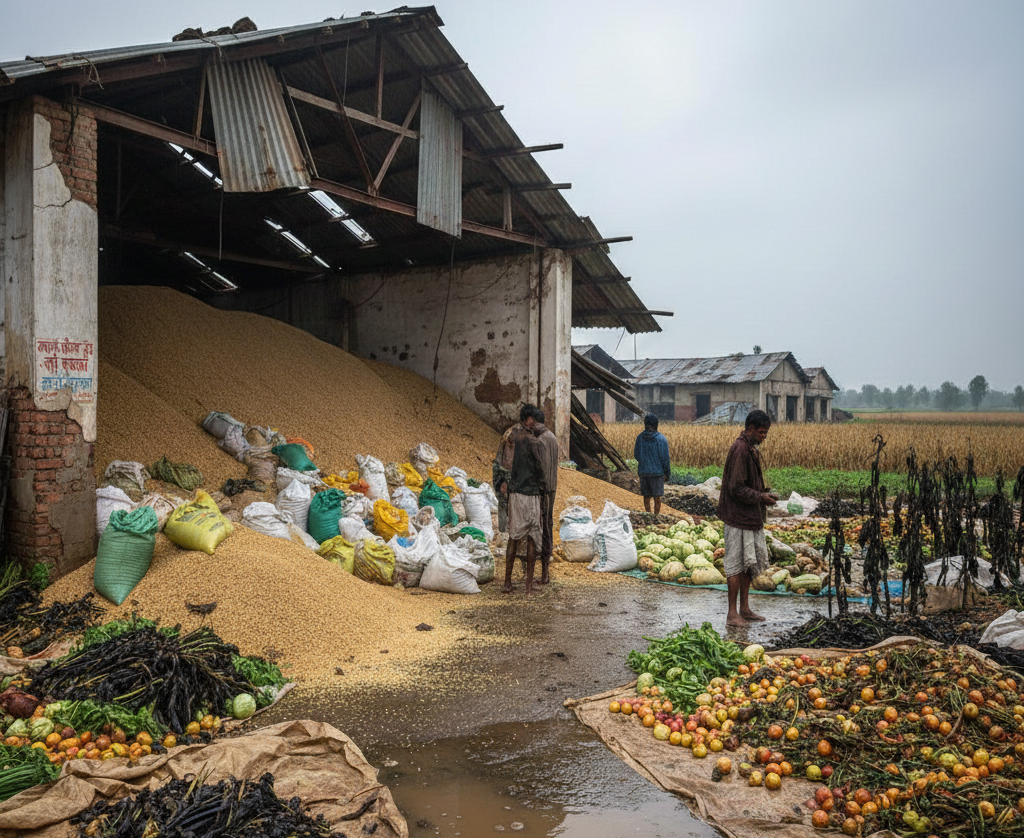
  • Lack of scientific warehousing and quality monitoring: Traditional storage methods often lack temperature control, aeration, and quality testing. This leads to grain spoilage, contamination, and inconsistent quality, making it difficult for farmers and traders to access premium markets or financing.
  • Limited access to finance linked to storage: Farmers often sell produce immediately after harvest due to cash flow constraints. Without access to warehouse-receipt financing or collateral management systems, they cannot hold produce to benefit from better prices.
  • Fragmented supply chains and limited transparency: India’s agri-supply chain involves multiple intermediaries and limited digital tracking. This fragmentation reduces visibility on stock levels, quality, and movement, leading to inefficiencies and wastage.

StarAgri’s technology-led solutions for storage challenges

As one of India’s leading integrated agritech players, StarAgri combines physical infrastructure with digital tools to modernise agricultural storage and post-harvest management.

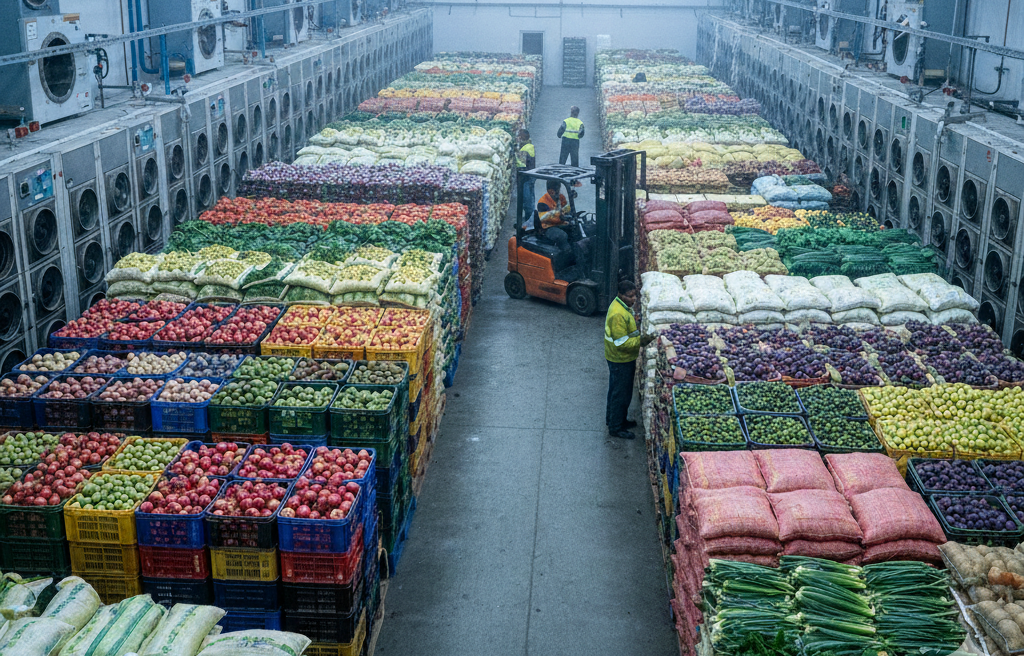
  • Scientific warehousing network: StarAgri operates 2,200+ warehouses across 400 locations, with a storage capacity of over 5 Mn metric tonnes. These facilities are designed for scientific storage with proper grading, fumigation, and monitoring, helping reduce spoilage and maintain quality. By providing reliable storage close to production centres, StarAgri enables farmers and agri-businesses to store produce safely and avoid distress sales.
  • Collateral management and warehouse receipt finance: StarAgri’s collateral management ecosystem supports warehouse-receipt-backed financing of over ₹1.5 lakh crore cumulatively, enabling farmers, traders, and processors to access working capital. This allows stakeholders to store produce and sell when market conditions are favourable, improving price realisation and liquidity.
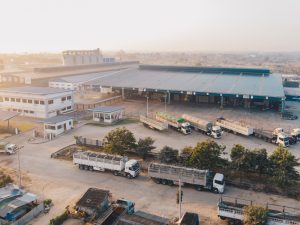
agriculture storage

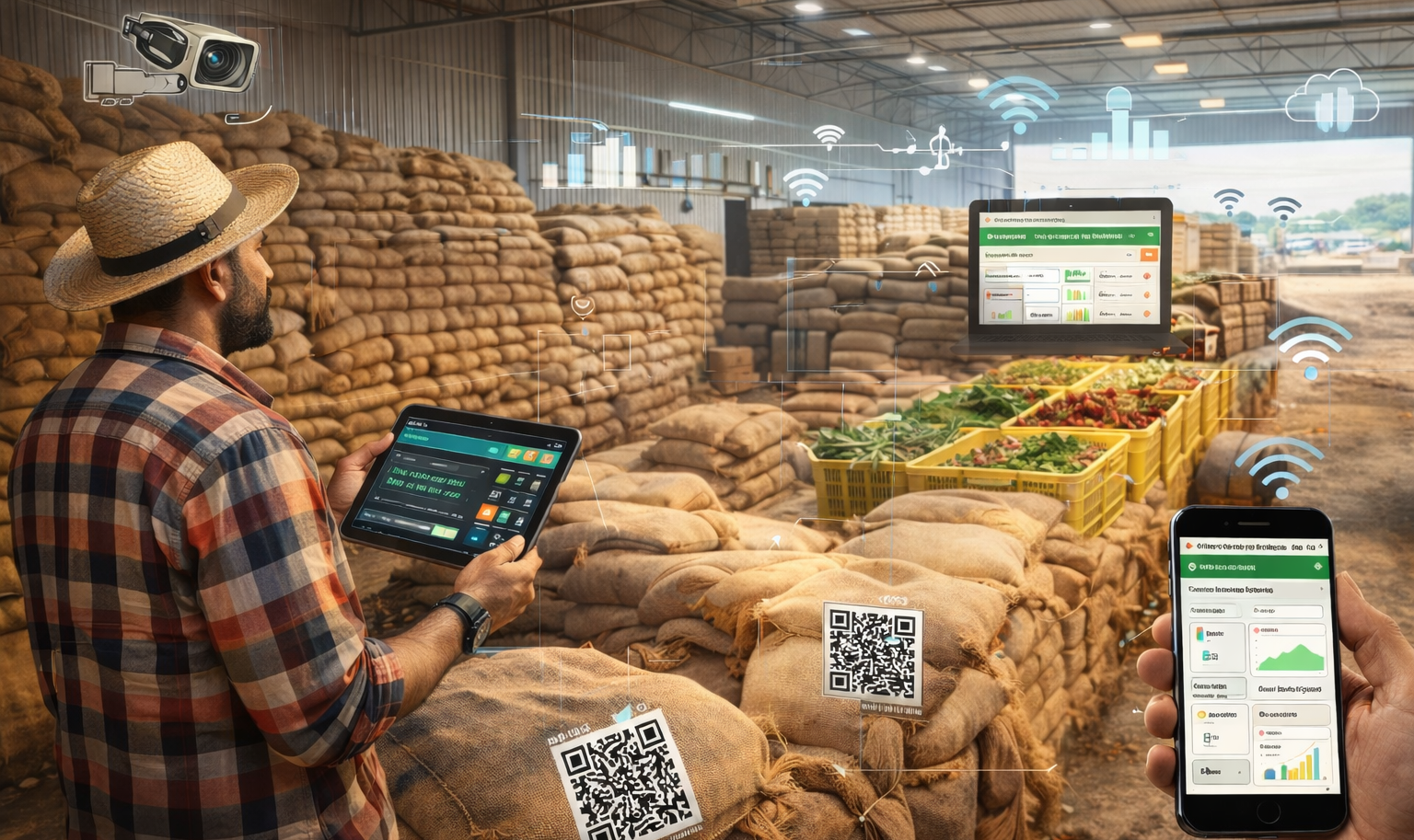
  • Digital inventory and supply-chain visibility: Through proprietary platforms like AgriGate and stocyard (across the UAE), StarAgri enables real-time monitoring of stock, quality, and movement across warehouses.

These technology tools help:

    • Improve transparency
    • Reduce pilferage and losses
    • Enable data-driven decision-making
  • Integrated marketplace and trade ecosystem: StarAgri’s digital marketplace, agribazaar, has facilitated the trade of over 12 million metric tonnes of commodities and connects more than 300,000 farmers to buyers. By integrating storage with digital trade and finance, StarAgri ensures that stored commodities can be monetised efficiently.
  • Data-driven decision making: With proprietary analytics, satellite-linked farm data, and credit models built on years of repayment data, StarAgri supports better storage planning, credit decisions, and risk management. This tech-enabled approach reduces risk for banks and improves access to finance for agri-stakeholders.

The road ahead

India’s agricultural growth story is increasingly dependent on how efficiently crops are stored, financed, and connected to markets. Reducing post-harvest losses and strengthening storage infrastructure could unlock billions in value for farmers and the economy.

Private sector participation, especially through integrated and technology-driven models, will be key to closing the storage gap. By combining scientific warehousing, digital platforms, and financing solutions, StarAgri is helping transform India’s post-harvest ecosystem, ensuring that harvests are not just produced but preserved, valued, and efficiently brought to market.

FAQs

  • What are the biggest agriculture storage challenges in India?
    India faces several storage challenges, including inadequate scientific warehousing, uneven distribution of storage infrastructure, high post-harvest losses, limited cold chain facilities, and restricted access to finance linked to stored commodities. These issues often force farmers to sell produce immediately after harvest, leading to lower price realisation.
  • How do storage issues impact farmers and agri-businesses?
    Poor storage leads to quality deterioration, pest infestation, and wastage, which reduces market value. Farmers often resort to distress selling due to a lack of storage and liquidity, while traders and processors face supply inconsistencies and higher operational risks.
  • How can technology improve agricultural storage in India?
    Technology enables real-time monitoring of inventory, quality tracking, digital warehouse receipts, and data-driven supply-chain decisions. Smart warehousing systems, sensors, and digital platforms improve transparency, reduce losses, and help stakeholders access better financing and markets.
  • What solutions does StarAgri offer for agri storage challenges?
    StarAgri provides integrated solutions, including scientific warehousing, collateral management, warehouse-receipt-based financing, digital inventory tracking, and an online commodity marketplace through Agribazaar. These solutions help reduce post-harvest losses and improve access to credit and markets.
  • Why is scientific warehousing important for India’s agri supply chain?
    Scientific warehousing ensures proper storage conditions, quality preservation, and traceability. It helps reduce wastage, stabilise supply, and enables farmers and traders to store produce safely and sell at favourable market prices, strengthening the overall agricultural value chain.

Disclaimer

The content published on this blog is provided solely for informational and educational purposes and is not intended as professional or legal advice. While we strive to ensure the accuracy and reliability of the information presented, StarAgri make no representations or warranties of any kind, express or implied, about the completeness, accuracy, suitability, or availability with respect to the blog content or the information, products, services, or related graphics contained in the blog for any purpose. Any reliance you place on such information is therefore strictly at your own risk. Readers are encouraged to consult qualified agricultural experts, agronomists, or relevant professionals before making any decisions based on the information provided herein. StarAgri, its authors, contributors, and affiliates shall not be held liable for any loss or damage, including without limitation, indirect or consequential loss or damage, or any loss or damage whatsoever arising from reliance on information contained in this blog. Through this blog, you may be able to link to other websites that are not under the control of StarAgri. We have no control over the nature, content, and availability of those sites and inclusion of any links does not necessarily imply a recommendation or endorsement of the views expressed within them. We reserve the right to modify, update, or remove blog content at any time without prior notice.

“India smart warehousing market is projected to witness a CAGR of 14.65% during the forecast period FY2025-FY2032, growing from USD 2.21 billion in FY2024 to USD 6.60 billion in FY2032.” – according to Markets & Data.

India’s agricultural storage ecosystem is entering a phase of meaningful transformation. While challenges such as post-harvest losses, inconsistent storage conditions, and limited real-time visibility have long impacted crop quality and farmer incomes, technology is steadily changing this narrative. The adoption of Internet of Things (IoT) solutions is enabling storage facilities to become smarter, more responsive, and far more reliable. By bringing real-time data, automation, and predictive insights into warehouses and cold storage units, IoT is helping India move closer to a more resilient, efficient, and future-ready agri storage infrastructure.

But how is IoT reshaping agri storage facilities in India? Let’s understand the key applications, measurable benefits, and how businesses like StarAgri are leveraging this technology to build future-ready storage solutions.

storage facilities

The IoT revolution in agricultural storage

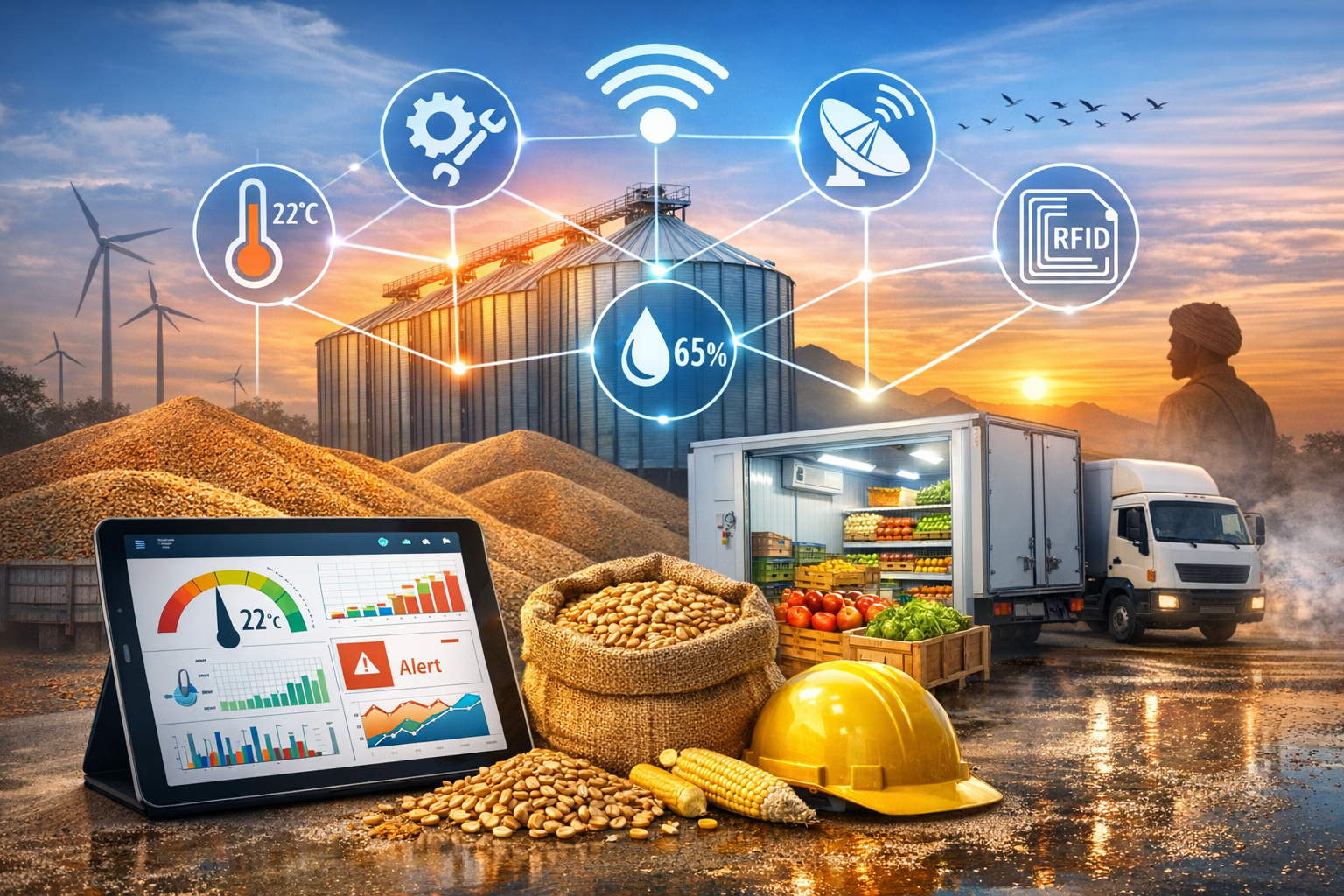
The Internet of Things refers to networks of smart sensors and devices that collect, transmit, and analyse data in real time. Within agricultural storage, whether grain warehouses, cold storage units, or controlled environment facilities, IoT enables continuous environmental tracking, automated alerts, predictive decision-making, and workflow optimisation.
IoT’s integration into agri storage is no longer futuristic. It’s already yielding value. The India IoT-based cold chain management market was valued at approximately USD 220.45 million in 2024 and is projected to grow robustly through 2033, indicating strong adoption of smart technologies across storage and logistics operations.

Core applications of IoT in agri storage

  • Real-time environmental monitoring: IoT sensors installed across storage facilities continuously capture critical parameters, including temperature, humidity, gas composition, ventilation, and moisture. For example:
    • A spike in humidity in a grain warehouse may indicate the potential for mould formation.
    • Rising gas concentrations could signal early spoilage behaviour in stored produce.

These parameters are streamed to dashboards and mobile apps, allowing managers to visualise conditions and intervene proactively. Such real-time insights significantly reduce the reliance on periodic manual checks and human error.

  • Automated & immediate alerts: Connected IoT systems can be configured to trigger alerts via SMS, email, or app notifications when conditions deviate from specified thresholds. For instance, if a cold storage unit’s temperature exceeds a set limit, automated alerts trigger immediate corrective action, minimising quality degradation.
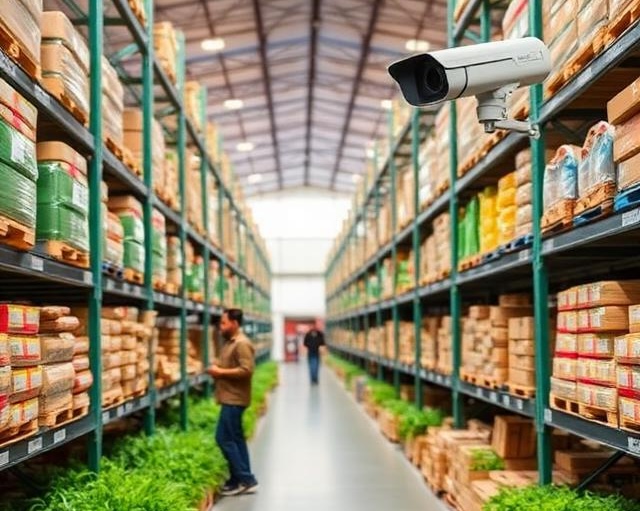
  • Digital inventory & traceability: Integrating IoT with tools such as RFID tagging, QR codes, and smart cameras facilitates accurate inventory tracking. Digitised records enhance traceability, minimise theft or misplacement, and improve accountability throughout the storage lifecycle.

rfid tagging

  • Predictive maintenance & efficiency: Beyond environmental factors, IoT can monitor the performance of infrastructure and machinery such as refrigeration units, motors, and ventilation systems. Sensor data fuels predictive analytics, enabling the anticipation of component failures before they occur, thereby reducing downtime and maintenance costs.
  • Energy optimisation & sustainability: Smart IoT systems can optimise energy usage by adjusting lighting, cooling, and ventilation based on actual usage patterns and environmental conditions. This not only reduces operational costs but also supports sustainability by lowering carbon footprints.

Industry impact

India’s agricultural sector loses a significant percentage of its produce due to post-harvest inefficiencies. Smart storage technologies are key to mitigating these losses. Real-time data and predictive analytics not only protect stored value but also empower stakeholders with insights for better planning and risk management.

  • Traditional warehousing inefficiencies contribute to post-harvest losses estimated at over ₹1.5 lakh crore annually (≈ ₹1.53 trillion).
  • IoT-enabled temperature and humidity monitoring in cold chains has been shown to reduce spoilage by up to 35% in pilot programs.

IoT in cold chain infrastructure

India’s cold chain, encompassing cold storage facilities, refrigerated transport, and controlled-environment warehouses, is expanding rapidly. As of mid-2025, the country reported approximately 8,815 cold storage facilities with a combined capacity of about 40.2 million tonnes, highlighting both progress and persistent infrastructure challenges.

IoT plays an increasingly vital role in making cold chain networks more resilient and intelligent. Continuous monitoring ensures that perishable goods such as fruits, vegetables, dairy, and pharmaceuticals remain within optimal conditions throughout their storage lifecycle, contributing to higher quality, reduced waste, and improved marketability.

StarAgri: Driving smart storage with IoT

At StarAgri, we are committed to modernising agricultural storage through technology-led, data-driven solutions that empower farmers and supply chain stakeholders.

Key IoT-enabled services and offerings include:

  • Real-time remote monitoring: Our warehouses are equipped with IoT sensors that capture environmental data, including temperature, humidity, and ventilation, around the clock, ensuring optimal conditions for grains, pulses, and perishables.
  • Connected warehousing network: With a pan-India presence of over 2,200 warehouses in 350+ locations, we deliver consistent quality and transparency across locations.
  • Collateral management services: By integrating tech insights with physical storage, we support structured trade finance against stored commodities, unlocking working capital for farmers when they need it most.
  • Data-driven decision support: AI-generated data enables informed decision-making, helping stakeholders reduce spoilage, optimise storage costs, and achieve better price realisation.

Conclusion: Future of Indian agri storage

IoT is catalysing a shift in how agricultural storage facilities operate, from reactive, manual operations to predictive, automated, and efficient ones. As the Indian agri ecosystem embraces smart storage technologies, the potential to reduce post-harvest losses, improve food quality, and enhance farmer incomes becomes increasingly attainable.
With continued investment in IoT, data analytics, and connected infrastructure, agri storage facilities are set to become high-performance assets in India’s agricultural value chain, supporting sustainability, resilience, and profitability for all stakeholders.

FAQs

  • How is IoT used in agri storage facilities in India?
    IoT is used in agri storage facilities to monitor temperature, humidity, moisture levels, and gas composition in real time. Sensors and connected devices provide continuous data, enabling storage operators to take timely action to maintain optimal conditions and reduce spoilage.
  • What are the key benefits of IoT in agricultural warehousing?
    IoT improves storage efficiency by reducing post-harvest losses, enabling real-time alerts, enhancing traceability, optimising energy usage, and supporting predictive maintenance of equipment in warehouses and cold storage units.
  • Can IoT help reduce post-harvest losses in India?
    Yes, IoT plays a critical role in reducing post-harvest losses by identifying risks early, maintaining consistent storage conditions, and enabling proactive interventions that prevent spoilage, pest infestation, and quality degradation.
  • How does IoT support cold storage operations in India?
    In cold storage facilities, IoT ensures precise control over temperature and humidity, tracks equipment performance, and provides instant alerts during deviations. This helps preserve the quality of perishable commodities and improves cold chain reliability.
  • How is StarAgri using IoT in its storage and warehousing services?
    StarAgri integrates IoT-based monitoring systems across its warehousing network to enable real-time visibility, remote monitoring, and data-driven decision-making. These capabilities support efficient storage management, quality assurance, and trade-linked financial services.

Disclaimer

The content published on this blog is provided solely for informational and educational purposes and is not intended as professional or legal advice. While we strive to ensure the accuracy and reliability of the information presented, StarAgri make no representations or warranties of any kind, express or implied, about the completeness, accuracy, suitability, or availability with respect to the blog content or the information, products, services, or related graphics contained in the blog for any purpose. Any reliance you place on such information is therefore strictly at your own risk. Readers are encouraged to consult qualified agricultural experts, agronomists, or relevant professionals before making any decisions based on the information provided herein. StarAgri, its authors, contributors, and affiliates shall not be held liable for any loss or damage, including without limitation, indirect or consequential loss or damage, or any loss or damage whatsoever arising from reliance on information contained in this blog. Through this blog, you may be able to link to other websites that are not under the control of StarAgri. We have no control over the nature, content, and availability of those sites and inclusion of any links does not necessarily imply a recommendation or endorsement of the views expressed within them. We reserve the right to modify, update, or remove blog content at any time without prior notice.