


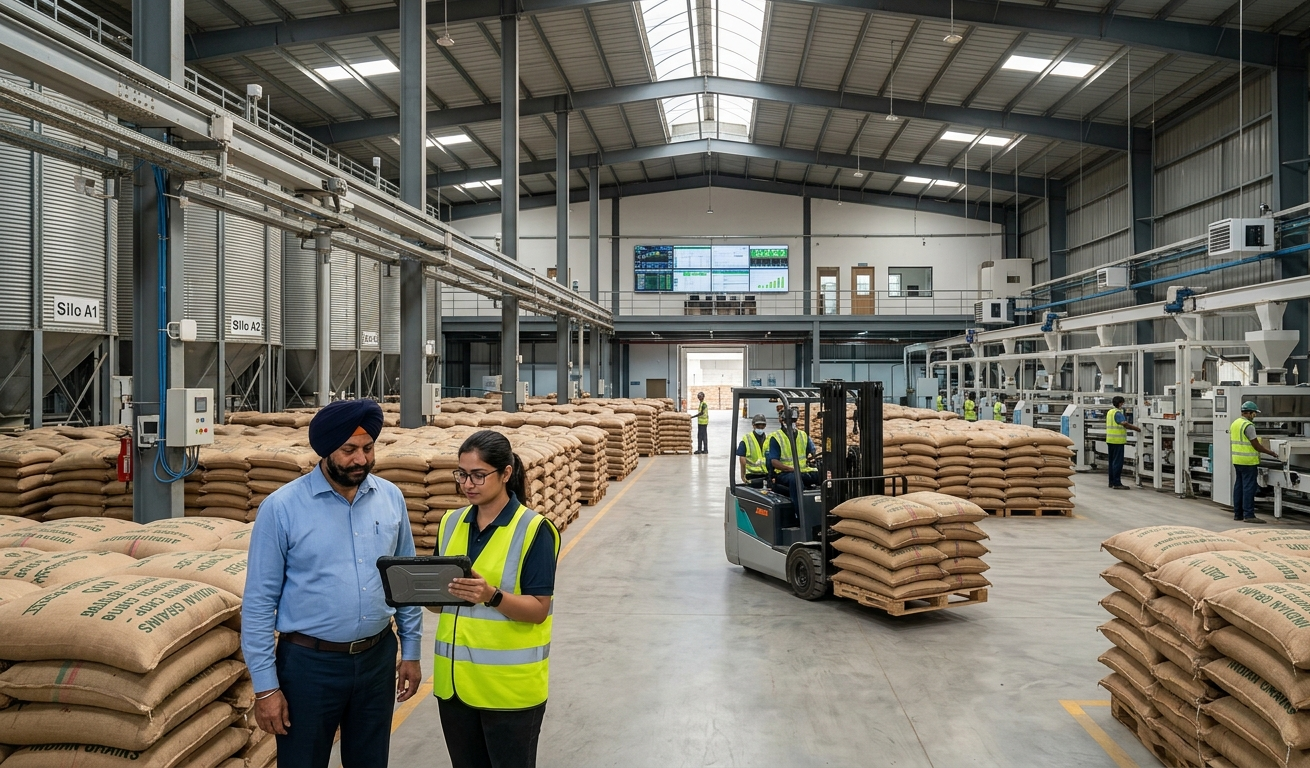
For decades, warehouses in agriculture had a fairly straightforward role: store commodities safely until they moved to the next stage of the supply chains.
Today, warehouses are no longer being viewed as just storage infrastructure. They are increasingly becoming intelligence hubs, capable of tracking inventory in real time, monitoring quality conditions, predicting risks, supporting financing, and improving supply-chain visibility across agricultural ecosystems.
And with AI, IoT, automation, and predictive analytics entering agriculture at scale, warehousing itself is beginning to evolve into something much bigger: autonomous infrastructure.
In many ways, the future of agriculture may depend just as much on how commodities are stored, tracked, and moved after harvest as on how they are grown.
Agriculture’s biggest challenges often begin after harvest
India has made enormous progress in agricultural production over the years. The country recorded foodgrain production of nearly 357 Million Tonnes in 2024–25, among the highest ever. A target has also been set for 2025-26 for 362.5 Million Tonnes. But production alone does not solve agricultural efficiency.
One of the biggest challenges in agriculture still lies in what happens after harvest:
- fragmented storage systems,
- inconsistent quality monitoring,
- inventory losses,
- limited traceability,
- and supply-chain inefficiencies.
Traditional warehouses were designed primarily for physical storage. But modern agricultural supply chains now demand much more. Today’s agri ecosystem increasingly needs:
- real-time inventory visibility,
- faster commodity movement,
- quality tracking,
- financing integration,
- predictive risk monitoring,
- and intelligent logistics planning.
And that’s exactly why warehousing is becoming smarter.
Warehouses are becoming data ecosystems
Walk into a modern warehouse today, and the transformation is already visible.
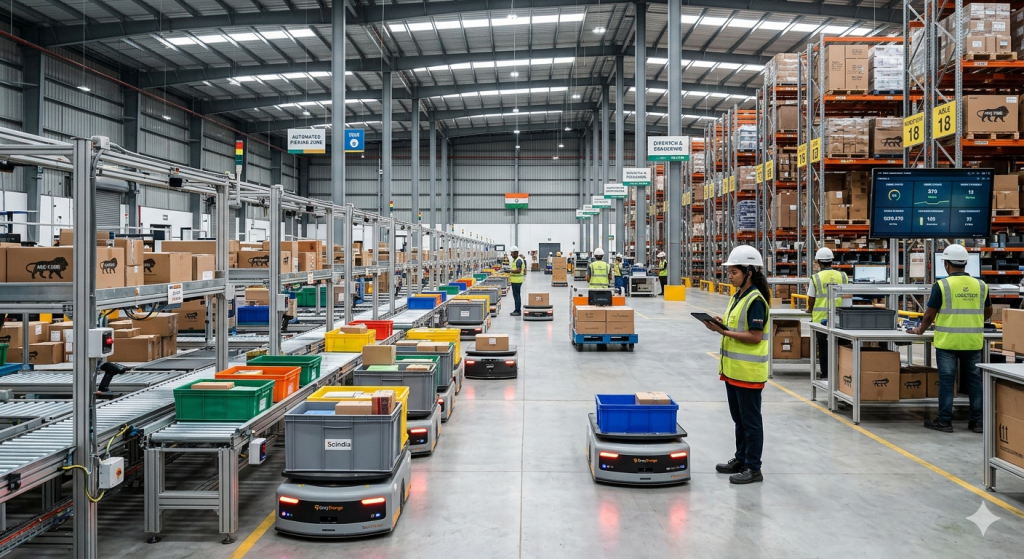
Sensors can monitor environmental conditions continuously. Digital inventory systems can track stock movement instantly. AI-based systems can flag unusual storage behaviour or operational inefficiencies. Integrated platforms can connect warehousing with finance, procurement, and logistics simultaneously.
Globally, AI-enabled warehousing and smart logistics systems are becoming a major focus area across supply chains, especially in sectors dealing with large-scale inventory movement and perishability. This shift is especially important for agriculture because agricultural supply chains are deeply time-sensitive.
Delays, poor visibility, or quality deterioration can directly impact pricing, financing, exports, and profitability.
As a result, the conversation around warehouses is slowly expanding from only storage to
“How intelligent is the infrastructure managing that inventory?”
The rise of autonomous warehousing
Autonomous warehousing does not simply mean robotics replacing people. In agriculture, it refers to warehouses that can increasingly:
- monitor themselves,
- generate operational insights,
- improve inventory visibility,
- support predictive decision-making,
- and integrate with broader supply-chain ecosystems.
Imagine a warehouse that can:
- detect moisture risks before commodity damage occurs,
- identify storage inefficiencies early,
- provide real-time stock visibility to lenders,
- support traceability for buyers,
- or help optimise commodity movement based on demand trends.
That’s where agricultural warehousing is heading. And as agriculture becomes more data-driven, intelligent storage infrastructure may become one of the most critical competitive advantages in the sector. Because in modern supply chains, visibility is becoming just as important as physical capacity.
Why this matters beyond storage
What makes this transformation particularly interesting is that warehousing is no longer functioning in isolation. Modern agricultural ecosystems are increasingly interconnected. Storage today influences:
- financing,
- commodity trading,
- logistics,
- procurement planning,
- quality assurance,
- and export readiness.
This is why warehousing is gradually evolving into financial and operational infrastructure rather than just physical infrastructure.
For example, better inventory visibility can strengthen collateral financing. Real-time stock intelligence can improve procurement planning. Digitised warehouse systems can enhance traceability for buyers and exporters.
How StarAgri fits into this transformation
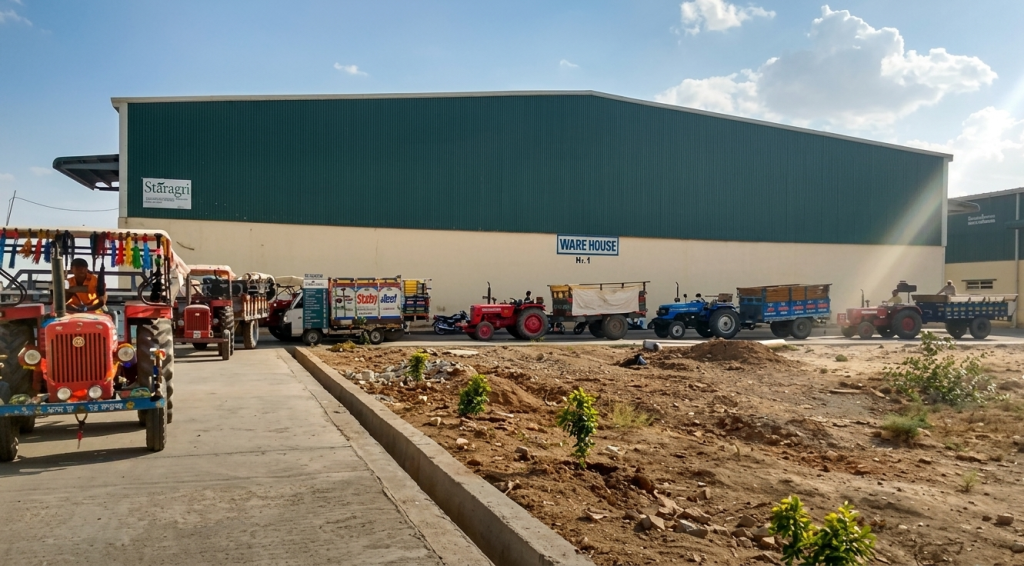
As India’s agricultural supply chains modernise, StarAgri is helping build integrated post-harvest ecosystems that combine infrastructure, intelligence, finance, and technology.
Today, StarAgri operates across 2,200+ warehouses with a storage capacity of nearly 5 MMT spanning 380+ locations across 19 states. But increasingly, the company’s role goes beyond warehousing alone.
StarAgri’s integrated ecosystem connects:
- warehousing,
- collateral management,
- quality assessment,
- logistics,
- agri-finance,
- digital trade,
- and AI-led agricultural intelligence through platforms like agribazaar and agribhumi.
This integrated approach becomes especially relevant as agriculture moves toward more connected and data-driven supply chains. Because the future of warehousing may depend on how intelligently that inventory can be monitored, financed, moved, and integrated into the larger agricultural ecosystem.
The future of agriculture is supply chains intelligence
For years, most agricultural innovation conversations focused heavily on productivity at the farm level. But the next big agricultural transformation now lies in reducing inefficiencies across storage, logistics, financing, and supply-chain movement.
Warehouses of the future may no longer function as silent storage spaces. They could become dynamic intelligence centres powering faster decisions, smarter financing, stronger traceability, and more resilient agricultural ecosystems.
And as integrated agritech players like StarAgri continue combining infrastructure with AI, finance, logistics, and digital intelligence, the role of warehousing in agriculture may become far more strategic than it has ever been before.
FAQs
- What is autonomous warehousing in agriculture?
Autonomous warehousing refers to technology-enabled storage infrastructure that uses AI, digitisation, IoT, and real-time monitoring to improve inventory visibility and operational efficiency. - Why are warehouses becoming important in modern agriculture?
Warehouses now support not just storage, but also financing, traceability, quality monitoring, logistics, and supply-chain visibility. - How does AI improve agricultural warehousing?
AI can help monitor inventory conditions, identify operational risks, improve stock visibility, and support predictive supply-chain decisions. - What challenges exist in post-harvest agricultural infrastructure?
Common challenges include storage losses, fragmented logistics, inconsistent quality monitoring, and limited inventory visibility. - How is StarAgri contributing to intelligent supply chains?
StarAgri combines warehousing, collateral management, logistics, finance, and AI-led agricultural intelligence to build integrated post-harvest ecosystems.
