


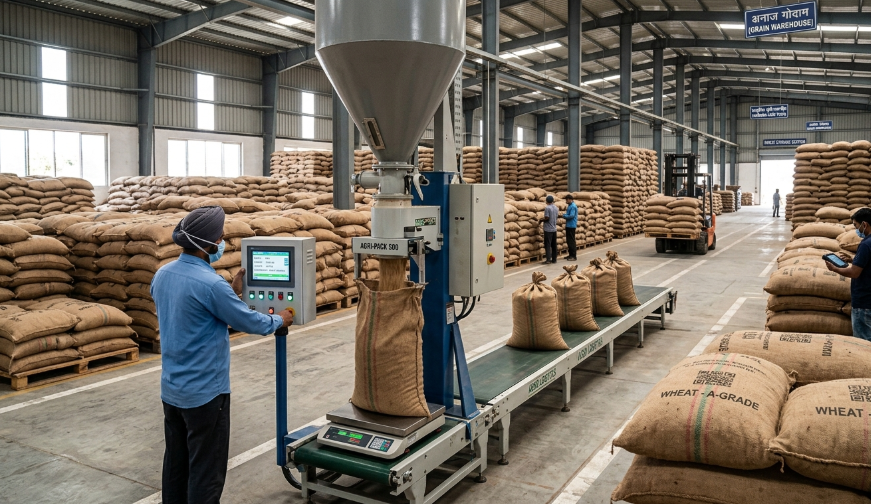
For decades, warehouses in agriculture were viewed as simple storage facilities, places where commodities stayed until they were sold, processed, or transported. Their role was largely operational.
But agriculture is changing rapidly, and warehousing is evolving along with it.
Today, warehouses are becoming intelligent hubs that support financing, quality control, inventory visibility, commodity traceability, and real-time supply chain planning. In modern agriculture, storage infrastructure is no longer just about physical capacity. It is increasingly about operational intelligence.
This shift is becoming especially important as agricultural supply chains become more digitised, quality-focused, and data-driven.
Why Smart Warehousing Is Becoming Critical in Agriculture
India’s agricultural economy is expanding rapidly, with agritech and supply chain modernisation creating new opportunities across the sector.
India’s agritech market reached nearly USD 974 million in 2025 and is projected to cross USD 2.5 billion by 2034, driven by digitisation, connected infrastructure, and technology-led agriculture ecosystems.
At the same time, post-harvest inefficiencies continue to impact profitability and supply chain efficiency across Indian agriculture.
A significant percentage of agricultural produce still faces losses due to fragmented storage systems, inconsistent quality monitoring, and inadequate infrastructure. These inefficiencies affect farmers, traders, processors, and exporters alike.
This is where intelligent warehousing infrastructure is becoming increasingly important. Modern agricultural warehouses now support:
- scientific storage
- quality preservation
- inventory visibility
- financing enablement
- collateral management
- digital audits
- commodity traceability
- operational forecasting
Warehouses are no longer functioning as standalone storage facilities. They are gradually becoming integrated operational ecosystems.
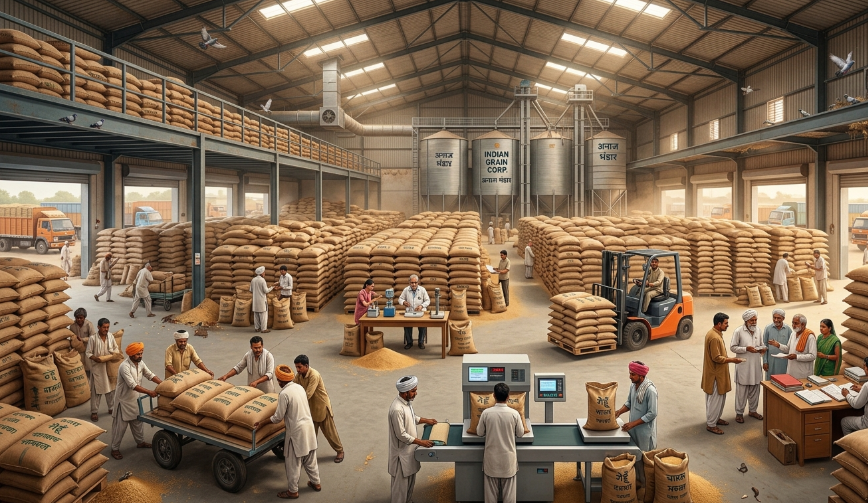
How Technology Is Turning Warehouses Into Intelligence Hubs
Technology is fundamentally changing how warehouses operate. Today’s smart warehousing systems can integrate:
- real-time inventory tracking
- temperature and moisture monitoring
- digital documentation
- warehouse analytics
- commodity movement visibility
- risk alerts
- financing workflows
- quality assessment systems
This shift is being accelerated by the growing adoption of connected agricultural infrastructure and IoT-enabled systems.
India’s Agriculture IoT market generated nearly USD 1.38 billion in 2024 and is projected to reach USD 2.12 billion by 2030. At the same time, India’s broader IoT devices market is expected to grow at a CAGR of over 23% between 2025 and 2030 as businesses increasingly adopt real-time monitoring and connected operational systems.
For agriculture, this means warehouses are no longer passive infrastructure assets. They are becoming real-time intelligence centres capable of supporting faster and smarter decision-making across supply chains.
Why Warehousing Is Becoming Important for Agricultural Finance
One of the biggest transformations happening in agriculture today is the increasing connection between warehousing and finance.
Stored commodities are increasingly being treated as financial assets instead of idle inventory.
Warehouse receipt financing allows farmers, traders, processors, and agri businesses to unlock liquidity while retaining ownership of their produce. This helps reduce distress selling and creates greater flexibility across commodity cycles.
At the same time, digital warehouse visibility improves:
- procurement planning
- commodity forecasting
- inventory management
- operational efficiency
- financing transparency
- risk assessment
In volatile agricultural markets, this kind of operational visibility is becoming extremely valuable.
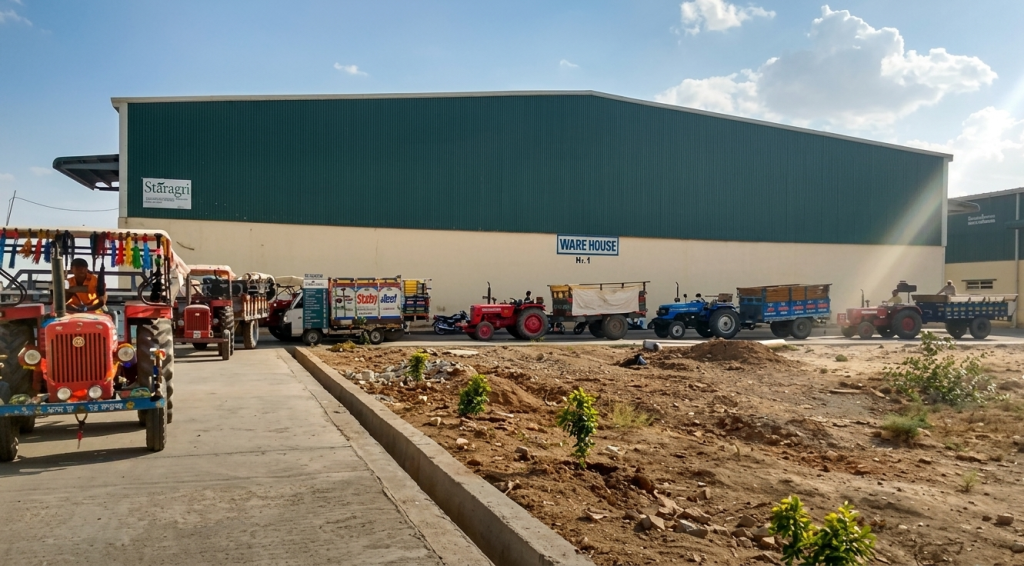
How StarAgri Is Building Integrated Agri Infrastructure
StarAgri has developed an integrated agri infrastructure ecosystem of 2200+ warehouses, operating across 19 Indian states and 380+ locations. Its ecosystem spans multiple services across the agricultural value chain, including:
- scientific warehousing
- collateral management
- commodity management
- procurement support
- quality testing
- logistics enablement
- financing integration
- agri infrastructure solutions
The company also operates 13 NABL-certified laboratories that support commodity testing and quality verification, capabilities that are becoming increasingly important in traceable and quality-focused agricultural trade ecosystems.
As agricultural supply chains become more data-centric, integrated infrastructure ecosystems are playing a larger role in improving transparency, efficiency, and operational confidence.
The Future of Warehousing Will Be Data-Driven
Agriculture is entering a phase where infrastructure will no longer be measured only by storage capacity.
The future will depend on how intelligently that infrastructure operates. Warehouses that provide:
- real-time operational visibility
- digital traceability
- quality intelligence
- financing integration
- commodity analytics
- connected supply chain support
will become critical to modern agricultural ecosystems.
In the years ahead, warehouses may no longer be viewed simply as commodity storage destinations. They could become the intelligent backbone of agriculture itself.
FAQs
- What is smart warehousing in agriculture?
Smart warehousing refers to technology-enabled storage infrastructure that uses digital systems for inventory tracking, quality monitoring, commodity visibility, and operational management. It helps improve efficiency, traceability, and supply chain planning in agriculture. - Why are warehouses becoming important in modern agriculture?
Warehouses today do much more than store commodities. They support financing, quality preservation, inventory visibility, and real-time supply chain decision-making, making them critical to modern agricultural ecosystems. - How does warehousing support agricultural finance?
Scientific warehousing enables warehouse receipt financing, where stored commodities can be used as financial assets. This helps farmers and agri businesses access working capital without immediately selling their produce. - What services does StarAgri provide?
StarAgri provides scientific warehousing, collateral management, commodity management, procurement support, quality testing, logistics enablement, and agri infrastructure solutions across 19 Indian states and 380+ locations. - How is technology changing agricultural warehousing?
Technology is enabling real-time inventory tracking, digital audits, warehouse analytics, moisture monitoring, quality assessment, and connected operational systems that improve transparency and efficiency across supply chains.
