

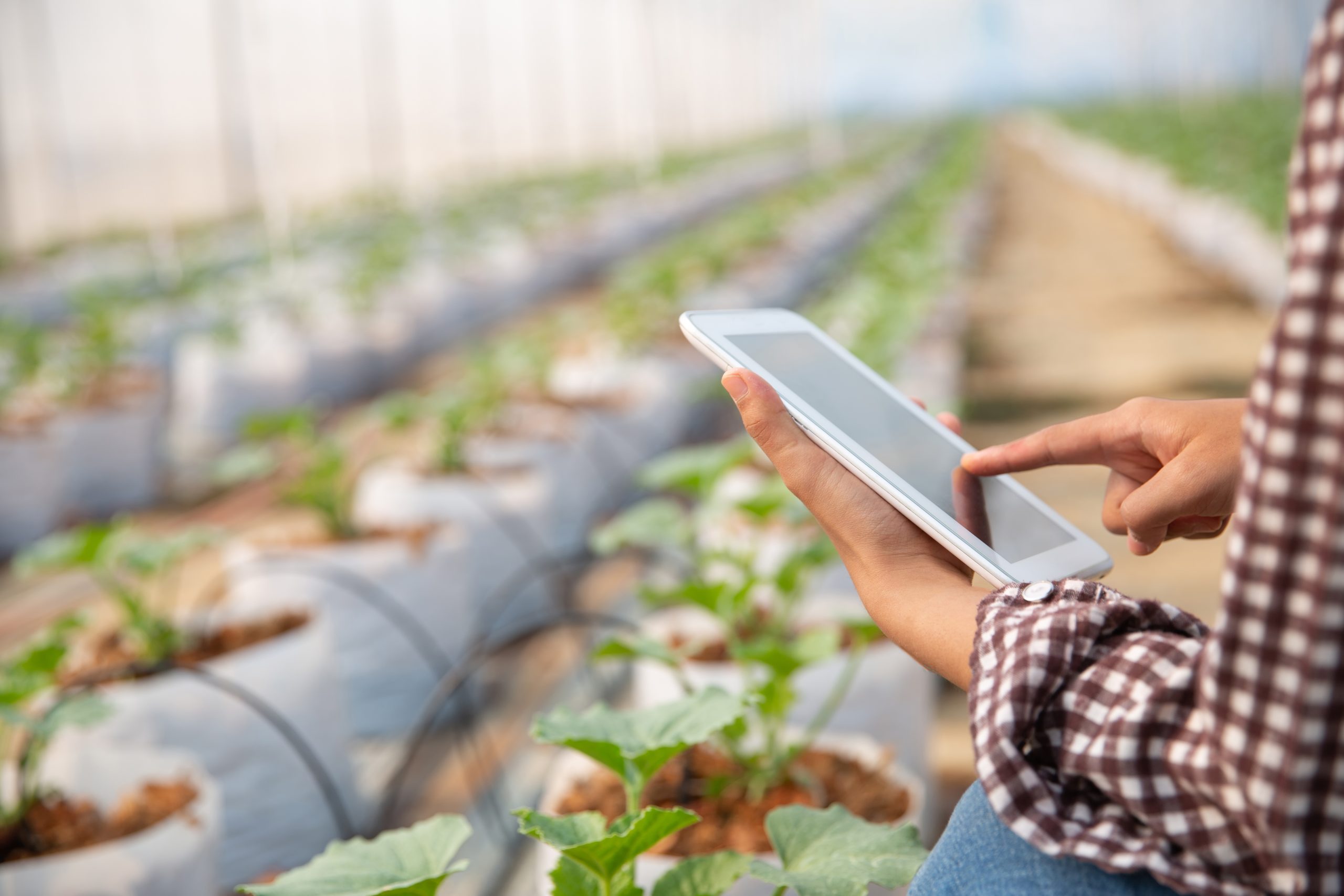
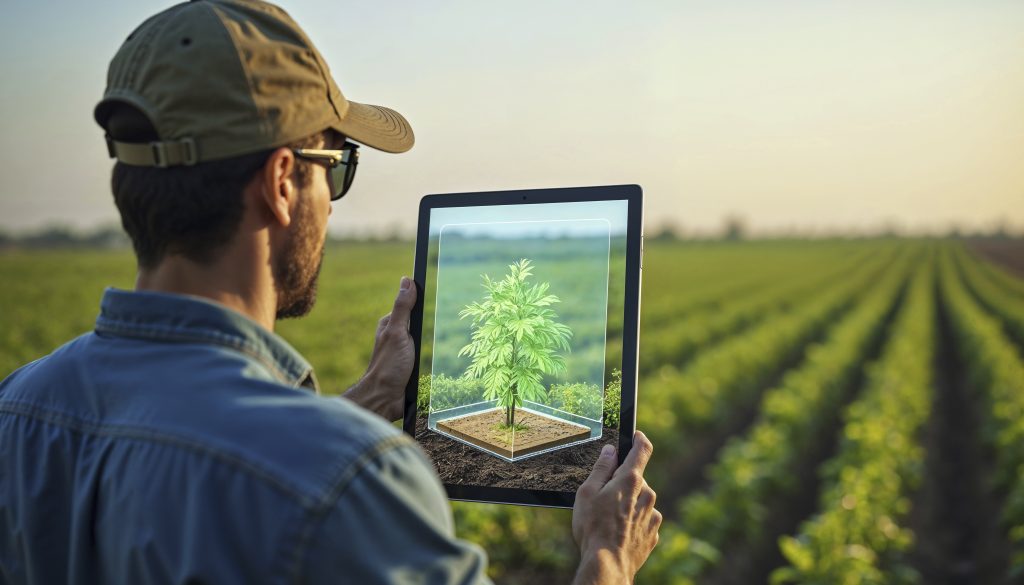
In 2026, agritech apps in India have become indispensable. The farmers make data-driven decisions, improve productivity, manage risks, and increase profitability. With mobile and internet access expanding in rural India, more farmers are turning to digital agricultural tools to simplify their operations and plan better.
“According to Inc42 and StarAgri’s Indian Agritech Market Landscape Report, 2025, India’s agritech sector is set to grow from $9 Bn in 2025 to $28 Bn by 2030, expanding at a 25% CAGR.”
Today’s agritech platforms are blending artificial intelligence (AI), Internet of Things (IoT), remote sensing, and marketplace features to bring precision agriculture into the hands of every grower.
So, what should a farmer look for while choosing farm management or agritech apps in 2026?
Top 5 Digital Agriculture Features Every Indian Farmer Should Know in 2026
1. AI-driven insights and predictive analytics: The most powerful agritech apps now leverage artificial intelligence (AI) to deliver actionable insights. These tools process historical farm data, soil health, and weather trends to recommend what to sow, when to irrigate, and how to prevent losses.
Why it matters:
- Forecasts for pests, diseases, and yield outcomes
- Optimised sowing and harvesting timelines
- Tailored advisory in local languages
According to industry reports, AI systems in agritech could expand from a valuation of $0.9 billion in 2025 to an estimated $5.6 billion by 2030, with multilingual AI advisory tools helping millions of farming households make more intelligent decisions in local languages.
2. Hyper-local weather and risk forecasts: Weather remains agriculture’s biggest variable. The best agriculture apps in India go beyond generic forecasts to deliver field-level, crop-specific predictions powered by IoT and advanced analytics.
What to look for:
- Real-time alerts on rainfall, humidity, and wind
- Crop-stage recommendations for spraying or harvesting
- Early warnings on drought, frost, and other weather extremes
This hyper-local intelligence helps reduce climate-related losses and ensures farmers can make more confident operational decisions.
3. Real-time crop monitoring and soil intelligence: The integration of IoT sensors, drones, and satellite data enables robust monitoring of crop and soil health. Today’s agritech apps harness this data to provide real-time metrics on soil moisture, nutrient status, pest infestations, and crop stress zones.
Features to prioritise:
- NDVI and chlorophyll mapping for early stress detection
- Soil moisture and nutrient anomaly alerts
- Pest and disease diagnosis from image uploads
4. Integrated market access, farm business management & embedded finance: In 2026, the most impactful agritech apps are those that seamlessly combine market access, farm management, and financial visibility into a single ecosystem. Farmers no longer want fragmented tools. They want platforms that connect what they grow, how they sell, and how they finance their operations.
Modern agritech apps now integrate real-time mandi prices, buyer discovery, digital trade execution, and post-harvest workflows with built-in financial intelligence. This includes tracking crop-wise expenses, expected revenues, inventory value, and working capital requirements — all in one dashboard.
Key capabilities farmers should look for:
- Live commodity prices with historical trend analysis
- Digital buyer–seller connections and transparent trade execution
- Expense tracking linked to crop cycles
- Cash-flow visibility aligned with sowing, harvesting, and sales timelines
- Access to credit, insurance, or financial products based on farm and trade data
5. User-centric design with offline and multilingual support: As agritech apps strive to reach farmers in every corner of the world, usability becomes a core differentiator. Farmers often face connectivity limitations and varying levels of digital literacy, making intuitive design, offline capabilities, and multilingual voice support essential.
Look for:
- Offline functionality with auto-sync capabilities
- Intuitive dashboards and local language interfaces
- Voice-enabled assistance for navigation and queries
 Bonus must-have: Complete farm business management tools
Beyond agronomy and marketplaces, the best agritech apps now offer holistic farm management modules that cover financial planning, expense tracking, labour deployment, compliance reporting, and inventory management. This positions agriculture as a business, not just a seasonal activity.
Conclusion
Farmers in 2026 should choose agritech apps that combine cutting-edge technologies, AI forecasts, hyper-local insights, real-time monitoring, market integration, and user-friendly design to harness the full potential of digital agriculture. These capabilities not only drive crop performance but also strengthen the farm’s economic sustainability and resilience.
StarAgri’s digital edge
At StarAgri, we understand what modern farmers expect from today’s agritech apps. Our AgriBhumi platform combines satellite imagery, machine learning insights, and field-level data to empower farmers with precise yield forecasts, soil maps, and crop planning tools built for Indian conditions.
Through Agribazaar, farmers gain seamless market access and digital trade connectivity, while Agriwise provides end-to-end financial solutions, including working capital, crop loans, and trade-linked credit. Together, these platforms create India’s most comprehensive digital ecosystem — connecting farm operations, marketplace opportunities, and financial empowerment under one roof.
FAQs:
- What are agritech apps, and why are they essential for farmers?
Agritech apps are digital platforms that provide farmers with insights, advisory, market access, and financial tools. They help increase productivity, reduce risks, and optimise farm operations by leveraging technologies such as AI, IoT, and satellite data. - How can agritech apps improve crop yield?
Modern agritech apps offer AI-driven recommendations, soil and crop health monitoring, pest and disease alerts, and precise weather forecasts. These tools allow farmers to make data-driven decisions, leading to higher yields and better resource management. - Can agritech apps provide financial support to farmers?
Yes. Many agritech apps, including platforms integrated with Agriwise, provide access to working capital, crop loans, and trade-linked credit. This helps farmers manage liquidity and invest in timely inputs. - Are agritech apps suitable for farmers in remote areas with limited internet?
Yes. Leading agritech apps now include offline functionality, multilingual support, and voice-enabled features, ensuring accessibility even in low-connectivity regions. - How do agritech apps help farmers get better market prices?
Agritech apps provide real-time mandi prices, buyer connections, and trade analytics. This transparency helps farmers choose the right time and channel to sell their produce, maximising revenue and reducing dependence on intermediaries.
Disclaimer
The content published on this blog is provided solely for informational and educational purposes and is not intended as professional or legal advice. While we strive to ensure the accuracy and reliability of the information presented, StarAgri make no representations or warranties of any kind, express or implied, about the completeness, accuracy, suitability, or availability with respect to the blog content or the information, products, services, or related graphics contained in the blog for any purpose. Any reliance you place on such information is therefore strictly at your own risk. Readers are encouraged to consult qualified agricultural experts, agronomists, or relevant professionals before making any decisions based on the information provided herein. StarAgri, its authors, contributors, and affiliates shall not be held liable for any loss or damage, including without limitation, indirect or consequential loss or damage, or any loss or damage whatsoever arising from reliance on information contained in this blog. Through this blog, you may be able to link to other websites that are not under the control of StarAgri. We have no control over the nature, content, and availability of those sites and inclusion of any links does not necessarily imply a recommendation or endorsement of the views expressed within them. We reserve the right to modify, update, or remove blog content at any time without prior notice.
