

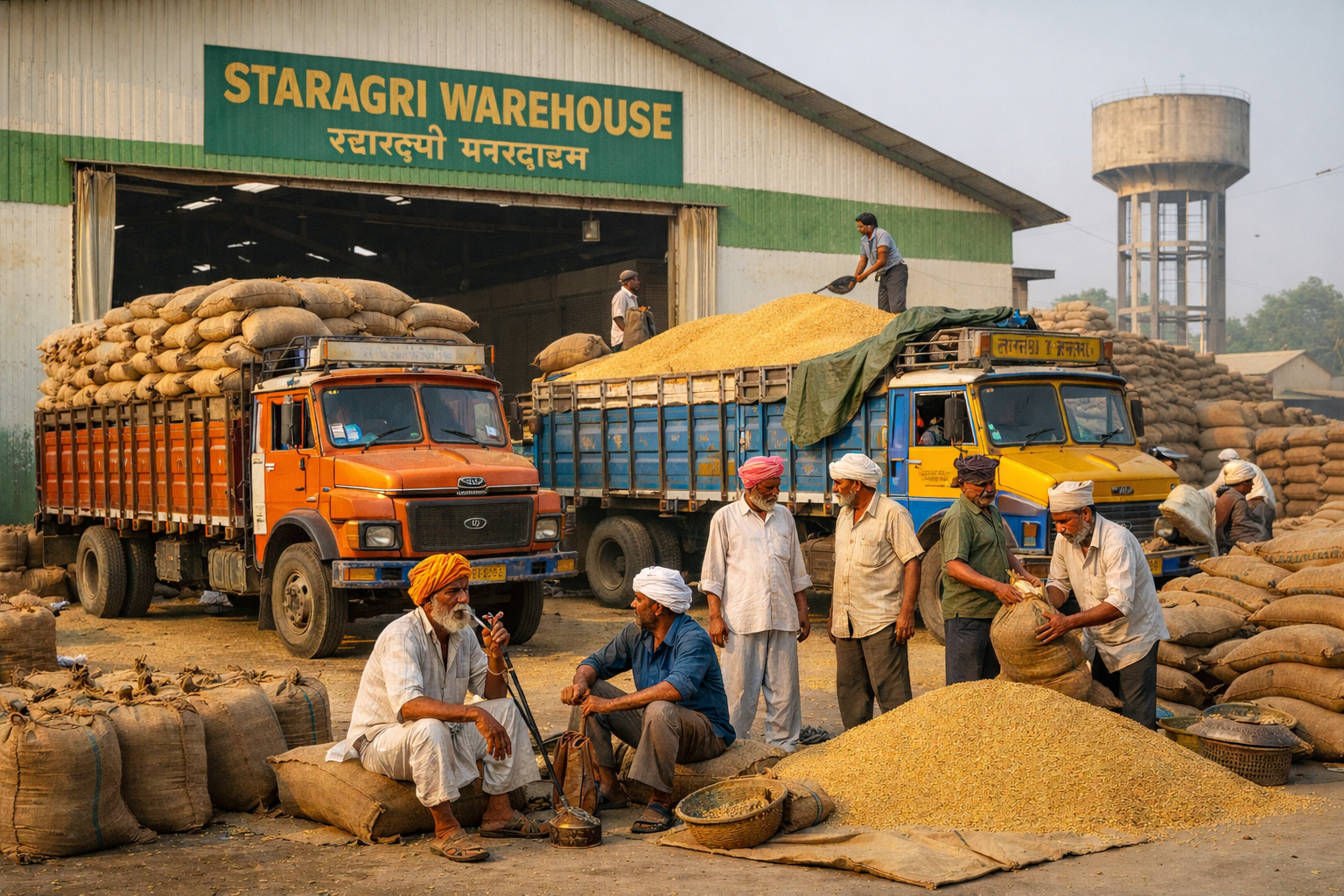
As we enter 2026, the agricultural sector faces critical crossroads, not just in production, but in what happens after the crop is harvested. The early months of the year set the foundation for how effectively produce is stored, priced, and ultimately monetised. For farmers, agribusinesses, and service providers like StarAgri, a post-harvest strategy is essential not only as an operational concern but also for maximising profitability, reducing waste, and strengthening supply chains.
The strategic importance of early-year post-harvest planning
Agriculture is cyclical, but the most impactful decisions are often made after the crop leaves the field. The period immediately after the harvest — commonly spanning December to March in India — is when produce transitions from harvest to market-ready stocks.
Effective planning in this window influences:
- Quality preservation through appropriate handling and storage
- Price realisation by deciding when and where to sell
- Loss reduction by minimising spoilage, contamination and degradation
Initiating harvest planning at the beginning of the year ensures that stakeholders can act strategically rather than react to market pressures or logistical bottlenecks.
Post-harvest loss realities in India and beyond
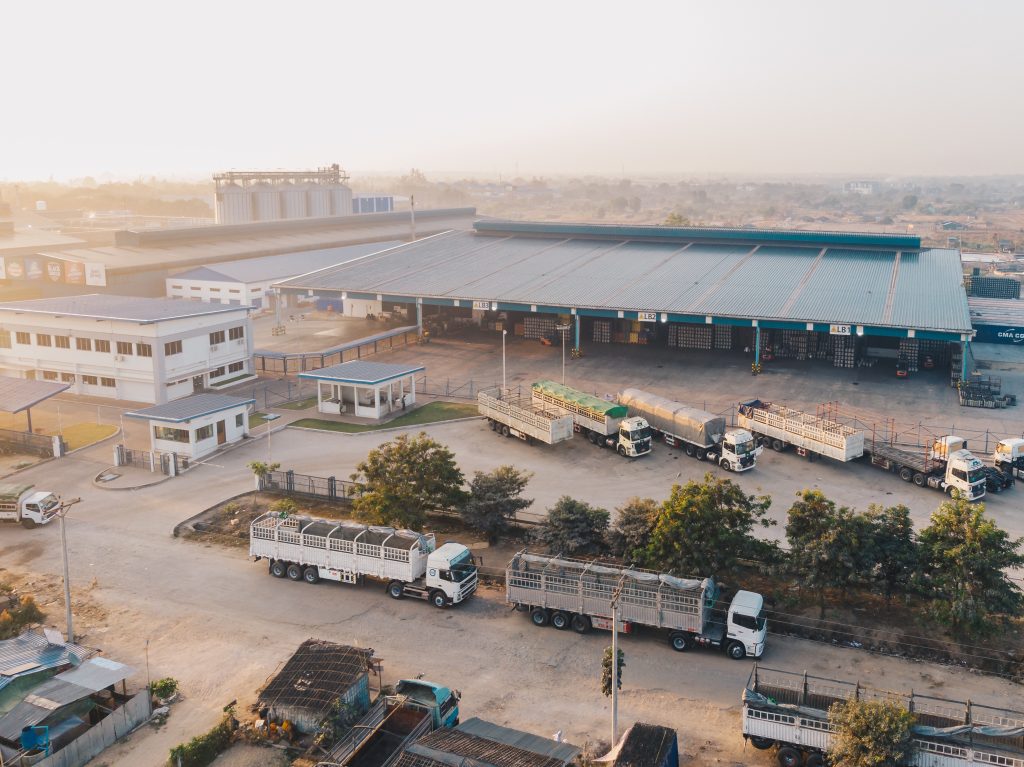
Post-harvest inefficiencies continue to drain value from the agricultural economy. According to recent government data, losses in horticultural produce can reach nearly 15% of total output, amounting to around 15 million tonnes of wasted produce annually. The Government of India aims to cut these losses to below 5% by 2047 with expanded cold-chain and processing infrastructure.
These losses not only reduce farmers’ incomes but also weaken food security and inflate consumer prices. In many cases, a lack of scientific storage and quality control means high-value crops such as fruits, vegetables, and grains deteriorate before they reach the market.
Against this backdrop, the beginning of the year becomes a strategic planning moment to make decisions that can drastically reduce losses and create economic opportunities.
Early-year decisions that shape post-harvest success
- Quality assessment and inventory insights: Understanding the quality of harvested produce, including moisture levels, contamination, and grading, is critical before deciding on storage, processing, or sale. Without this insight, stocks risk spoilage after investment in storage or are released at suboptimal times due to uncertainty.
- Scientific vs. traditional methods: India has seen significant growth in modern warehousing and cold-chain infrastructure over the past few years. However, gaps remain in last-mile availability and sorting facilities. Scientific storage reduces moisture migration, pest infestation, and biochemical deterioration, all of which are key causes of harvest losses. Deciding early whether to store in dry warehouses, cold-chain facilities, or decentralised village hubs affects quality and price outcomes.
- Market timing and price forecasting: Agricultural commodity prices are shaped by global cues, domestic arrival patterns, and policy decisions. Strategic post-harvest decisions rely on forecasting price movements and global demand signals, rather than reacting to spot prices. Holding stock based on informed projections rather than instinctive timing can result in higher realised prices and fewer distress sales.
How StarAgri supports intelligent post-harvest decisions
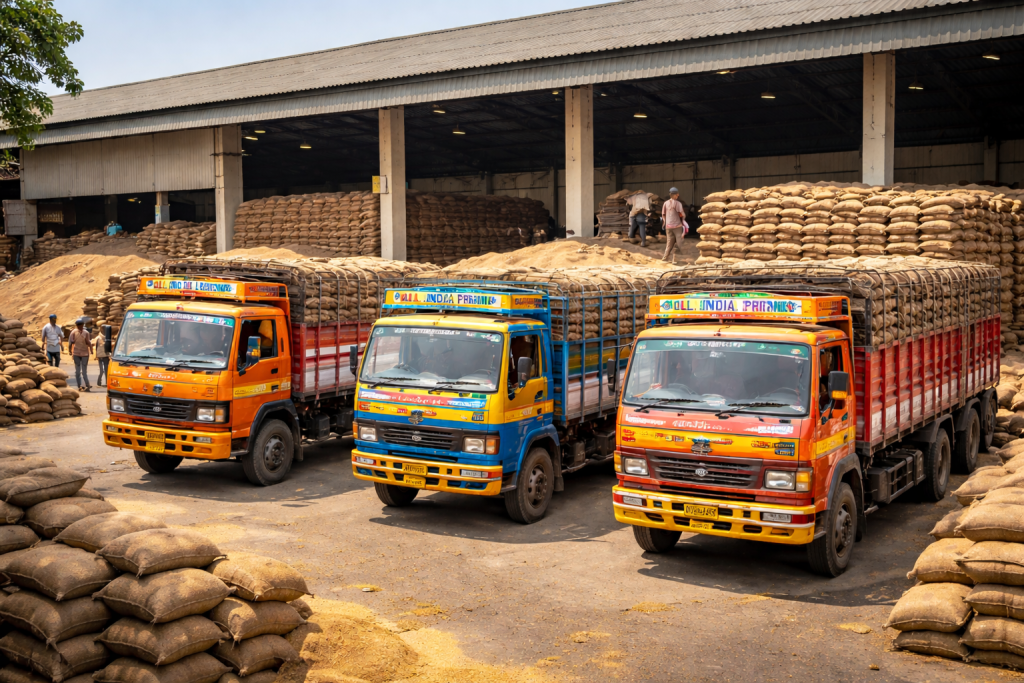
StarAgri is committed to enabling robust post-harvest strategies for farmers and agribusinesses through technology-driven services and a pan-India infrastructure footprint.
- Star Labs: StarAgri’s advanced lab testing network provides NABL-licensed, ISO-certified quality testing for agricultural commodities. With multiple labs across India, Star Labs conducts comprehensive physical and chemical quality checks essential for:
- Accurate grading of produce
- Ensuring compliance with buyer standards
- Informing storage and release decisions
This scientific assessment empowers stakeholders to plan storage duration, market timing, and price strategy by leveraging data rather than guesswork.
- Scientific warehousing & collateral management: StarAgri operates over 2,200 scientific warehouses across India in more than 350 locations, providing secure storage solutions for multiple commodities. These facilities help preserve quality and extend the marketable lifespan of produce. Good storage infrastructure also unlocks financial access, stored stock becomes a credible asset that strengthens trust with buyers and partners throughout the supply chain.
- Integrated value chain solutions: In addition to warehousing and testing, StarAgri’s ecosystem includes procurement support, trade facilitation, and digital marketplaces that connect farmers directly to buyers, removing unnecessary intermediaries and enabling fairer price realisation. This integrated approach helps bridge the crucial gap between field-level harvests and market demand, ensuring post-harvest actions add value rather than erode margins.
- Growing international presence: StarAgri’s global expansion, with operational footprints across the Middle East, Africa, and the UAE, reflects its ambition to support international agri-commodity trade. This cross-border reach helps Indian producers align post-harvest quality standards with global market requirements, opening new export opportunities.

Looking ahead: Stronger post-harvest planning in 2026
As global food demand continues to grow and supply chains become more complex, the importance of post-harvest decision-making at the start of the year will only increase. In 2026, stakeholders who prioritise quality testing, strategic storage, pricing insights, and integrated supply chain access will be better positioned to unlock value and reduce loss. By investing time and resources into these decisions early in the calendar year, farmers and agribusinesses can turn the post-harvest phase from a period of risk into a platform for sustainable growth.
Conclusion
The beginning of the year isn’t just another calendar milestone for agriculture; it is a strategic window in which critical post-harvest decisions determine success or failure for the entire season. With the right quality insights, infrastructure, market intelligence, and partners like StarAgri supporting every step, stakeholders can transform what once was a vulnerable phase into a competitive advantage. Let 2026 be the year where every harvested grain finds its best value.
FAQs:
- Why is the beginning of the year important for post-harvest decisions?
The beginning of the year is critical because it follows the primary harvest season for many crops. Decisions taken during this period, such as quality assessment, storage selection, and market timing, directly impact post-harvest losses, price realisation, and overall profitability for the rest of the year. - What are the biggest challenges in post-harvest management in India?
The significant challenges include inadequate scientific storage, insufficient quality testing, limited cold-chain infrastructure for perishables, and insufficient market intelligence. These factors contribute to high post-harvest losses, especially in fruits, vegetables, and grains.
- How does quality testing support better post-harvest outcomes?
Quality testing helps determine moisture levels, infestation risk, and grading standards of agricultural produce. Early post-harvest quality assessment enables farmers and traders to decide whether to store, process, or sell immediately, reducing the risk of rejection and preserving value. - How can scientific warehousing reduce post-harvest losses?
Scientific warehousing maintains controlled storage conditions that protect commodities from moisture, pests, and physical damage. This significantly reduces post-harvest losses, extends shelf life, and enables producers to hold stocks until market conditions improve. - How does StarAgri support post-harvest planning for farmers and agribusinesses?
StarAgri supports post-harvest planning through Star Labs’ quality testing services, a vast network of scientific warehouses, integrated value chain solutions, and an expanding international presence that helps align domestic produce with global market standards.
Disclaimer
The content published on this blog is provided solely for informational and educational purposes and is not intended as professional or legal advice. While we strive to ensure the accuracy and reliability of the information presented, StarAgri make no representations or warranties of any kind, express or implied, about the completeness, accuracy, suitability, or availability with respect to the blog content or the information, products, services, or related graphics contained in the blog for any purpose. Any reliance you place on such information is therefore strictly at your own risk. Readers are encouraged to consult qualified agricultural experts, agronomists, or relevant professionals before making any decisions based on the information provided herein. StarAgri, its authors, contributors, and affiliates shall not be held liable for any loss or damage, including without limitation, indirect or consequential loss or damage, or any loss or damage whatsoever arising from reliance on information contained in this blog. Through this blog, you may be able to link to other websites that are not under the control of StarAgri. We have no control over the nature, content, and availability of those sites and inclusion of any links does not necessarily imply a recommendation or endorsement of the views expressed within them. We reserve the right to modify, update, or remove blog content at any time without prior notice.
