

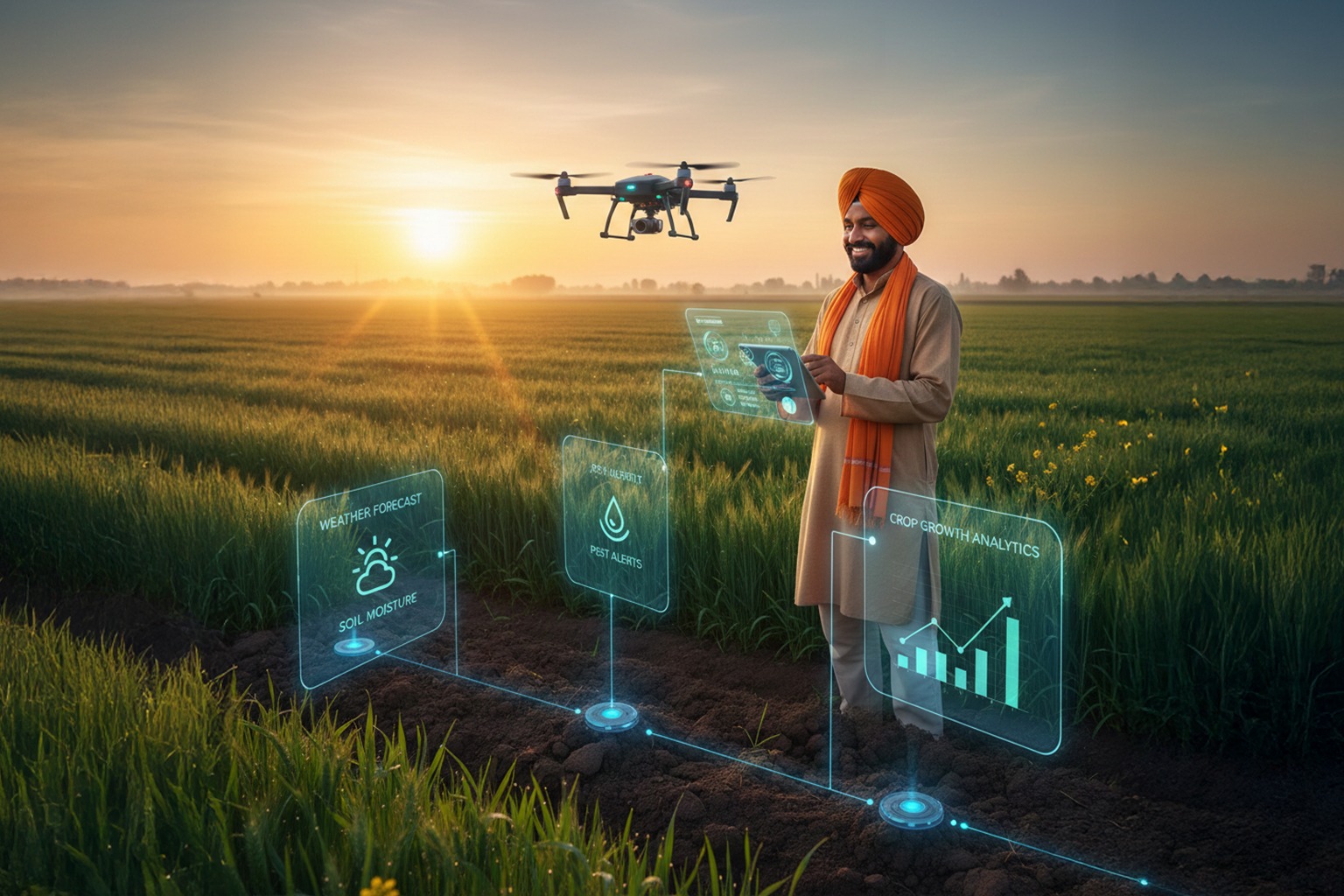
For decades, Indian farmers have battled unpredictable weather, pest attacks, poor soil health, and unstable yields. These challenges often mean the difference between a good harvest and a year of financial struggle. But a quiet revolution is changing that—technology. From AI-powered insights to IoT-driven sensors, digital innovation is transforming traditional farming into a smarter, data-backed system. Farmers today no longer rely on guesswork; they rely on information.
Let’s explore how technology helps farmers overcome everyday crop challenges and shape a more resilient, profitable agricultural future.
Common Crop Challenges Faced by Farmers
Even with years of experience, farmers face multiple challenges that affect their productivity and profits. Let’s look at the most common ones:
-
Unpredictable Weather
Sudden rains, droughts, and heatwaves damage crops.
-
Pest Infestation and Diseases
Lack of early detection leads to heavy losses.
-
Poor Soil Health
Continuous cultivation without analysis depletes soil nutrients.
-
Water Scarcity
Inefficient irrigation systems cause water wastage and crop stress.
-
Post-Harvest Losses
Inadequate storage and transport reduce crop value.
Technology provides practical, data-driven solutions to each of these challenges, reducing uncertainty and empowering farmers with control over their produce.
The Evolution of Smart Farming Solutions
Smart farming solutions combine data, automation, and connectivity to improve efficiency and productivity across the entire crop cycle. Unlike traditional methods that depend on manual observation, smart farming uses tools like drones, sensors, and analytics platforms to provide real-time insights.
Key elements of smart farming include:
-
Sensors
Measure soil moisture, nutrient levels, and crop health.
-
Automation
Controls irrigation and fertilization systems for precision farming.
-
Drones
Capture aerial data to monitor large farmlands quickly.
-
Mobile Apps
Deliver instant updates on weather, prices, and advisory alerts.
These technologies help farmers make informed decisions, such as when to sow, how much to irrigate, and when to harvest. This ensures maximum yield with minimal waste.
IoT Applications in Agriculture: Smart Monitoring and Decision-Making
The Internet of Things (IoT) connects devices and sensors across farms to monitor conditions in real time. Farmers can collect, analyze, and act on critical data directly from their smartphones. Here’s how IoT applications in agriculture are transforming the field:
-
Soil and Moisture Sensors
Detects exact water requirements, enabling smart irrigation systems that save water and improve crop health.
-
Climate and Weather Sensors
Provide hyper-local weather forecasts and temperature data to prevent crop damage from heat, rain, or frost.
-
Drones and Imaging Devices
Identify nutrient deficiencies, pest infestations, or uneven growth areas across vast farmland.
-
Livestock and Equipment Tracking
Helps monitor movement, health, and productivity on integrated farms.
By automating monitoring, IoT reduces manual labor and boosts efficiency. It allows farmers to manage their farms remotely and act immediately when problems arise.
AI Solutions for Crop Health and Yield Optimization
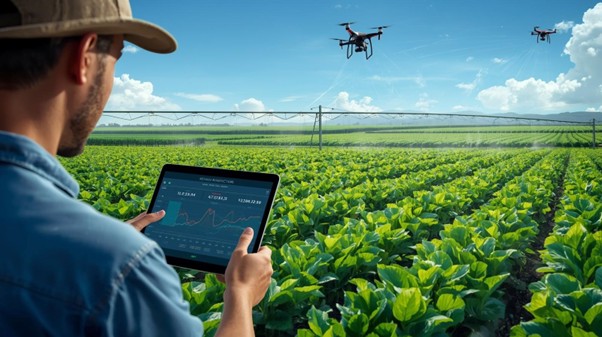
Artificial Intelligence (AI) has become a trusted ally for modern farmers. It analyzes huge data sets from satellites, drones, and sensors to offer actionable insights for better decision-making. Here’s how AI solutions for crop health help farmers:
-
Pest and Disease Detection
AI uses image recognition to identify diseases in leaves or fruits before they spread.
-
Predictive Analytics
Forecasts yields and identifies potential risks such as drought or soil imbalance.
-
Fertilizer Recommendations
Suggests optimal nutrient mixes based on soil and crop type.
-
Automated Crop Surveillance
Drones equipped with AI can scan fields, detect issues, and suggest corrective actions instantly.
These tools reduce crop loss, improve resource use, and increase profitability. AI ensures that farming is not just productive but also sustainable.
The Role of Data Analytics and Mobile Apps in Empowering Farmers
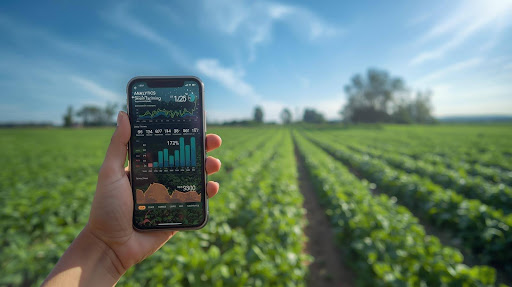
Information is power in modern agriculture. Data analytics and mobile applications provide farmers with insights that were once out of reach.
Data Analytics for Smarter Farming
- Tracks soil performance and yield patterns over time.
- Identifies the best crops to grow based on regional data.
- Predicts demand and helps plan planting cycles for better market timing.
Mobile Apps for Daily Support
- Offer real-time weather and pest alerts.
- Provide expert guidance for crop care and irrigation.
- Show market prices and connect farmers with buyers directly.
Together, these digital tools help farmers reduce risks, optimize resources, and gain access to timely, reliable information, empowering them to make smarter, faster decisions.
Building a Sustainable Future Through Technology
Technology isn’t just solving today’s problems; it’s building a sustainable tomorrow. Precision agriculture minimizes waste by using only what’s necessary, such as water, fertilizers, and pesticides, based on real-time needs.
Sustainability benefits include:
-
Efficient Water Usage
Smart irrigation reduces water consumption by up to 40%.
-
Reduced Chemical Dependency
Sensors and AI identify exact pest zones, cutting pesticide use.
-
Higher Productivity
Technology helps produce more from less land.
-
Lower Carbon Footprint
Optimized logistics and automation reduce emissions.
By integrating sustainability into farming, technology ensures that agriculture remains profitable without harming the planet.
To Sum Up
Technology has become a vital partner for farmers, helping them overcome traditional crop challenges with smart, data-driven solutions. From real-time IoT monitoring to AI-powered crop analysis, these innovations empower farmers to boost yields, cut losses, and make informed decisions.
As a leading agritech company in India, StarAgri continues to lead this transformation by combining technology, infrastructure, and expertise to make farming smarter, more sustainable, and more profitable.
Connect today to know how our innovative agri-solutions are helping farmers thrive in the digital era.
FAQ’s
What are the benefits of adopting technology in agriculture?
Technology improves efficiency, reduces manual labor, and increases crop yields. Farmers can use data-driven insights to optimize irrigation, fertilization, and pest control. It also helps monitor real-time conditions, reduce post-harvest losses, and increase profitability through smarter decision-making.
How does precision farming help small farmers?
Precision farming helps small farmers use resources efficiently by targeting specific areas for irrigation, fertilizers, and pest control. This reduces costs, improves yield quality, and prevents wastage. With affordable digital tools and mobile apps, even smallholders can access precision technology today.
How does automation improve farming productivity?
Automation simplifies repetitive tasks like irrigation, seeding, and fertilization. Smart machines and automatic irrigation systems ensure consistency and efficiency, allowing farmers to manage larger areas and improve output without increasing labor costs.
How do mobile apps contribute to better farm management?
Mobile apps help farmers track crop growth, manage irrigation schedules, and receive weather alerts. They also provide expert recommendations and market insights, helping farmers plan better and reduce risks linked to changing conditions.
How can agritech drive sustainable farming practices in India?
Agritech promotes sustainability by optimizing water and fertilizer usage, reducing chemical dependence, and improving soil health. It encourages precision farming and eco-friendly practices that balance productivity with environmental responsibility.
Disclaimer
The content published on this blog is provided solely for informational and educational purposes and is not intended as professional or legal advice. While we strive to ensure the accuracy and reliability of the information presented, StarAgri make no representations or warranties of any kind, express or implied, about the completeness, accuracy, suitability, or availability with respect to the blog content or the information, products, services, or related graphics contained in the blog for any purpose. Any reliance you place on such information is therefore strictly at your own risk. Readers are encouraged to consult qualified agricultural experts, agronomists, or relevant professionals before making any decisions based on the information provided herein. StarAgri, its authors, contributors, and affiliates shall not be held liable for any loss or damage, including without limitation, indirect or consequential loss or damage, or any loss or damage whatsoever arising from reliance on information contained in this blog. Through this blog, you may be able to link to other websites that are not under the control of StarAgri. We have no control over the nature, content, and availability of those sites and inclusion of any links does not necessarily imply a recommendation or endorsement of the views expressed within them. We reserve the right to modify, update, or remove blog content at any time without prior notice.
