

What does an agricultural commodity need after harvest?
Storage is the obvious answer. But follow that commodity for a few more weeks and the list gets longer.
It may need quality testing. The owner may require financing while it is stored. A processor needs to procure it. A bank financing that inventory needs collateral management. Eventually, the commodity needs to be traded, transported or potentially exported.
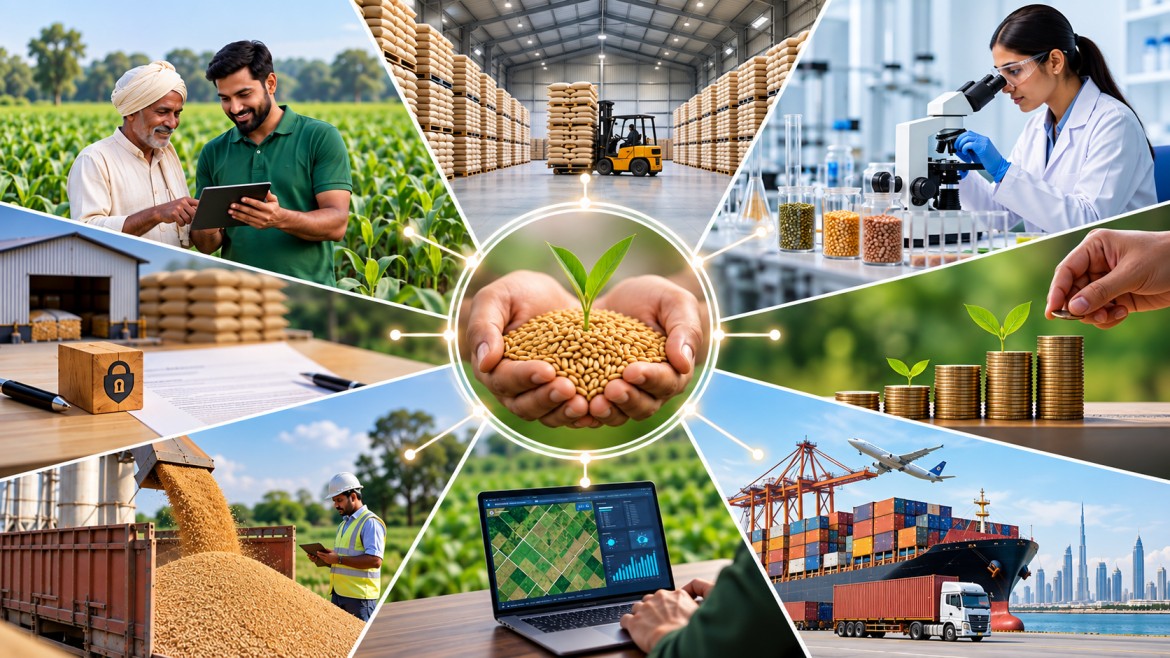
Agriculture, in other words, does not require a single service after harvest. It needs an ecosystem of agri services. That is the space in which StarAgri operates.
Start with the warehouse
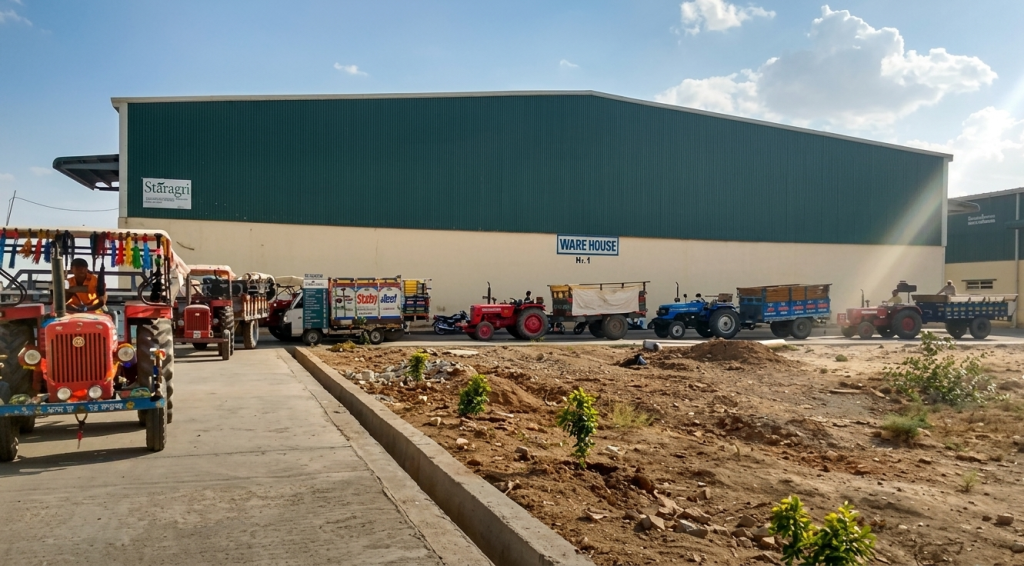
Scientific warehousing forms a key part of StarAgri’s infrastructure. StarAgri today operates a network of 2,200+ scientific warehouses across 19 states, with approximately 5 million metric tonnes of storage capacity.
But storage is only the starting point. A modern warehouse can become the point where commodity preservation, quality assessment, financing, and trade begin to connect.
- Scientific Warehousing
Agricultural commodities require appropriate storage conditions to preserve quality and reduce storage-related risks.
StarAgri provides scientific warehousing solutions across major agricultural regions of India. Its distributed network allows farmers, traders, processors and other agricultural participants to access organised storage infrastructure closer to producing and consuming markets.
- Collateral Management
Stored agricultural commodities can also represent financial value.
StarAgri provides collateral management services that help lenders monitor agricultural commodities pledged against financing. Standardised processes, digital documentation and monitoring help make stored commodities more transparent and finance-ready. This creates an important bridge between warehousing and agricultural credit.
- Financing Solutions
Agriculture often creates a timing mismatch: expenses occur today, while revenue may arrive weeks or months later.
Within the StarAgri ecosystem, financing solutions are provided through Agriwise Finserv. These include Warehouse Receipt Finance, Farmer Financing, Loan Against Property, Supply Chain Finance and customised working-capital solutions. Instead of treating finance as separate from agriculture, this model connects credit with the realities of agricultural inventory and business cycles.
- Procurement
For processors, corporates and institutional buyers, sourcing the right commodity is not simply about finding supply. Quality, quantity, location, timing, and consistency all matter.
StarAgri provides procurement services for agricultural commodities across a network covering 110+ commodities, helping customers source produce according to required specifications.
- Quality Testing Through Star Labs
Before agricultural produce can move confidently through a commercial supply chain, stakeholders need to know what they are dealing with.
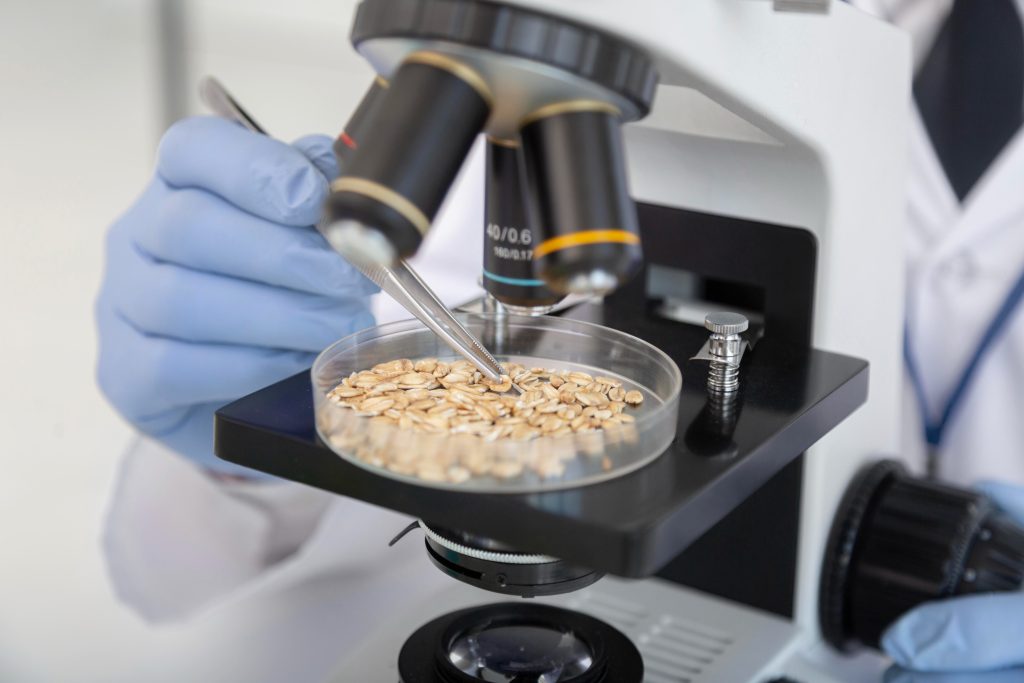
Star Labs provides scientific testing and standardised grading of agricultural commodities. StarAgri operates a network of NABL-certified laboratories equipped to conduct physical and chemical analysis of agricultural commodities and food products, along with testing of water and soil. Quality testing adds something essential to agricultural transactions: measurable information.
- Digital Marketplace and Technology
Not every agri service needs to be physical. Through agribazaar, the StarAgri ecosystem provides digital marketplace access that connects agricultural buyers and sellers.
Its technology capabilities also extend to advanced agricultural data services. AI, machine learning, remote sensing, IoT, and data analytics are used across applications including crop monitoring, agricultural intelligence, and supply-chain analytics.
- Trade Facilitation and Agri Exports
StarAgri also supports trade facilitation for non-perishable agricultural commodities, serving participants including millers, processors and corporates. Its agri-export capabilities extend the ecosystem beyond domestic markets, applying its agricultural sourcing and value-chain experience to international trade opportunities.
Why an integrated model matters
The interesting thing about StarAgri’s portfolio is not simply the number of services. It is how they connect.
A commodity can enter a StarAgri warehouse, undergo quality assessment, become collateral for financing, be procured or traded and eventually move towards a processor or another market. Instead of several isolated transactions, these activities can become parts of a connected agricultural journey.
That is where integrated agri services are heading. Agriculture will always begin on the farm. But what happens after the crop leaves the farm increasingly depends on how effectively storage, finance, quality, markets, data and trade work together.
FAQs
- What Agri services does StarAgri offer?
StarAgri provides warehousing, collateral management, financing, procurement, trade facilitation, quality testing, digital marketplace solutions, technology services and agri exports.
- How large is StarAgri’s warehousing network?
StarAgri operates 2,200+ scientific warehouses across 19 states with approximately 5 million metric tonnes of storage capacity.
- What is collateral management?
Collateral management involves monitoring and managing commodities pledged against financing, helping lenders reduce risk while enabling commodity-backed credit.
- Does StarAgri provide agricultural quality testing?
Yes. Star Labs provides quality testing and analysis for agricultural commodities through NABL-certified laboratory facilities. - Does StarAgri use technology in its agricultural services?
Yes. Its ecosystem uses technologies including AI, machine learning, remote sensing, IoT and data analytics for agricultural and supply-chain applications.
